

Columnist Arlen Pettitt is the self-proclaimed cynic for today’s main piece in which he maintains that genuine listening in policymaking appears to be in very short supply.
Today’s edition also includes the five-bedroom ‘annex’ and 10-bay garage that faces being knocked down after failing to get retrospective planning permission.
And business is booming for the 18-year-old trading in trainers, North Shields enters the ring in a bid to be crowned UK Town of Culture, there’s updates on the Northumberland and Leamside lines, the world-first that’s coming to Blyth and imagination runs wild at Seven Stories.
Full steam ahead
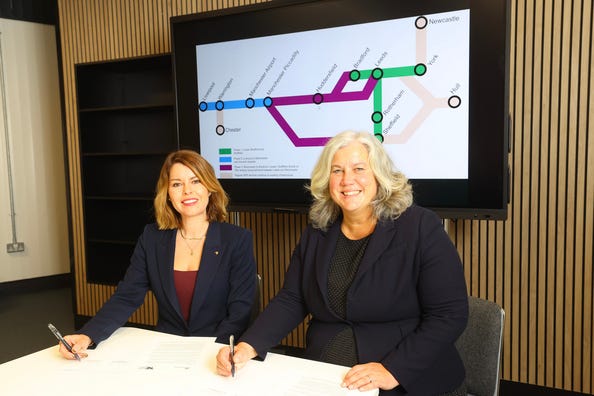
The Government has put pen to paper to push on with the reopening of the Leamside Line - the most important 21 miles in the region.
A full restoration of the line would not only allow more passenger services on the congested East Coast Main Line but would bring train services to a range of County Durham communities - providing a massive regeneration opportunity.
Transport Secretary Heidi Alexander and North East Mayor Kim McGuinness signed an agreement at Newcastle Central Station on Thursday morning which, effectively, says the Government will support the reopening of the Leamside Line if the numbers stack up - and I’m sure the good officers of the North East Combined Authority can do that, given the national as well as local significance of reopening that 21 miles of track.
This echoes what Rachel Reeves said on a visit to Darlington last week with the Chancellor pointing out that the reform of the Green Book (used by the Treasury to assess individual investments) will work in our favour. “The onus is on us now to work with Kim and get a business case that can stack up. But I really want to do that, I can see the benefits it will bring,” she said.
‘Excessive and inappropriate’
The Ladhar family has been denied retrospective planning permission for major works at their Woolsington home, including the building of a five-bed ‘annex’ house and a 10-bay garage.
The family, whose businesses include care home firm Crown Care and popular Newcastle venues including Pleased to Meet You, Lady Grey’s and the Crown Posada, had received approval in 2017 for a two-storey extension to the main house as well as an orangery and a separate annex building.
The development, on Green Belt land, was deemed “excessive” and “inappropriate” , however, by the council and the family could be ordered to knock down the extensions.
We’re a bargain
I bought a newspaper the other day for the first time in ages - have you seen how much they cost!
Eyes & Ears is free to read every Friday and Sunday but paid subscriptions are open to anyone who thinks we’re worth it. It’s £6.99 a month - which works out at being a heck of a lot cheaper than I paid for one newspaper - or take out an annual subscription and get two months free.
RIP Peter
It was standing room only at Darlington Crematorium as mourners gathered for the funeral of Peter Blackett, one of the country’s longest-serving legal partners. Peter, a partner of more than 50 years with the North East’s oldest legal firm, BHP Law, died after suffering a stroke just before Christmas. He was 78.
Celebrant, Laura Parks, who led the service, said it was “very rare” for so many people to want to show their respects, describing Peter as “a unique and brilliant person”. You can read more from Peter Barron here.
Highest new entry
“Straight in at Number 3… Hays Travel” (you can tell that I used to listen to the Radio 1 chart show on a Sunday).
It’s a magnificent achievement for the Sunderland-based travel agency to be the highest new entry in the UK Customer Satisfaction Index (UKCSI), beaten only by John Lewis and chart-toppers First Direct.
Owner and Chair, Dame Irene Hays, who was in Leeds to hear the chart rundown, said: “I’m very proud of all our people for their work to achieve this, making sure our customers are cared for is at the heart of our business success.”
Count us in
North Shields, which recently marked its 800th anniversary, has put its hat in the ring to become UK Town of Culture 2028. Bishop Auckland has already announced its bid, alongside other areas such as Basingstoke, Richmond and Ashby-de-la-Zouch (I’m sure that’s where Adrian Mole lived).
The winner is awarded £3m to deliver a programme of year-long events celebrating its heritage and identity.
The next station is…
The opening date for the delayed Northumberland Park station on the Northumberland Line has been confirmed for February 22. Bedlington will open a few weeks later.
Seven million and counting
The impact of early-years reading took centre stage in Newcastle this week as the 2026 book list for Dolly Parton’s Imagination Library was unveiled at Seven Stories, the national centre for children’s books in Newcastle’s Ouseburn.
The event marked a significant milestone for the programme, which has now gifted more than seven million books to children under five across the UK.
The launch also highlighted the local reach of the scheme. In Newcastle, a pilot supported by the city council has already delivered nearly 5,000 free books to babies and young children since its launch last May, helping families build reading into everyday life. Cultured. North East has more words and pictures.
More energy in Blyth
You might have seen one of Luke Jerram’s fabulous planetary sculptures in one of the North East’s landmark buildings.
Newcastle’s Life Science Centre hosted one, as did Durham Cathedral. More recently Seaton Delaval Hall and Hexham Abbey have been transformed by the presence of one or other of them.
But Blyth will soon be able to boast a world first – two Jerram sculptures, his Earth (known as Gaia) and his Moon (Museum of the Moon), together in one place; and a place, moreover, not normally open to the public - the ORE Catapult’s massive industrial testing facility.
They’re to be a highlight of the four-day Festival of Energy in March, the climax of the Blyth Celebrates creative programme. You can read more from David Whetstone here.
It’s Sunderland - naturally
The National Lottery Community Fund has awarded the City of Nature Sunderland programme £326,543 to help people with limited access to green spaces to connect with nature.
Michal Chantkowski, development and services manager at the International Community Organisation of Sunderland (ICOS), said the funding would help the charity connect diverse communities across Sunderland with nature and “inspire them to take positive action”.
“By combining our expertise in inclusion with Durham Wildlife Trust’s environmental knowledge, we can make a real and lasting difference for both people and nature in Sunderland,” he said.
Sole trader
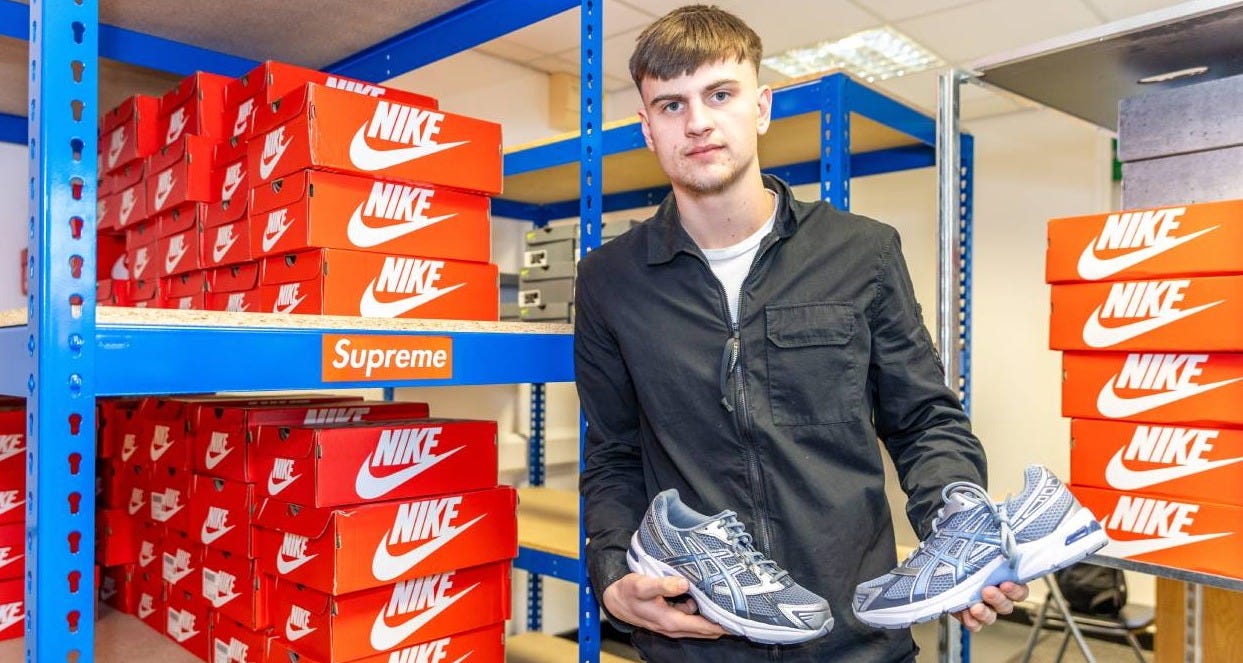
Elliott Usher was just 13 when he started trading in trainers from his home. He set up a business called The Sole Guyy in the North East BIC in Sunderland in 2023 - and things have gone from good to great.
Entrepreneur Elliott, now 18, has just recorded a third successive year of growth and moved to bigger premises at the BIC, supplying rare Nike and Asics models to retailers across the UK.
A cynic’s guide to consultation
By Arlen Pettitt
Last year I worked on a project with academics over in the North West who were exploring ways to make sure the voices of children and young people were heard in decision making about their health.
In the conversations around that, the concept of safe spaces and brave spaces came up.
The general idea was safe spaces allow young people to speak their mind, often when surrounded exclusively by peers, then brave spaces are where policymakers and others can hear from representatives coming from the safe space with the views of their group.
It’s an extra step in the usual consultation process, which typically consists of getting people in a room with weak coffee and some battered packets of biscuits and then talking at them for an hour.
I could immediately see how it would benefit policymakers to change how they engage with people, and to not only reach groups they don’t usually reach but also actually make sure those people can contribute effectively.
I’ve long been frustrated with the way in which we develop policy ideas, as I’ve spent far too many days of my life as a participant in various consultations, workshops and laughably one-sided ‘listening exercises’.
To the regular observer of politics, it can often feel as though there are no new policies, just old policies with new names, and I think there’s a reason for that.
The apparently universal approach to policy development goes as follows:
Think of a few ideas, either internally or speaking just to the external people you know really, really well
Pick your favourite ideas, ideally the ones where you already know how people are going to react (often this will mean ideas you’ve announced before)
Leak some of the newer ideas to see if it makes anyone angry; if it does, deny you were every considering them
Think of all the people you should have spoken to at the beginning but didn’t, and prioritise the ones who will get most irate if you don’t involve them
Set up some consultation events, where you can present and defend your idea, and invite those same people you already know about
Talk at them for an hour, so they can’t get their views across, then ask for feedback on post-it notes
Change absolutely nothing about your plan
I’m perhaps being slightly unfair but, nonetheless, genuine listening in policymaking appears to be in very short supply.
This failing is acutely present in the Government’s preparation of its Schools White Paper, which will set out reforms of the broken SEND system.
The paper has been delayed multiple times as the Government wrestles with the best approach to dealing with rising need and rising costs - an estimated extra £3 billion a year by 2029.
Very little is known about the detail of the reforms, other than a push towards greater inclusivity in mainstream schools - rather than a reliance on expensive special school places - and a suggestion that Education, Health and Care Plans (EHCPs) may be on the chopping block.
EHCPs are the legal documents which set out a pupil’s needs and what is required to meet them. The process to get one is lengthy and arduous, but for parents they represent formal recognition of the challenges your child is facing, and something to hold both school and local authority accountable to.
When the possibility of EHCPs being abolished was raised, there was an understandable strong reaction from parents and advocacy groups.
You’ll see at this stage we’re at Point Three on the list above, and Points Four, Five and Six swiftly followed in the form of a ‘national conversation’ led by Schools Standards Minister Georgia Gould.
Displaying a staggering lack of understanding of the lives of SEND parents, the first engagement events happened the same day the consultation was announced, with the only in-person event in the North East happening in Darlington on a Thursday lunchtime. The absence of flexibility would prevent most SEND parents from attending.
The alternative was online panel events, but these were themed and tightly controlled.
Asked in one of these online events about EHCPs and legal protections, Gould refused to answer, saying they would be setting out their proposals in the white paper.
Right. Good, we’ve arrived at Point Seven, via the Hellerian absurdity of a Catch-22 where a Government-hosted consultation event on the development of a white paper is unable to talk about the potential content of that white paper until it is published.
When the objective of policymakers entering a consultation process isn’t to listen and learn, but rather to emerge unscathed, the result is policy based on assumptions and blinkered information.
That means worse outcomes, missed opportunities, and - in the case of SEND reform - young people faced with continued trauma and wasted potential.
Arlen Pettitt
arlen@arlenpettitt.co.uk
Arlen is a parent of a child with special educational needs, and a writer and consultant. He is also the author of Wor Room: the North East Policy Newsletter and on February 5 he is hosting an event on SEND reform in Newcastle.
