


On the one hand the North East is attracting the kind of investment that could rewrite its economic story. On the other, we have the lowest healthy life expectancy of any English region, a quarter of our working-age population is economically inactive, and three in ten children are growing up in poverty.
Two sides, same coin, one region, writes Anni Hood in her column for The Source today. The Government is desperate for growth - but closing the health gap between the North and the rest of the country could generate an additional £18.4 billion a year. “That shows the shape of the problem,” she says. “And, more positively, the size of the prize.
“The North East has an unusually powerful mix of ingredients. It has capital arriving at a scale that is changing the energy and regional momentum. It has living affordability in sharp contrast to the South East. We have mayors with real devolved powers, universities producing research the world buys, and a charity sector that knows every street by name. Add that to space, abundant nature and a coastline the envy of the country.”
That amounts to what she calls the most exciting opportunity in the country. Her column ‘The money’s arriving. Are we ready?’ is at the end of today’s edition.
Six Sunderland teenagers are making a big noise in the music world and have just released a video to accompany their debut single. It features some iconic Wearside landmarks - and a cameo from three well-known faces from the business community (whose teenage years were several decades ago).
Plus, the North East’s first bookbank will open on Thursday - at a food bank in the west end of Newcastle. Collecting a book with a food parcel is feeding the mind and the body - a brilliant way to bring books and reading to those most in need.
Brian Aitken
Editor
‘Food for the soul’
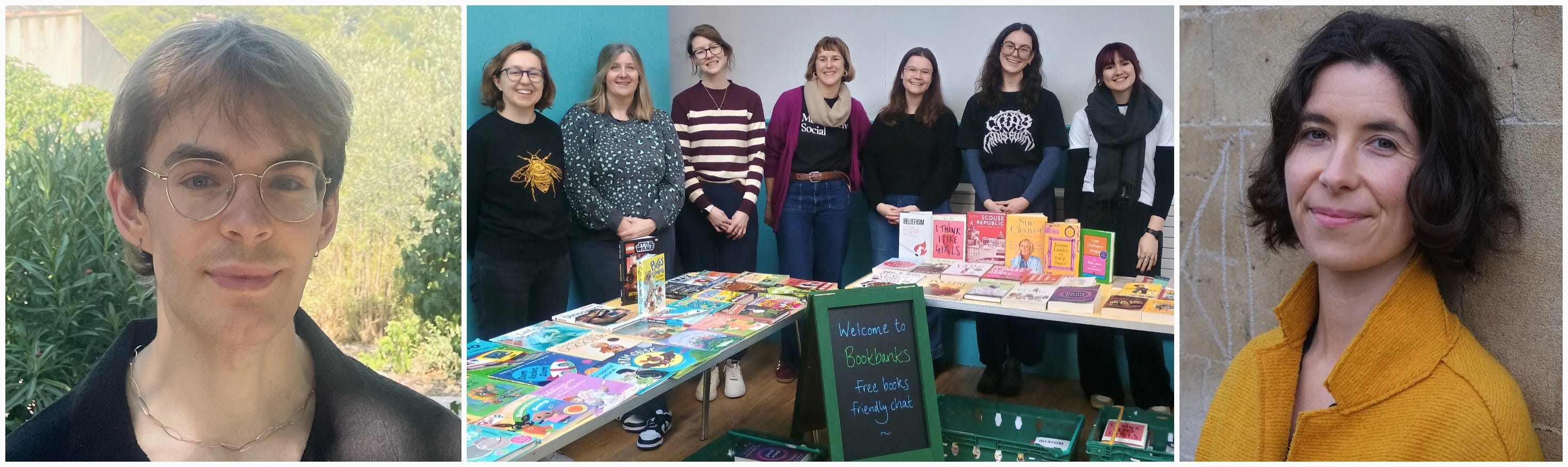
A charity which has already given away more than 25,000 books is bringing its mission to Newcastle, offering free reading material to people using the city’s food banks.
Bookbanks will launch its Newcastle service on Thursday at Newcastle Foodbank’s Venerable Bede Church site in the West End. The charity sets up pop-up book stalls inside food banks, offering everything from children’s stories and cookbooks to poetry and classics, with trained volunteers helping visitors find something they’ll enjoy.
Working alongside local organisation Borderline Books, Bookbanks Newcastle will operate every Thursday from 10am to noon. The charity’s North East lead Asa Beckett said: “We have a diverse, enthusiastic and very bookish team of volunteers raring to go. After visiting and working alongside food bank staff a couple times at the site, the food bank’s guests come from all walks of life, and the site receives such a multi-cultured and international collection of attendees.
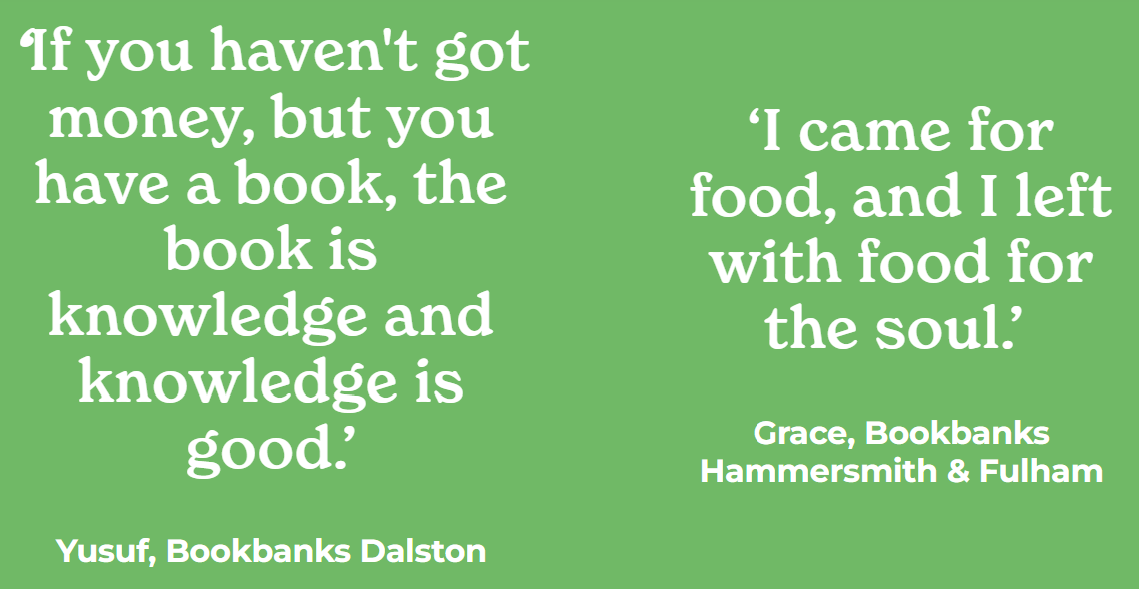
“I’ve really tried to represent this diversity in the books we have sourced, and I’m so excited to see our stall interact and engage so positively with the food bank community in the West End as other existing Bookbanks stalls have demonstrated.
“Bookbanks’ focus on providing new quality books means we want people to feel as though they’ve come away with a book they’re proud and excited to have in their home - a book they can cherish (or break the spine of!) themselves.
“I’ve already started reaching out to potential new partners in other locations in the North East - Sunderland, North Tyneside and Middlesbrough are all being particularly considered. We aim to open our second site in March, and will be recruiting our second team of volunteers throughout January and February.”
I wasn’t expecting that
I was expecting to see the Penshaw Monument, Roker Lighthouse, the Stadium of Light, Winter Gardens and a flashmob performance in Sunderland’s Keel Square. I wasn’t expecting to see former ITV Tyne Tees boss Graeme Thompson, entrepreneur Paul Callaghan and former Northumbrian Water executive John Mowbray popping up on a seafront park bench though.
The trio make a cameo appearance in the recently-released video for the first single by Sunderland group Northern Daughters. The six teenage members - Izzy Gettins, Lola Waite, Lola Cairns, Annette Ambang, Isabelle Dutton, and Molly Daymond - met at the city’s Inspire Stage School.
The song Open Arms is designed to spread a message of unity and belonging across Sunderland, and that is exactly what the video does too. Councillor Ciera Hudspith said: “Open Arms is a fantastic example of how culture and creativity can bring people together, create opportunities and celebrate the talent and spirit we have here in Sunderland.
“The song has become much more than a piece of music - it is a lasting legacy from BBC Radio 1’s Big Weekend, showing what can happen when local talent, schools and communities are given the chance to be part of something creative and ambitious. We were delighted to support the project through the UK Shared Prosperity Fund, helping to ensure that the excitement around the weekend created something meaningful and lasting for communities across the city.
Gemma Waite, Principal at Inspire Stage School and the manager of Northern Daughters, said: “We are immensely proud of everything the girls are achieving. They are six very different personalities, but they share such a strong friendship, an incredible work ethic and a genuine love of performing. When they step onto a stage together, their energy and connection are impossible to miss.
“To have created the music video in Sunderland, surrounded by so many local people, schools and organisations, makes it even more special. The reaction has been fantastic and we can’t wait for even more people to see it.”
A quick word

This year’s Fenwick Christmas window display is based on the Julie Donaldson book The Gruffalo’s Child. It will be seen from today. It was thought to be a done deal, but the takeover of Gateshead FC by US-based Flacks Group is in danger of collapsing because of the involvement of another company who had agreed to buy the club last March and have not confirmed their interest has ended. Members of Stockton Council’s Labour-run Cabinet will decide on Wednesday whether to go ahead with the £13m purchase of Billingham town centre. Cabinet member for resources and regeneration Paul Rowling said there were both risks and opportunities attached.
The money’s arriving. Are we ready?
By Anni Hood
The North East is attracting the kind of investment that could rewrite its economic story. The question not getting so many headlines is whether the people who live here are in a position to absorb the financial advantage. Answer that properly, and we stop being the national underdog and become the region everyone wants to copy.
The good news is also exciting news. Nissan has announced £170 million for its tenth Sunderland model in the plant’s fortieth year. SeAH’s £900 million Teesside monopile factory has begun production, Fujifilm opened a £400 million Billingham expansion this year, and JDR’s £130 million Cambois cable factory began operations in May. Alongside these commitments and completed facilities sits a substantial pipeline: the Blyth and Cobalt Park AI Growth Zone could attract up to £30 billion and more than 5,000 jobs, including Blackstone’s £10 billion commitment through QTS, while the Port of Tyne is proposing a £175 million Clean Energy Park. Confirmed investment and proposals are different stages of the story, but together they show global chequebooks open on the table. Whether those chequebooks stay open comes down, in no small part, to mobilising the region’s people and delivering a return they can share in.
Two sides, same coin, one region
Here is the other set of numbers, from the same region. The North East has had the lowest healthy life expectancy of any English region in every period of the ONS series beginning in 2011–13. A quarter of our working-age population is economically inactive, against roughly a fifth nationally; 2025 data shows that around a third of those inactive cited long-term ill health and three in ten children are growing up in poverty.
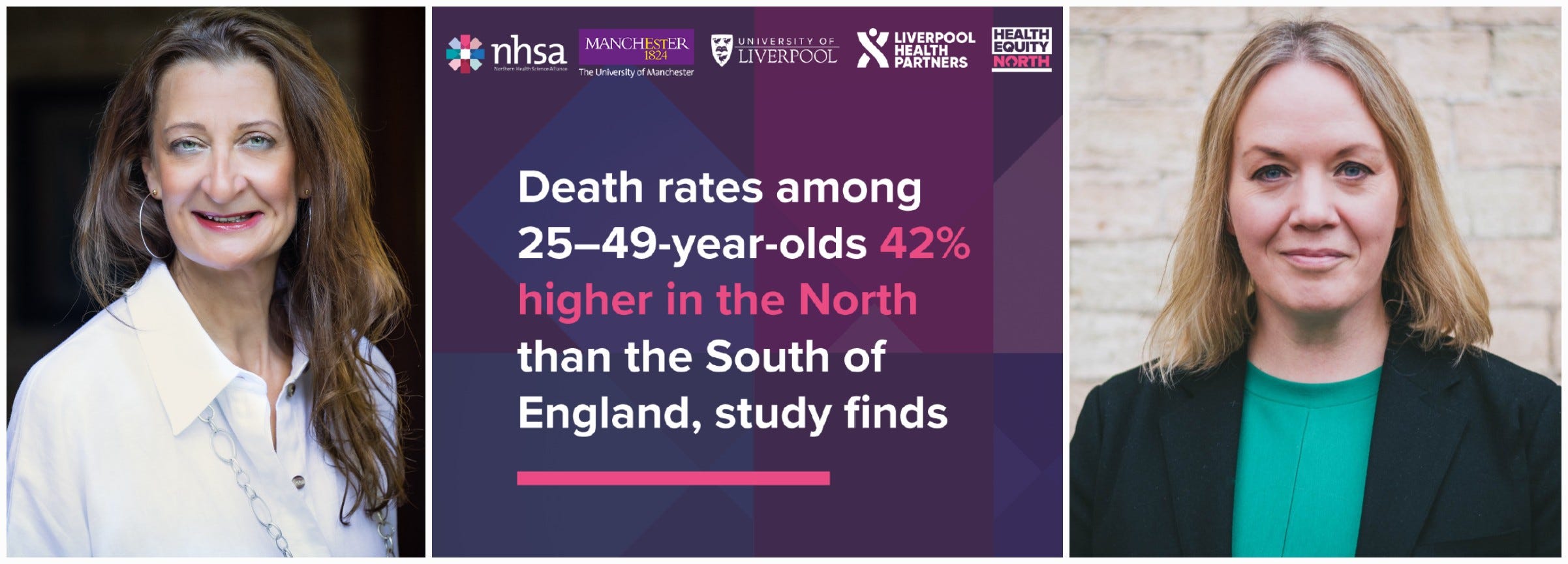
Some aspects are getting worse. Hannah Davies, Chief Executive of the Northern Health Science Alliance and Executive Director of Health Equity North, pointed me to their new research in The Lancet Public Health.
The study found that excess mortality among women aged 25–49 was 41% higher in northern than in southern England in 2024. In the 1980s, northern women in their late twenties and thirties had no excess mortality compared with the South. If you’re talking about productivity, that is a huge issue.
We report these things on different pages. The investment goes in the business section, the life expectancy in the health section. As if the people building the cars and the people in the health statistics live in different places. Quite often they live in the same house.
Health Equity North estimates that closing the health gap between the wider North and the rest of England could generate an additional £18.4 billion annually. Its analysis attributes 36% of the gap in GVA (Gross Value added – the economic value generated in an area, divided by the number of people living there) per head to poorer health in the North. That shows the shape of the problem and, more positively, the size of the prize.
The absorption gap
Anyone who has tried to wipe up a spill with a bone-dry kitchen sponge knows what happens. The sponge isn’t broken. It just hasn’t been primed.
Financial capital arrives. Absorption makes it stay and appreciate. It is the capacity of people, workplaces and public services to turn investment into something a family in Hartlepool, Gateshead or Ashington can actually feel: a job they are well enough to do, a school that is coping, a GP they can see and proactive support upstream of issues.
When absorption is low, money can land but run off to supply chains elsewhere and workforces that commute in and out. When it is high, more of the same pound can circulate, compound and stay. Hannah puts it simply:
“Bringing in the jobs helps massively… but giving people the health to be able to access their capacity is of very high value return for the region”
Where absorption actually happens
Absorption isn’t built in boardrooms. It is built at the grassroots of community. When I asked Hannah what she would fund if an investor handed her a cheque, she didn’t hesitate.
“Fund breakfast clubs, fund youth clubs, fund family hubs, women’s health hubs… we know communities in the third sector make a massive difference.”
We have the evidence. Sure Start centres, built around parents and particularly mothers, were later shown to improve children’s educational attainment, with benefits lasting to GCSE age and a grade higher on average, across the board . Many have since closed. So here’s a suggestion for the community commitments that arrive with big investment: invest in infrastructure behind the frontline work the evidence backs. That’s the money that primes the sponge.
Why this is the most exciting opportunity in the country
The North East has an unusually powerful mix of ingredients. It has capital arriving at a scale that is changing the energy and regional momentum. It has living affordability in sharp contrast to the South East. We have Mayors and combined authorities with real devolved powers, including the North East’s integrated funding settlement, universities producing research the world buys, and a charity sector that knows every street by name. Add that to space, abundant nature and a coastline the envy of the country.
“There is a huge amount of unrealised potential in the North East,” Hannah told me. She sees no reason why the region cannot grow as much as other parts of the country.
We also have the right size. The North East is small enough to measure with granularity and big enough to matter. If capacity-led growth can be proven anywhere, it can be proven here, and what we prove could become a national model.
What leading looks like
All of this needs tracking. What if every major investment in the region carried an absorption line next to its jobs line, built around five readings?
Local reach: how many new roles go to people living nearby, including people moving out of inactivity?
Capacity trajectory: what happens to health and work in host communities in the years after the ribbon is cut?
Public capacity: are local services growing alongside the investment or shrinking beneath it?
Grassroots reach: how much community money reaches the frontline work that the evidence backs?
Supply chain depth: how much of the spend stays in the region rather than leaving via the A1 South?
Capacity isn’t a soft issue. It is measurable, it moves, and it shows up in business and regional performance. When I ran a capacity protocol with Weir Insurance in Blyth, not only did participants feel better, they measured better. In the ten-person study, blood pressure improved in all ten, inflammation markers improved in seven and cholesterol diminished in six.
Hannah makes a point that often gets overlooked: many small businesses lack the resources to fund occupational health support themselves. Shared support through combined authorities and community organisations could help close that gap.
The local café cannot build its own capacity infrastructure, but it can plug into a shared, inclusive one.
It includes everyone
Absorption and citizen capacity isn’t something done to communities from somewhere on high. It means the global investor and the local café owner, the youth worker, the plant supervisor on nights and the woman who’s been out of work for three years with a back injury but wants to return. It also means the child Hannah describes: “If you are too hungry, if your mum is working too many jobs, so you can’t get to school on time, you’re not going to really realise that potential.”
The fork in the road
In its 2024 report, IPPR North projected that the healthy life expectancy gap between the wider North and the South East would endure until 2079-80 if the trends it analysed continued. Are you prepared to wait that long? Current trends are a choice, not a weather system.
Hannah is clear about our ability to change direction: “It’s policy decisions that saw that decline, and we can reverse that by better policy decisions because people in the North East of England want to achieve. They are ambitious and they are capable.”
The region goes one of two ways. Either it becomes the cautionary tale of record investment running straight off the worktop because the sponge is still dry, or it proves that capacity-led growth works, from the grassroots up, and hands the rest of the UK the playbook.
Anni Hood is a human systems and infrastructure architect. As founder of Well Intelligence, she provides consultancy insight and business modelling that deliver framework and protocols, via the AstralMandala welltech platform, for de-risking human capital.

Anni’s previous column for The Source looked at why the next phase of AI adoption is less a technology decision and more a human one. It was published in Sunderland, 10,000 jobs and the capacity equation on October 14.
And finally…

It was a rather unexpected headline. E-bike rental company Lime issued a warning that its bikes were “not for jousting” after footage was posted online of two riders dressed as knights charging at each other in a London park. “While we appreciate the medieval spirit, safety must always come first,” the company said.
The warning went unheeded. On Saturday, actor Cameron Carnegie-Brown, who jousts as Camtholomew the First, and artist Jack Carden met for a second duel in front of thousands of people with the match raising funds for five charities.
To manage the crowd, they released the event location two hours beforehand to those who had submitted an RSVP to the event, which was capped at 5,000 people.
Tommy Moore, a 28-year-old content creator who was involved in the event, said: “Horses are quite hard to source in London, so we thought we’d go for Lime bikes and bring it into the 21st Century.”