

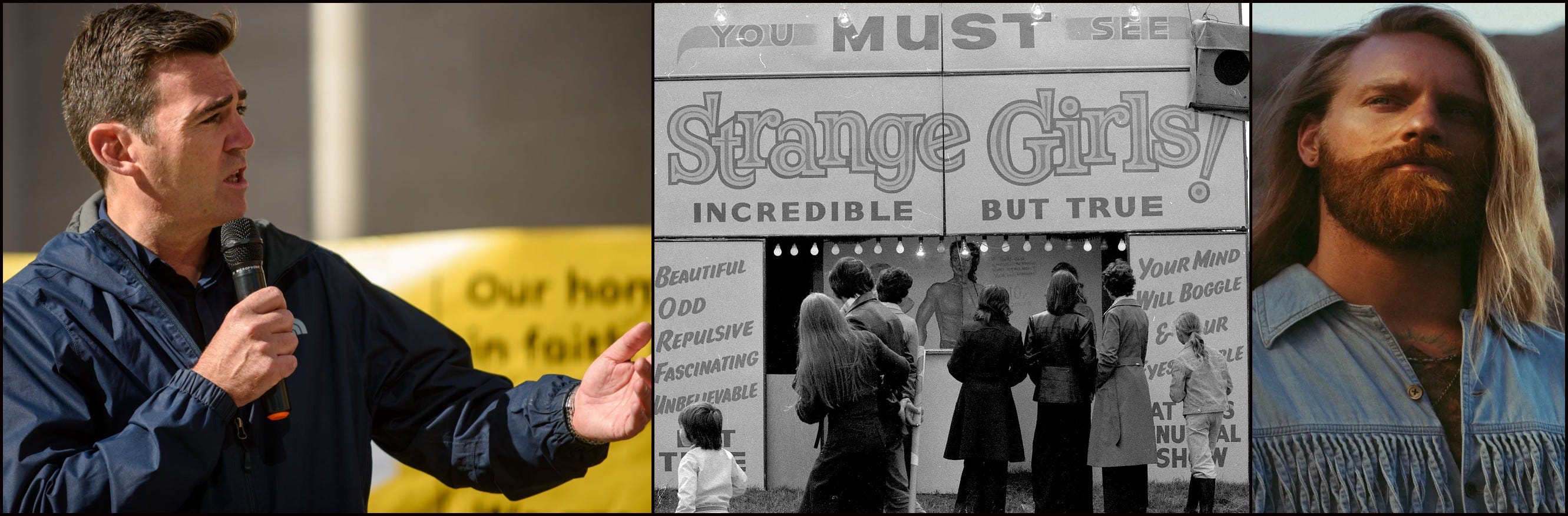
Where to begin? Possibly Sunderland where there was an interesting mix of logic and timing in the council chamber as the new Reform administration voted to repeal the 2019 climate emergency declaration - on the very day a rare Red Extreme Heat Warning came into force covering much of the country.
And the logic? Well, there can’t be a climate emergency, apparently, because polar bears aren’t extinct and the Maldives “hasn’t” sunk. Good indicators to watch out for.
There’s an update on John Dance and his “lavish lifestyle” with a bank making a voluntary payment of more that £31m to clients of his Newcastle-based wealth management company.
The new CEO of Northumberland National Park outlines his vision, and a new production of Jesus Christ Superstar is coming to Newcastle and Sunderland next year. Sam Ryder is playing the lead role - saving much time in the make-up room, I think.
‘Attack journalism’ is as old as the newspaper industry itself. Even in the 17th century, editors realised that sustained attacks on individuals were commercially successful, politically useful and remarkably effective at shaping public opinion.
Eventually the attack either exhausts itself or culminates in resignation, electoral defeat, public retreat or reputational collapse. By then another target has usually emerged.
With Sir Keir Starmer preparing to exit stage left, this is where Andy Burnham comes in, as journalist and author Bethany Usher writes in her column for us today. Dr Usher, Director of Education for the School of Arts and Culture at Newcastle University, knows her history and says we have just witnessed one of the most effective media-led political assassinations of modern times.
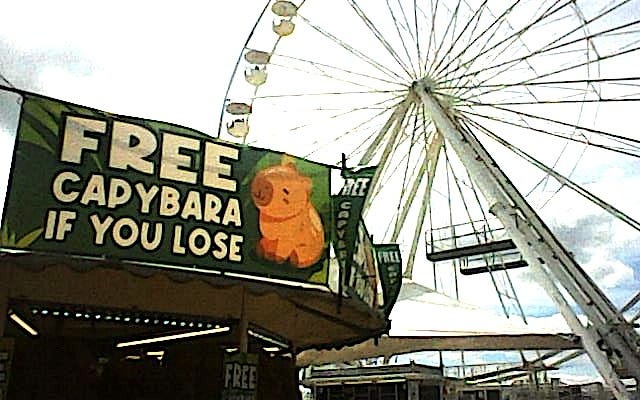
Meanwhile, the Hoppings are over for another year. I can’t remember the last time I was at a funfair but the prizes have changed a lot, judging by this pic that was sent to me by contributor Jack Arthurs who was at Newcastle’s Town Moor yesterday.
“The heady scent of candy floss, wet straw, toffee apples, diesel generator fumes, burgers and fried onions, and chips with industrial lashings of salt and vinegar.” Now, that’s more in keeping with my memories.
The words are from Tony Henderson. He and artist Peter Dixon end today’s edition with a great piece from our archives as they relive the Hoppings of yesteryear - when it was deemed a failure to go home without a coconut.
Hot topic
They say timing is everything. Sunderland’s new Reform administration has rescinded the council’s climate emergency declaration.
The decision was made at the full council meeting on Wednesday, the start of the record‑breaking June heatwave and the day a rare Red Extreme Heat Warning came into force covering much of England and Wales.
The motion to repeal the 2019 declaration was propopsed by Councillor Bill Blackett who told the meeting: “Polar bears are not extinct, their numbers are increasing. The Maldives hasn’t sunk. In short, there is no climate emergency.”
As mentioned in these columns previously, the council also voted to end its involvement in the nationwide City of Sanctuary scheme.
Bank pays £31m
Caceis UK will pay £31.7m to former clients of John Dance’s collapsed WealthTek empire after the Financial Conduct Authority found the bank failed to act on clear warnings about the Newcastle-based firm’s activities, leaving investors exposed to financial crime.
The voluntary payout adds to more than £56m already recovered as Dance awaits trial in September next year on fraud and money‑laundering charges, which he denies.
The FCA described the case as “one of the most serious and largest frauds we have ever investigated” and allege that Dance transferred more than £64m in client funds for his own use in pursuing a “lavish lifestyle” which included owning a string of racehorses and a nightclub.
Whyzat?
Talking of timing, England cricket captain Ben Stokes has announced he is retiring from Test cricket. He told team-mates yesterday morning just before going out to play the fourth day of the third and deciding Test match against New Zealand.
His decision was made public just before tea. He then re-entered the field to a standing ovation from the Trent Bridge crowd - and took a wicket with his very next bowl. It’s another ‘you couldn’t make it up’ story from Stokes - one of many he has created throughout his career.
There will be a lot more to come on the reasons behind his decision and the timing of it. As things stand, however, Durham fans will be seeing a lot more of the 35-year-old at the Riverside this summer.
Park vision
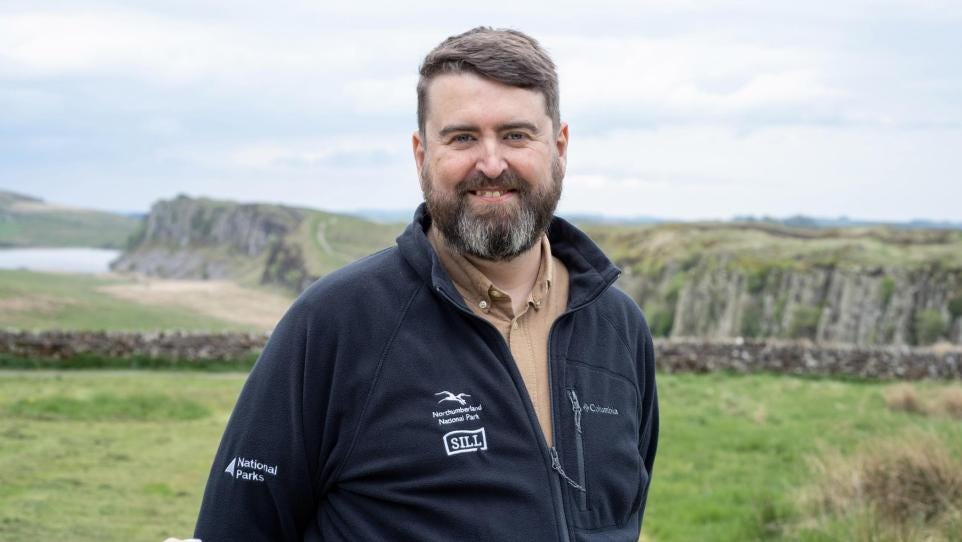
Just four people have run the Northumberland National Park Authority since it was formed 70 years ago - and one of them only took up the post last month.
Former Natural England regional director David Renwick is the man with the not inconsiderable task of taking over from Tony Gates.
“I was fortunate to spend some time with Tony,” said David in an interview in the Hexham Courant. “He fully understood and championed the role and value of national parks to society, something I’m keen to continue as we move forward into an exciting new chapter in the national park’s story.”
David’s vision for the authority involves an emphasis on greater access, collaborative working, and conservation impact beyond park boundaries.
A quick word
A new production of rock opera Jesus Christ Superstar is going on tour next year with Sam Ryder in the lead role - he already has the hair for the part. It will be at Newcastle Theatre Royal from March 16-27 and Sunderland Empire from September 14-18. Northumbrian Water has been named Water Company of the Year at the prestigious Water Industry Awards 2026 with judges recognising its strong performance for customers, the environment and innovation. Northumbria University has been named one of the 50 GREAT British Employers of Veterans 2026 - the definitive national ranking of Forces Friendly organisations in the UK. Schools North East director Chris Zarraga has criticised government plans to scrap the PE and Sport Premium for primary schools next year and introduce a new School Sport Partnerships Network. The Kirkharle Courtyard parkrun in Northumberland has had to be cancelled for the second week in a row. The reason? Migrating frogs. Plans for a six-storey four star hotel overlooking Durham’s cricket ground in Chester-le-Street have been approved. Financial pressures are behind Northumberland racehorse trainer Paul Robson’s decision to hand in his licence. He took over the Hazlerigg stables from Rose Dobbin in 2024 but is moving to take up a position with Nicky Richard’s yard in Penrith.
‘There’s nothing like it’

Claire Malcolm, founding chief executive of New Writing North, opened her remarks at a lively Northern Writers’ Awards celebration and showcase with an update on the proposed new centre for writing and publishing in Newcastle.
“We are about to buy the Old Post Office,” she said.
Seven years in the planning (although with several previous possible sites looked at), £10.7m had been raised and “a new generation of storytellers” would soon see the benefits of the proposed facility opposite St Nicholas’ Cathedral.
It would enable a scaling up of activity, creating new opportunities for young people and new creative jobs. “You’ll be able to grow up here, dream of becoming a writer or publisher and not have to leave the North East to do it.
“We’re creating something completely unique with a vision that is all our own,” said Claire, who started New Writing North 30 years ago with a room, a typewriter and virtually a blank sheet of paper. “There’s nothing like it in the world. We’ll take stories from the North to the world and bring the world’s stories back here.”
David Whetstone has the full story in Cultured. North East.
Now the attack moves to Burnham
By Bethany Usher
Keir Starmer is gone. Just two years after a landslide election victory, Britain has witnessed one of the most effective media-led political assassinations of modern times. The cannons of the press barely fell silent before turning towards their next target, Andy Burnham, now heir apparent for the top job.
There are many legitimate criticisms of Starmer’s government. Democracies depend upon rigorous scrutiny of those in power and incredulous own goals such as the Mandelson fiasco certainly raised questions about his judgement.
But there was also a sustained attack that shaped public opinion and in this, right-wing press and social media campaigns won the day.
Attack journalism’s power lies in accumulation. An individual’s visibility is rapidly increased while the range of acceptable interpretations of them are deliberately narrowed. Political disagreement becomes personal judgement, structural problems become character flaws, information becomes instruction and repetition becomes a weapon.
We’ve all witnessed a press attack against a celebrity or politician. Willingly or unwittingly, we may have joined in by clicking on content, comments and subtweets, shares and likes. In stat-driven newsrooms, popularity means that more of the same is produced and other publications follow suit. Algorithms now turbocharge attacks by pushing similar stories and content.
As a bombardment of similar narratives appear across multiple publications and platforms, they become seen as common sense rather than editorial construction. Descriptive adjectives are inseparable from the person’s actions: radical, weak, dangerous, bizarre, extremist, woke, elitist, ludicrous, shameful. Character overtakes conduct as television debates reinforce newspaper headlines, opinion columns echo broadcasters and on social media both real people and paid for political bots, largely hosted in Russia, amplify it all.
Eventually the attack either exhausts itself or culminates in resignation, electoral defeat, public retreat or reputational collapse. By then another target has usually emerged.
But none of this is new…
Attack journalism was baked into news at its seventeenth-century origins in newsbooks and pamphlets. Long before the tabloid press, broadcast and online news, newspapers discovered that sustained attacks on individuals were commercially successful, politically useful and remarkably effective at shaping public opinion. While technologies changed, its representational methods are consistent, making attack one of the longest sustained genres in British journalism itself.
The first example appeared during the English Civil War. Parliamentarian newsbooks rhetorically criminalised Charles I by borrowing the language of crime pamphlets and anti-Catholic propaganda. The King was transformed from divinely appointed monarch into the embodiment of tyranny, a murderer and a common criminal.
As newspapers and celebrity culture expanded during the 18th century, attack journalism acquired another enduring characteristic as gossip became linked to political and social comment.
This began when an anonymous politico named “Junius” collapsed the distinction between public conduct and private morality, arguing that the two were inseparable. Sexual indiscretions, drinking habits and rumour became evidence of corrupt and hypocritical character of aristocratic ruling elites.
By the end of the 18th century, newspapers increasingly attacked those who challenged established political, social and cultural norms by transforming structural debates into stories about individual morality and “othering” based on elements of class and gender.
Radical journalist Thomas Paine – whose work steered the American and French revolutions – was not simply criticised for his arguments but became the story. Newspapers dismissed him as “Mad Tom”, a “lunatic”, a “traitor”, “a public pest” from the “lower orders”. His working-class background became evidence of intellectual and moral inferiority.
Similarly, when Georgiana, Duchess of Devonshire – whose story was later immortalised in the Keira Knightley film The Duchess – became the first celebrity political campaigner, she was vilified because she was a woman daring to speak up in public. Newspapers quickly reduced her work to discussions of appearance and body, friendships, marriage, gambling and alleged sexual affairs.
By the 20th century these methods were a norm of reportage when a celebrity was perceived to threaten social orders. For example, when David Bowie’s challenged norms of masculinity and gender, newspapers fixated on his appearance, manhood and repeatedly described him as “bizarre”, “camp” and “dangerous”.
More recently, the attack on Meghan Markle reflected fears about modern, racially diverse Britain. Coverage repeatedly returned to nationality, motherhood, personality and even inferred gang associations. Stories about avocados, baby showers or holding a baby bump may appear trivial in isolation but collectively they created a persistent narrative of difference, entitlement and threat.
What comes next for Andy Burnham?
We don’t have to look far back into attack journalism’s long history to predict what happens next. Just over a decade ago, the press’ vicious attack on former Labour leader Ed Miliband provides a contemporary template and as he is a close political ally of Burnham, it is likely to take a similar form.
The attack on Miliband also rhymed with history. The charge was led by The Sun while the one against Thomas Paine, by Murdoch-owned stable-mate The Times. Separated by more than two centuries the rhetorical similarities are extraordinary.
Paine was dismissed as “Mad Tom” whereas Miliband became “Red Ed” who would “defile” number 10 with “socialist lunacy”. Both were “barmy” and wanted “class war”. Paine was “envious” of his “superiors” and Miliband’s programme was described as “the politics of envy”. Paine’s demands for working class rights were presented as a threat to the nation and Miliband’s ideas as a “horror story” that would bring about social and economic ruin. Both had their masculinity questioned, with newspapers joking about Paine’s breeches being found in the water closet and Miliband was repeatedly portrayed as a man who would never “wear the trousers”. His awkward smile, body language and even how he ate a bacon sandwich, all became shorthand for political inadequacy.
As the cannons now turn on Burnham, expect his political programme to be reduced to a single ideological label such as “red”, “hard left”, “radical” or “socialist”. Discussions of inequality will be portrayed as the politics of envy.
In the past week across news and opinion sections there are already more than a hundred negative stories about Burnham. The Express argue he should “terrify Britain”, has “already failed the UK” and “doesn’t know what a woman is”. The Daily Mail declare he is “plotting wealth tax raid” and like Miliband is a “net zero nut job”. He is advised by “quasi-Marxists” and “high tax fanatics” and, according to Nigel Farage in a new exclusive column, has orchestrated a “brazen” “coup” that is reminiscent of a “banana republic”.
The Telegraph declare that his eyelashes are the most “interesting thing about him” and consider debates as to whether “Bambi Burnham” who “the girls and the gays” will love, wears mascara. The Sun declare he is a man with “no plan” and consider the “chaotic life” of his wife who, shock horror, once appeared on ITV’s Blind Date with Cilla Black.
But in Miliband, Burnham also has an ally who understands how this works and, in the past, has proven himself unafraid of taking on the British press. As such, whom Burnham appointments as Secretary of State for Culture, Media and Sport is key.
British regulation has long recognised that persistent pursuit can amount to harassment. It is time to recognise that persistent personalised publication can also become a distinct form of media harm. IPSO and Ofcom remain largely designed to assess individual articles and broadcasts, yet attack journalism derives its influence from cumulative publication across newspapers, broadcasters, websites and social media. The regulatory framework should evolve to recognise that reality.
Nearly four centuries after newsbooks first turned political opponents into moral threats, the paper bullets are now digital, but the method endures. If we are serious about improving political debate, now is the time to confront one of journalism’s oldest and most damaging traditions.
Journalist and author Dr Bethany Usher is Director of Education for the School of Arts and Culture at Newcastle University
I asked, you said…

I posted the above in last Monday’s edition and was delighted to get the following response from Jon Radgick:
“Eyes and Ears provides something that I am not aware is available anywhere else. It is a succinct digest of local news covering all sectors delivered with a dash of your personal character and humour.
“Twice a week means I can take the time to read it whereas a daily email would end up getting deleted unread. I realise that considerable effort goes into creating it and that if I and others don’t subscribe it will not survive.
“I think the price of a pint or so once a month is well worth contributing in the hope that it is worth your while to continue the good work. Good luck to you.”
You can click here if you are minded to follow Jon’s lead…
Hopping back in time
In June 2024, TONY HENDERSON and artist Peter Dixon relived the days of The Hoppings on Newcastle’s Town Moor when it was deemed a failure to go home without a coconut.
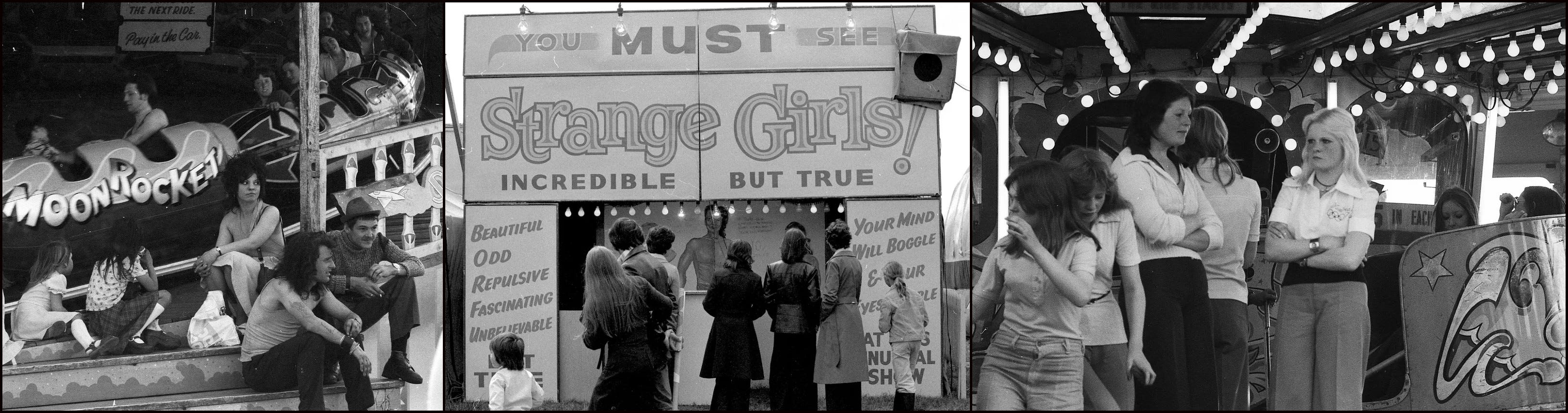
Ah, the heady scent of candy floss, wet straw, toffee apples, diesel generator fumes, burgers and fried onions, and chips with industrial lashings of salt and vinegar. This was the evocative smell of The Hoppings.
Devotees of the celebrated fair will recall the long avenue of sideshows, featuring delights such as the boxing booths, striptease, animal freaks, woman in a goldfish bowl, and the motorcycle Wall of Death.
There were the stalls where the objective was to lob a ping pong ball into a goldfish bowl, a feat never ever witnessed by a living person, or to hit a playing card fixed to a wooden board with a blunt dart which always slid to the floor.
The thrill of “anything off the bottom shelf” — usually chalk ornament tat — on the bingo where players covered their numbers with bottle tops, or fired lead slugs at metal men in the shooting gallery.
For those of limited means, there was always the challenge of rolling a penny to land in the middle of a square bearing the number of coins returned if successful, dispensed at lightning speed by the proprietor wearing a Trilby hat.
But the main mission was to win a coconut, at whatever the cost. Failure to do so called into question one’s manhood, a fact exploited by an enterprising chap who set up a table at the Moor exit point selling coconuts at a premium so that the coconut-less could avoid social shame.
There’s more memories in the link below.

Having read this, I shall be watching what comes next from the media about Andy Burnham. I only hope that he does his homework before he takes up the post of Prime Minister.
Jon's quote is just lush (and I agree wholeheartedly). Thanks as ever for a great (detailed) summary. I used to work for NBS in the Old Post Office (happy days) so I'm over the moon to see the new owners and hope they love it.
And shame on you Sunderland council.