

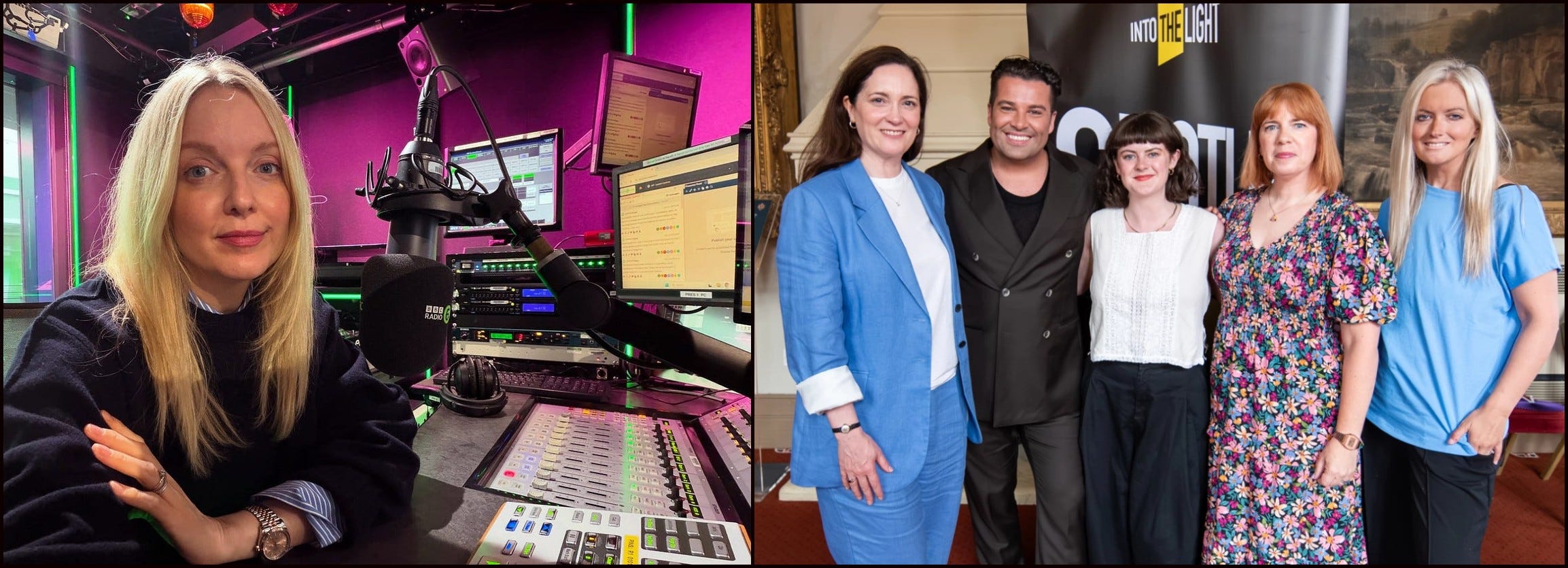
I’m losing count, but we get a new Prime Minister today. Maybe this one will last a bit longer.
Devolution is likely to be high on his agenda. No surprise there really considering Andy Burnham’s nine years as mayor of Greater Manchester.
But Britain is a highly-centralised state and it wasn’t that long ago that local authorities had financial authority and the power over police, criminal prosecutions, public transport, further education, water and sewerage.
Yes, really.
I doubt Burnham’s devolution revolution will go that far but it’s interesting times for the regions.
There’s also a geographical bubble that needs to be burst in Westminster, questions over the costs charged by the private care sector, drama at the Port of Tyne, and a resolve to keep fighting for the A1 to be dualled.
Brian Aitken
Editor
Care charge outcry
A senior council official has criticised the “morally reprehensible” sums being charged by the private care sector to look after vulnerable youngsters.
Northumberland councillors were told that there was a £4.5 million overspend of its budget for external residential care placements in 2025-26. The number of children in external care placements stood at 80 in March - six higher than the year before - with the average weekly cost of one placement increasing from £6,052 a week to £6,592.
Audrey Kingham, the council’s executive director of children, young people and education, said some companies were upping their bills at just a few hours’ notice. “It is really difficult for us to manage that private market and the cost base. There are some behaviours that are, in my mind, morally reprehensible in the charges they raise.”
Port drama
A man was taken to hospital after an incident at Port of Tyne yesterday afternoon. Northumbria Police said: “It was reported that, for reasons yet to be established, a ship had collided with a crane. Emergency services attended and a man was found to have sustained injuries not believed to be life-threatening.”
To the manner born
New Prime Minister Andy Burnham has made no secret of his desire for a Number 10 North. Research published by social mobility charity the Sutton Trust would suggest it is needed.
50% of civil service bosses, 52% of special advisers and 46% of the House of Lords were educated in London and the South East.
Just 17% of Lords and permanent secretaries were educated in the whole north of England.
A privately educated person in London and the South East is 24 times more likely to become a permanent secretary and 23 times more likely to become a Lord than a state school pupil in the north of England.
CEO Nick Harrison said: “We talk about the Westminster bubble. These figures suggest it’s not just a political bubble, but a geographical one too.”
Early priorities
Investment in grass cutting, potholes, bulky waste collection and youth services are the early priorities set out by the minority Lib Dem administration in Newcastle. Council leader Colin Ferguson said: “We’ve rolled up our sleeves and got on with the job. I want residents to be able to look out their windows and see a noticeable difference in communities.”
A1 case file
North East MPs urged the Government to rethink its decision on dualling the A1 during a debate in the House of Commons last week but transport minister Simon Lightwood repeated the view that the case was “a comparatively weak value-for-money proposition when assessed against competing investment priorities”.
Northumberland County Council leader Glen Sanderson told the Local Democracy Reporting Service that the response was “completely predictable and in no way does it slacken our resolve on the latest bid”.
“I think the resolve is absolutely as strong as it was and, to that end, we have taken on some extra resources within the council – even though it is not a council road – and we are putting together evidence, data, and statistics which will build into a file which we will give to National Highways in September.”
Costs soar
The cost of a coastal cycling corridor running from Blyth to Whitley Bay has increased from £9.7 million to £13.5 million. The North East Mayoral Strategic Authority Cabinet will be asked this week to agree a revised funding package for the scheme as part of an £18.6 million investment into walking and cycling routes.
The Cabinet will also be asked to award £4.5million to active travel upgrades in Sunderland, connecting St Peter’s Metro Station, the city centre and the Stadium of Light. A further £2.25million will also be allocated to safety measures outside 16 schools across Newcastle, North Tyneside, and South Tyneside.
A quick word
Around 200 people took part in a march through South Shields to the Town Hall on Saturday in protest at the prospect of South Tyneside Council closing 10 nurseries. A petition has attracted more than 5,000 signatures. Blyth Wildlife Rescue, which operates across Tyneside and Northumberland, has had to stop taking new admissions. Its facilities are full - but the charity is also warning that its funds are low. Darius Defoe, who recently announced his retirement after 22 seasons with the Newcastle Eagles, is to be granted the Honorary Freedom of the city in recognition of his achievements on and off the basketball court. A campaign is underway to save a mosaic mural which depicts County Durham’s history. The artwork sits on the side of the County Hall, which is being vacated ahead of its demolition next year. Former Newcastle Lib Dem councillor Thom Campion, who sexually assaulted a woman in his house in March 2023, has been given an 11-month prison sentence, suspended for a year. Residents of Newbiggin Hall are calling for the creation of a new country park in Newcastle as part of their campaign against plans for a new housing development - with fears that a new access road could cut through a popular green corridor. Councillors have paved the way for former Middlesbrough Mayor Dave Budd to be awarded the freedom of the borough.
Nature delivers for Northumberland
One of the North East’s greatest natural and heritage assets contributed £146 million in a year to the regional economy, according to the latest figures.
The new data shows strong growth in the value of tourism generated by Northumberland National Park and also highlights its importance for culture, heritage, nature and wellbeing.
Visitor numbers reached 1.79 million in 2025 - up 6.7% on the previous year and exceeding 2019 (pre-pandemic) levels for the first time - while generating £146 million. Tourism in the national park is now estimated to support 1,369 full-time equivalent jobs. Tony Henderson has more in Cultured. North East.
Lauren reveals rare disorder
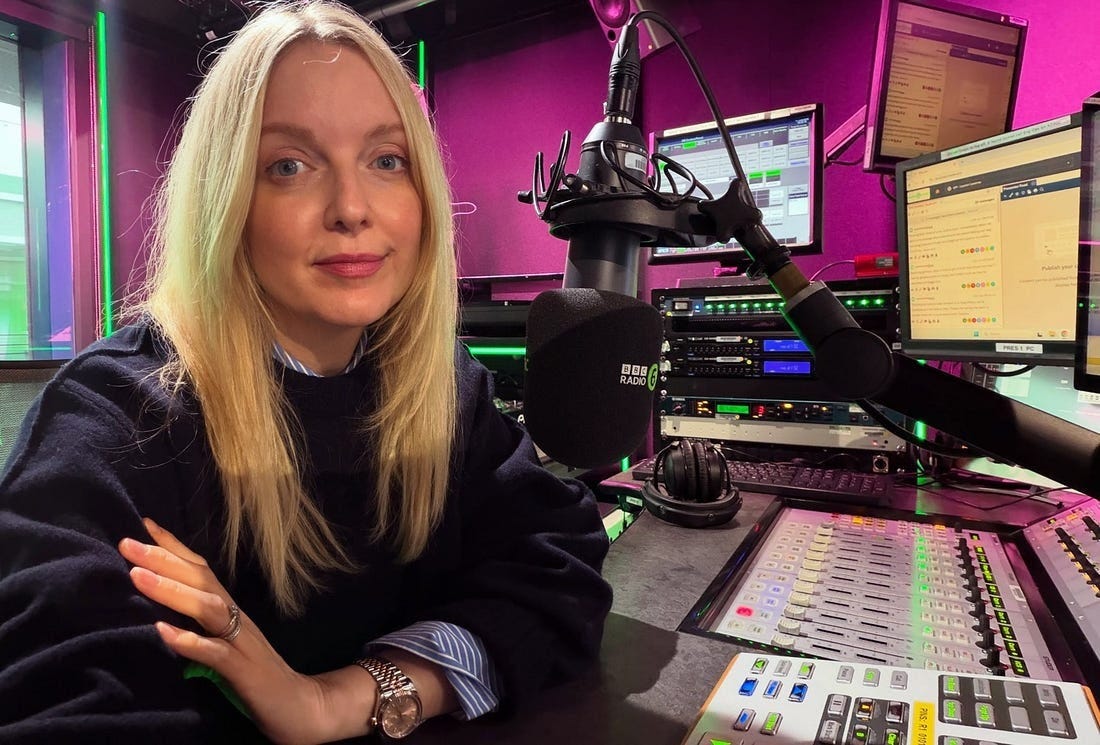
North East broadcaster and former Kenickie frontwoman Lauren Laverne has revealed she has been diagnosed with smouldering myeloma, a rare blood and bone marrow disorder.
The Sunderland-born presenter, 48, shared the news in an Instagram post on Friday, almost two years after announcing she had been diagnosed with cancer, from which she was later given the all-clear.
She expects to be back at Radio 6 in a couple of weeks and said: “It’s an asymptomatic blood and bone marrow disorder that in some people can develop into blood cancer. Thankfully for me the risk of this happening in my case is pretty low.”
Durham calling

A call has gone out around County Durham. It’s called Creative Call. And it sees the Into The Light partnership inviting institutions, businesses, educators, funders and decision-makers to support that call and help grow the county’s creative sector.
X-Factor winner Joe McElderry hosted a launch event at Durham Town Hall. He said: “Growing up in the North East and building a career in music and theatre, I know how much talent exists across our region. But talent also needs opportunity, encouragement and people willing to open doors. I was proud to host Creative Call’s launch; it is practical, positive and shaped by the people who know the county’s creative scene best.”
You may have missed…

And this…

Power to the people
Devolution seems to be working, in this part of the world at least. And Greater Manchester is often held up as the supreme example of how devolved powers can benefit local communities.
Today, Andy Burnham, a man who has held senior positions in Westminster but was mayor of Greater Manchester for the past nine years, becomes Prime Minister of this country.
He is an advocate of de-centralising powers. The devolution story is about to get very interesting.
Mayors and mayoral authorities are about to become even more important. But what about councils?
Britain is one of the most economically lopsided countries in the rich world. London powers about a quarter of all growth and accounts for more than a third of exports, despite having about 15% of the national population. By contrast Berlin generates 5% of economic output in Germany, where skilled jobs are spread between places like Frankfurt, Munich and Hamburg.
A big part of the problem, as highlighted by The Observer’s Daily Sensemaker column recently, is our highly centralised state. Only 6% of British tax revenues are collected by local government, compared to 14% in France, 24% in Spain and 32% in Germany.
This means British regions have to appeal to Whitehall for money. But civil servants, as we know to our cost, give priority to projects in the most productive areas - although recent changes to the Treasury’s Green Book will help in that respect.
It wasn’t always like this - and what comes next will sound pretty amazing for many of you.
There was a time, in living memory, when the police, criminal prosecutions, public transport, further education, water and sewerage were the responsibility of councils.
I am indebted to author Dan Jackson (@northumbriana) for Tweeting about a column written by former council chief executive Sir Rodney Brooke which was published in the Local Government Chronicle four years ago. It’s brilliant.
“It is difficult for today’s officers to imagine the importance local government once had,” he writes. “My half-century of involvement with local government coincided with its decline, as its powers dwindled and its financial autonomy was removed.”
Sir Rodney started working life as a young reporter in Yorkshire - but quickly realised that the town hall was the powerhouse.
“Council news filled the paper. The Labour group fed the stories which the Conservative administration wanted to keep quiet. In reprisal the local Tory magnate, Harry Hardy, bought the newspaper, closed it down and sold the title. Shortly afterwards a grateful country ennobled him as Sir Harry Hardy.”
Having moved into local government, Sir Rodney noticed a heirarchy.
“Top dogs were the county councils, which traced their ancestry back to the courts of quarter sessions in 1388.
“The grandeur of the clerks of the county councils surpassed imagination. The London train would be held for Sir Charles McGrath, one of my predecessors in the West Riding County Hall. On arrival in London he would send his card to the permanent secretary of the Local Government Ministry, announcing that Sir Charles was in residence at Claridge’s and would be pleased to receive the permanent secretary if he cared to call.
“The county clerks treated their urban counterparts with contempt. The town clerk of Sheffield wrote to Sir Bernard Kenyon, Sir Charles’s successor, saying ‘I must now discontinue this correspondence since I fear that I can no longer match you for calculated rudeness’. Sir Bernard concluded a meeting with the town clerks of Leeds, Bradford and Sheffield, with the words: ‘What a load of bloody fools: no wonder you finished up where you have’.”
The decline and fall of local government continued.
“My seven years as secretary of the Association of Metropolitan Authorities (AMA) saw local authorities’ powers and autonomy continue to erode as first Margaret Thatcher and then Tony Blair demonstrated their dislike of local government,” said Sir Rodney.
You get to a situation today where councils have to spend so much money on things they HAVE to pay for that it leaves them little or no room to do anything else.
In February 2024, I wrote about the difficult spending decisions councils were having to make (Time to stop blaming ‘the council’): “While we are focussing on the novelty of regional mayors, the destruction of a layer of local government that has served us well for almost 200 years gathers pace. The loss of our civic infrastructure is now impossible to ignore: libraries, museums, leisure facilities, playing fields, public toilets, community centres, parks, youth services and so much more. The civic glue that helped to give us a sense of community, belonging and pride are vanishing, with no obvious way back.”

We were warned
As it became clear that Sir Keir Starmer was going to have to hand back the keys to No.10, our columnist Dr Bethany Usher said we had just witnessed one of the most effective media-led political assassinations of modern times (Climate, strange girls and ‘attack journalism’ 29.07.26).
“As the cannons now turn on Andy Burnham, expect his political programme to be reduced to a single ideological label such as ‘red’, ‘hard left’, ‘radical’ or ‘socialist’,” wrote Dr Usher, Director of Education for the School of Arts and Culture at Newcastle University. “Discussions of inequality will be portrayed as the politics of envy.”
The journalist and author had already found more than 100 negative stories about Burnham:
“The Express argue he should ‘terrify Britain’, has ‘already failed the UK’ and ‘doesn’t know what a woman is’. The Daily Mail declare he is ‘plotting wealth tax raid’ and like Miliband is a ‘net zero nut job’. He is advised by ‘quasi-Marxists’ and ‘high tax fanatics’ and, according to Nigel Farage in a new exclusive column, has orchestrated a ‘brazen’ ‘coup’ that is reminiscent of a ‘banana republic’.
“The Telegraph declare that his eyelashes are the most ‘interesting thing about him’ and consider debates as to whether ‘Bambi Burnham’ who ‘the girls and the gays’ will love, ‘wears mascara’. The Sun claim he is a man with ‘no plan’ and consider the ‘chaotic life’ of his wife who, shock horror, once appeared on ITV’s Blind Date with Cilla Black.”
With Burnham set to become Prime Minister today, I scanned some headlines over the weekend to see how the attack journalism was coming along. Here’s a small selection:
The Express: Andy Burnham just made one major blunder - it reveals everything about him and Nigel Farage slams Andy Burnham’s first speech: ‘Utterly vacuous’.
The Telegraph: Welcome to Burnham’s world: a farrago of nonsense, revisionism and economic illiteracy and Burnham’s ‘unashamedly Labour’ push spells economic ruin.
The Sun: Soaring cringefest of Burnham’s rise to PM leaves me with two sickly feelings and Burnham taking UK back to the 70s might be fantasy for Labour but NIGHTMARE for us.
Daily Mail: Burnham’s New Order: Labour’s Messiah without a mandate dad dances before he begins moving into Downing Street where he will take Britain back to disastrous 1970s.

Tale of two headlines
The BBC inadverdently provides another example of attack journalism.
You may remember John Cleese’s 1985 advert for the BBC in which he asks a pub full of stars: ‘What has the BBC ever given us’? (It has featured in the Eyes & Ears ad break).
Now, over 40 years later, the BBC has revived the advert, this time fronted by Romesh Ranganathan. The comedian stars as a disgruntled licence fee payer grumbling in EastEnders’ Queen Vic pub to a host of household names including Chris Martin, Claudia Winkleman, David Jason and Greg James.
While the Guardian headline says ‘Romesh Ranganathan reboots corporation’s 1985 licence fee plea’ the Telegraph goes for ‘BBC uses highest-paid celebrities to demand licence fee’.
Demand?
Sad.