


We have a very personal piece from Bethany Usher this week - taking us back to her early teens when she was the victim of a senseless and severe beating.
Who owns a crime story, she asks. And what are the ethics of how we tell it? That is the question that stayed with her ever since.
Before that, there is the news that Newcastle University is taking a lead on devolution. A new institute has been created and former Bank of England chief economist Andy Haldane has been recruited.
The university is also in the headlines for making the youngest son of India’s richest man a professor of practice in sustainability. Anant Ambani is not short of a bob or two himself - and his dad runs oil and gas giant Reliance Industries
There’s the tale of two Middlesbroughs. The Turner Prize exhibition has opened - but there’s also the ongoing PR war for the minds of the town’s youngsters.
And a business leader has pledged to support The Source and explained why others should follow his lead.
He is getting no arguments from me.
Brian Aitken
Editor
Taking a lead on devolution

The North East is taking centre stage in the devolution agenda with Newcastle University creating an Institute of Devolution and announcing former Bank of England chief economist Andy Haldane as its first Professorial Fellow.
The pioneering institute will bring together researchers, policymakers, business leaders and civic partners from across the UK and beyond to explore how devolved power can drive economic growth, improve public services and strengthen communities.
Haldane, the president of the British Chambers of Commerce, said: “The UK’s economic future will increasingly be shaped by the success of its cities, regions and communities. As someone born and raised in the North East, I have seen first-hand the transformative power of regional leadership, regional innovation and regional ambition.”
Professor Jane Robinson, pro-vice-chancellor for business, partnerships and place at Newcastle University said: “Devolution presents one of the most important policy opportunities of our generation. Our ambition is for Newcastle University to become the leading global voice on devolution, supporting governments, civic leaders and communities to turn devolved powers into tangible benefits for the places they serve.”
Dr Henry Kippin, chief executive of the North East Mayoral Strategic Authority said: “The devolution agenda is here to stay – and it is vital that the future is shaped by ideas, expertise and engagement from a diverse range of places and institutions. I am delighted that Newcastle University have stepped up to the plate on this, and I am looking forward to working closely with Andy and the team as we drive forward plans for growth and reform here in the North East.”
A tale of two Boros
It was a big weekend for Middlesbrough with the high profile Turner Prize exhibition opening at MIMA. It was also the start of the well-established Middlebrough Art Week (ends October 3) with artists exhibiting and performing in various venues.
Running alongside the Turner Prize exhibition, and further highlighting the area’s vibrant arts scene, is the Turner on Tees programme which embraces the most prominent exhibition spaces.
Supported by Arts Council England, MIMA and Teesside University, it is part of a strategy called The Next Wave: Creativity Rising aimed at building and sustaining culture, confidence and creative ambition across the Tees Valley.
David Whetstone has done a brilliant job, as usual, in covering all of this in Cultured. North East.
Then there’s this…

“When you walk through the quiet residential streets of eastern Middlesbrough, only the occasional detritus of smashed glass and a few boarded-up windows give away the signs of unrest,” the article in The Telegraph begins.
Detritus. I’d be amazed if the words ‘Middlesbrough’ and ‘detritus’ had ever featured in the same sentence before.
What follows, thankfully, is a detailed, balanced and insightful article. It covers crime stats, deprivation, poverty figures, school absences, the number of people on universal credit, unemployment and crime rates.
Interviewees include former mayor Andy Preston, current mayor Chris Cooke, Professor Simon Winlow of Northumbria University, and Laura Bush, from the charity Youth Focus: North East.
She recently brought in people to talk to children as young as 10 about the pitfalls of gambling and addiction. “It’s early intervention. That’s what youth work is,” she said. “Young people, they live in this world. They see things at home, in the communities. They will see drug dealing down the street. It’s just normal around here now.
“If they want to go down that route, we can never stop them. We just try to give them as much information as possible and say don’t, because it’s obviously very dangerous.”
Convincing them of the virtues of work therefore becomes a PR war against local drug gangs looking to recruit. “You get more money dealing drugs than you would doing an apprenticeship,” she said. “If they need to help mum and dad, or they have siblings, or they want those new trainers, whatever it might be, it’s quick money, and the gangs know that.”
Pledging support for The Source
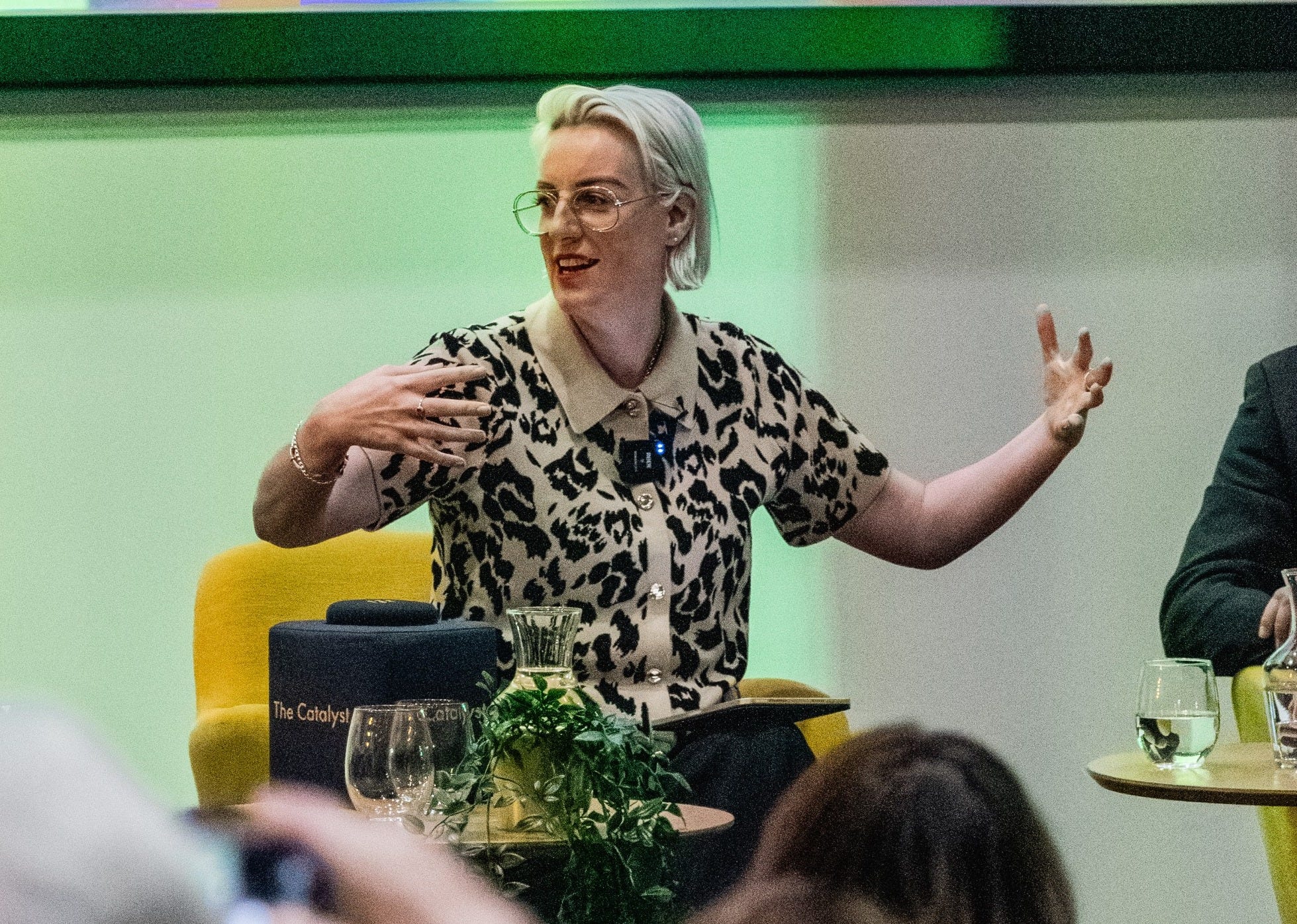
It’s been just under two weeks since we launched The Source as the new home of Eyes & Ears. Anyone who was at the launch event in The Catalyst in Newcastle will have heard Ian McElroy, chief executive of Tier One Capital, voice his support.
Taking part in a Q&A with Steph McGovern, he pledged £5,000 to The Source - and urged other businesses to follow his lead. “There is a clear need for a new approach to quality journalism and for reasoned debate in the region and that’s why I feel The Source is the right platform at the right time,” he said.
“We need more trusted, independent voices that can celebrate the positivity underpinning our proud region right now and more media organisations that can hold key figures to account.
“The editorial team behind The Source is well connected, experienced and passionate about delivering unbiased journalism and sparking the conversations that will keep us moving forward.
“I am pledging £5,000 to support their work and I would like to see other businesses across the region do the same. A strong voice for the North East can only benefit the North East.”
We want individuals to get involved as well. The most sustainable way to help us is to upgrade to being a paying subscriber - it’s £6.99 a month and you can do that here:
A Crowdfunder campaign has also been launched to help raise the £35,000 required to employ a reporter specialising in public-benefit journalism:
www.crowdfunder.co.uk/p/thesource
Steph McGovern, who hosts The Rest is Money podcast with Robert Peston, is investing in The Source. She said: “As a journalist and proud North Eastern lass, I crave local news that isn’t just clickbait drama. What Brian offers is a smart, insightful and impartial analysis of the news that matters to the people here.”
Honour sparks controversy
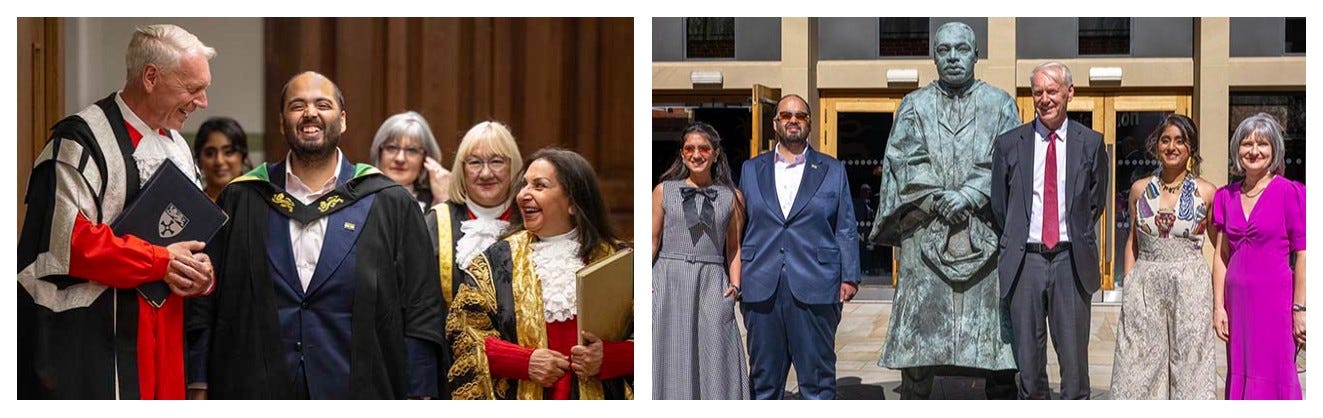
The month-long celebration of his wedding two years ago cost at least $600m. Performers included Justin Bieber, Rihanna and Katy Perry. The family chartered a $120m cruise for 800 guests including Kim Kardashian, Jeff Bezos, Mark Zuckenberg, Tony Blair and Boris Johnson.
It’s fair to say Anant Ambani, the youngest son of India’s richest man, does not do things by halves. Father Mukesh runs oil and gas giant Reliance Industries. Anant leads on the renewable energy side of the business and founded Vantara, a 3,500-acre wildlife rescue and conservation centre in Gujarat which has more than 150,000 animals including 200 lions, 250 leopards and 900 crocodiles.
And he has also been made a Professor of Practice in Sustainability by Newcastle University. Speaking at a ceremony in the university’s historic King’s Hall, he said: “As humanity confronts a different set of global challenges, I believe conservation and sustainability must become the next great movement - one that transcends nations, generations and differences.
“It is in that spirit that I accept this honour - not simply as a recognition of past work, but as a responsibility to do more: to help build a future in which people and nature thrive together, on the one planet we all call home.”

The university’s announcement was met with incredulity and derision from academic staff and Indian and international conservationists and environmentalists, according to The Guardian.
“I must say that it is a rather mystifying choice,” Ramachandra Guha, a leading Indian public intellectual and the author of the book Speaking With Nature: The Origins of Indian Environmentalism, told the newspaper.
“As a scholar of Indian and global environmentalism, I can name at least 50 – perhaps 100 – individuals who are far better qualified to be thus honoured.
“I wonder on whose advice Newcastle University has acted, and whether it did due diligence on what has and has not been done in these fields. Its appointment of Mr Ambani is puzzling in the extreme, and is likely to adversely affect the university’s institutional credibility and intellectual standing.”
A Newcastle University spokesperson said: “The award of a professorship of practice recognises Mr Ambani’s contributions to conservation, biodiversity protection, animal welfare and environmental stewardship through his work with Vantara, a wildlife rescue and conservation initiative, and as the executive lead for the Reliance Group’s transition toward a green energy future.”
A quick word
Scientists and doctors at Newcastle are among the first in the UK to use a pioneering brain tumour test with the potential to speed up a diagnosis for patients from weeks to hours. The test has the potential to improve diagnosis and treatment for thousands of patients with brain tumours which can be aggressive and challenging to treat. A Durham police officer has appeared in court on two charges of sexual communication with a child. The 31-year-old was released on condition bail and will next appear at Newton Aycliffe Magistrates’ Court on October 1. A marine rescuer said more investigations were needed after a porbeagle shark was found dead on a beach close to where six pilot whales died after becoming stranded near Amble last week. Newcastle has been named Airport of the Year at the Aviation Industry Awards UK. Voted for by a panel of industry experts, the airport was recognised for its award-winning customer service, significant network growth, infrastructure developments and sector-leading sustainability achievements. Comedian Alan Carr’s renovation of his £3.25m Ayrton Castle in Berwickshire could come to a halt - because of roosting bats.
Yes, the doors are open
I must admit that I thought it had happened months ago, but the official opening of Redhills Durham Miners Hall as a centre for culture, education, events and community activity took place on Thursday following its £14m restoration.
Victoria Hughes from the Joseph Rowntree Foundation took to LinkedIn to say: “Being a trustee here may well be the greatest honour of my life. As the Durham Miners’ Association Brass Band played, I thought of my grandad, a County Durham miner who would have loved to have been there. He’d have been first on his feet for the standing ovation they so richly deserved.
“And my god, last night made every trustee meeting about surveys and ground source heat pumps worth it.”
We sent David Whetstone to take a look at Redhills and speak to chief executive Andrew McIntyre last August. It’s well worth a read.

When crime becomes content, who gets to tell the story?
By Dr Bethany Usher
When I was 13, I was the victim of violent crime.
I was kicked unconscious by a gang of girls, not that much older than me, whom I had never met before. It was brutal and stopped only when passing good samaritans pulled over, got out of their car and dragged them off me. While an age-old story of simply being in the wrong place at the wrong time, it left physical and psychological injuries that, more than 30 years later, still impact my life.
They were convicted and punished. But one went on to commit further violent crimes as an adult and became the subject of stories in the Sunderland Echo, where, in a strange twist of fate, I had previously been a crime reporter. For both of us, it seems, that moment of madness set us on paths that would frame the rest of our lives.
For me, it meant becoming determined to be a journalist. I wanted to give voice to victims and there were times I feel I did that well. I’ve stayed in touch for many years with some families who lost loved ones to violence.
There were also times when I got it wrong.
When I reached the national press in my mid-20s, I became too caught up in the pressure to perform, meet deadlines and beat rivals to exclusive lines. When the realisation hit that for too many – although by no means all – of my colleagues, human suffering could become little more than fodder for copy, I quit.
It was tough to let go of a job that had been not just a teenage ambition but also, I realise now, my way of coming to terms with what had happened to me.
Those experiences eventually led to my last book, Journalism and Crime, which tried to make sense of why we tell crime stories as we do. I tracked crime reporting back to the first true crime pamphlets of Tudor England and traced some of its more troubling practices right through to the present day.
Now, the landscape of crime news and media has changed in ways none of us could have imagined. Trauma is clickbait, speculation travels further and faster than fact, and victims’ names, photographs and stories are endlessly recycled.
AI is taking us into even more difficult ethical territory. It is even used to animate the images and voices of people who have been brutally killed, making it appear that they are telling their own stories from beyond the grave. It blurs our sense of what is real and risks desensitising audiences in new ways.
But while the technology is new, at the heart of it is a very old question: Who owns a crime story? And what are the ethics of how we tell it?
It is this question – burned into my brain since I became a victim myself – that led to Newcastle University’s Civic Journalism Lab project to develop a new Code of Conduct and practical guidance for both those who create journalistic crime content and the victims who become the subjects of it.
Developed with victims, crime journalists, producers and creators, the Code is now in its final development stages and will launch early next year. Civic Journalism Lab has also developed guidance and support for victims who are encountering the media.
Through this work, we have worked with some incredible journalists and creators. They educate audiences, challenge official accounts, help victims and families find answers and, importantly, care enormously about the people whose stories they tell. Some of them will be at True Crime Forum in Newcastle on Saturday, October 10, where I will also be speaking.
The Code isn’t about policing true crime or telling creators what they are allowed to say. It is about giving people practical tools to make better decisions and creating a community in which journalists and creators can ask for help when the ethical answer isn’t obvious.
But steering professional practice is only part of how we can effect change. You can help too.
As audiences, we have real power. We click, share and speculate. We join online communities. We reward certain kinds of storytelling with our attention. Sometimes we may forget that the person we are discussing online can read every word. What you click on matters because if we choose the ethical content, more of it will be made.
Those journalists, organisations and creators who sign up to the Code will be able to display a mark that helps audiences quickly identify content produced in accordance with its ethical principles.
And new publications such as The Source – which has put ethical journalism and storytelling at the forefront of its development – have an important part to play. Crime news may not be at the centre of its editorial mission, but when crime stories shape our region, The Source will ensure that discussion of them is ethical and responsible and ask questions about the wider social issues that may have played a part.
More than 30 years after becoming a victim of crime, I have experienced crime storytelling from all sides. What I’ve learned is that, at the heart of my work, there is still the vulnerability of that battered and bruised 13-year-old girl. It still drives me to want victims to have a voice and feel heard. Now, that means finding ways for their stories to be told with them, rather than simply about them.
In the end, we all must remember that before there was a headline, a documentary, a drama re-enactment, a podcast or a TikTok post, something awful happened to a real person. That person matters. And our choices can impact them.
Dr Bethany Usher, Director of Education at Newcastle University, will be speaking at True Crime Forum at the Maldron Hotel on Saturday, October 10. Use code USHER for 10% off tickets. Book at: https://www.truecrimeforum.co.uk/
Headline support
Multi-millionaire entrepreneur Dale Vince is injecting funding into a trio of London newspapers - Camden New Journal, Islington Tribune and Westminster Extra - nearly two years after he failed in a bid to buy The Observer. “Regional newspapers are the bedrock of our democracy,” he told Sky News.
Do any of you know Mr Vince by any chance? I’d really like to meet him - or any other benefactor with a serious interest in supporting public benefit journalism.
I’m easy to get hold of!