

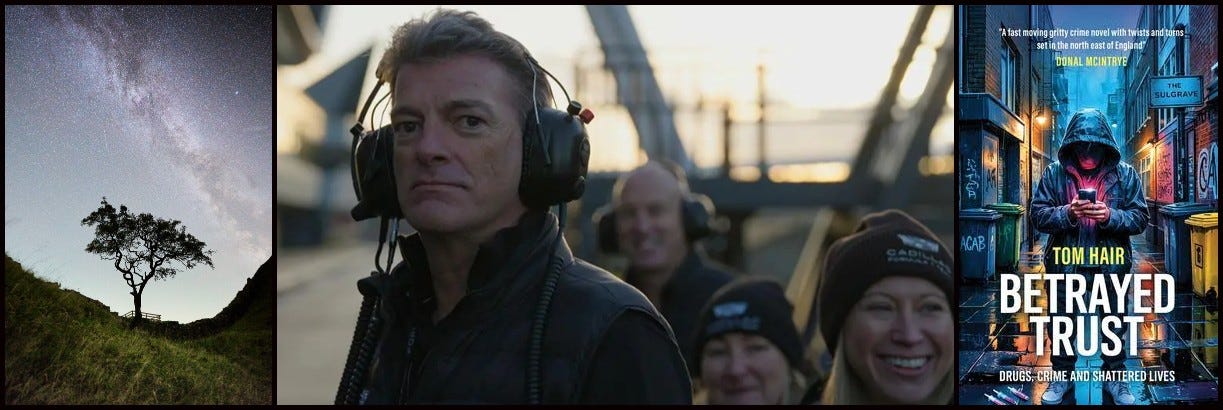
Today’s main story concerns a man who has had to reinvent himself and has written a novel which has been picked up by an ambitious Wearside production company. Stand by your TV sets!
There’s also the continuing story around Horden. A couple of weeks ago a travel blogger likened the former Durham pit village to places he had seen in Third World countries. The Eyes & Ears publicity has brought two people together who are well placed to change the narrative (now I know what Cilla felt like on Blind Date!).
The Formula One season is about to get underway and there’s a new team on the starting grid - with a Geordie in the driving seat (not literally).
And a scenic coastal village is revisited eight years after a ban was put in place on any new builds being used as second homes or holiday lets.
Match making
Victoria Hughes from the Joseph Rowntree Foundation put up a spirited defence of Horden last Sunday (Health, wealth and muscle memory) after the former pit village had received a couple of inglorious mentions in these columns.
“Horden was once a powerhouse of industry and civic life. That history of communities creating their own infrastructure is part of the village’s DNA,” she said. “What if we focused on how to re‑engage that muscle memory, rather than kicking places when they’re already down?
“I’d love to see more coverage that sits with that complexity: acknowledging what’s been done to Horden, but also with some positive, propositional pieces about what’s needed, what people here are doing for themselves and what could be unlocked if they were backed for the long term with an economic system which is regenerative, rather than extractive and exploitative.”
Our coverage and my posts on LinkedIn attracted the attention of Mark Stamper, the head of inclusive economic development and partnerships at Durham County Council who added a comment on my post with a message to Victoria: “Would be good to have a chat about how we can collaborate in east Durham and the wider county.”
My work here is done (not really, but I’ve always wanted to say that).

Unfinished business

Prime Minister Keir Starmer made a much-publicised visit to Walbottle Academy in Newcastle on Thursday, but that wasn’t the end of his time in the city. He went on to visit the North East Chamber of Commerce offices for an informal reception with business leaders and employers.
The small gathering included a range of sectors and sizes from advanced manufacturing and energy to professional services, culture, health, digital education and the third sector.
Chamber chief executive John McCabe said: “Honest and constructive dialogue between Government and business is essential if we are to unlock the full potential of the North East economy, and we are pleased to have hosted this important conversation.”
Matters of principal

The new Formula One season starts in Melbourne next Sunday. There will be one more team on the grid this year with Cadillac joining the ranks - led by Geordie Graeme Lowdon.
Graeme, who co-founded Nomad Digital in Newcastle in 2002, is team principal, a role he describes as ‘chief worrier’. “There’s a huge amount involved in building a team from scratch and it’s a huge task.”
Nomad Digital installed wi-fi on Virgin Trains and it was through this work that Graeme met Sir Richard Branson, going on to become chief executive officer for Virgin Racing.
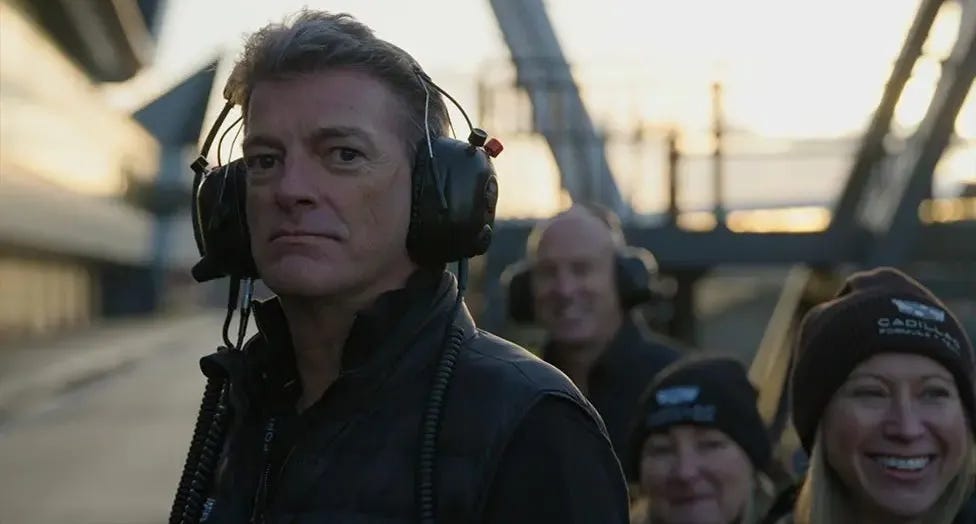
Speaking to the BBC on a rare visit home to the Tyne Valley, Graeme stressed just how big a team sport F1 is.
“When people tune in and see the first Grand Prix in Melbourne, you see the two cars, you see the two drivers. This is sport and every sport has to have heroes and the drivers are, quite rightly, the heroes but behind that sits an enormous team of people.” An estimated 1,000 people, in fact!
You are the judges
A long shortlist of 26 photographs has been selected in a picture competition to mark the 70th anniversary of Northumberland National Park. You, the public, are now being invited to choose the overall winner.
With no professional equipment required, entrants were encouraged to submit images taken on cameras or phones and reflect their personal connection to the national park’s outstanding 400 square miles of natural, cultural, and historical beauty.
A total of 247 entries were received. These have now been distilled into a shortlist of 26 images across the award’s two themes: People and Place.
The category winners will be selected by Northumberland National Park partners, North East Community Foundation and Tarmac, but the People’s Choice category is in the hands of voters, with the winner named as Northumberland National Park Photographer of the Year 2026.
The online vote closes on March 8. You can see all the shortlisted photographs and make your vote by clicking here. They will all be displayed in an exhibition at The Sill which will open at the end of the month. Here are just three of the outstanding images:

In the shadow of Sycamore Gap by Julie Smith:
There is a gnarly little tree that has stood just to the north of Hadrian’s Wall, in the shadow of Sycamore Gap. If you position yourself at the right angle then you can capture it silhouetted within the glacial nick. The fencing that surrounds the stump can be seen in the shot, and the angle this is taken at makes it look like the tree is rising from where the majestic sycamore once stood. The Milky Way is clearly visible above the tree showing off the pristine dark skies of the Northumberland National Park.
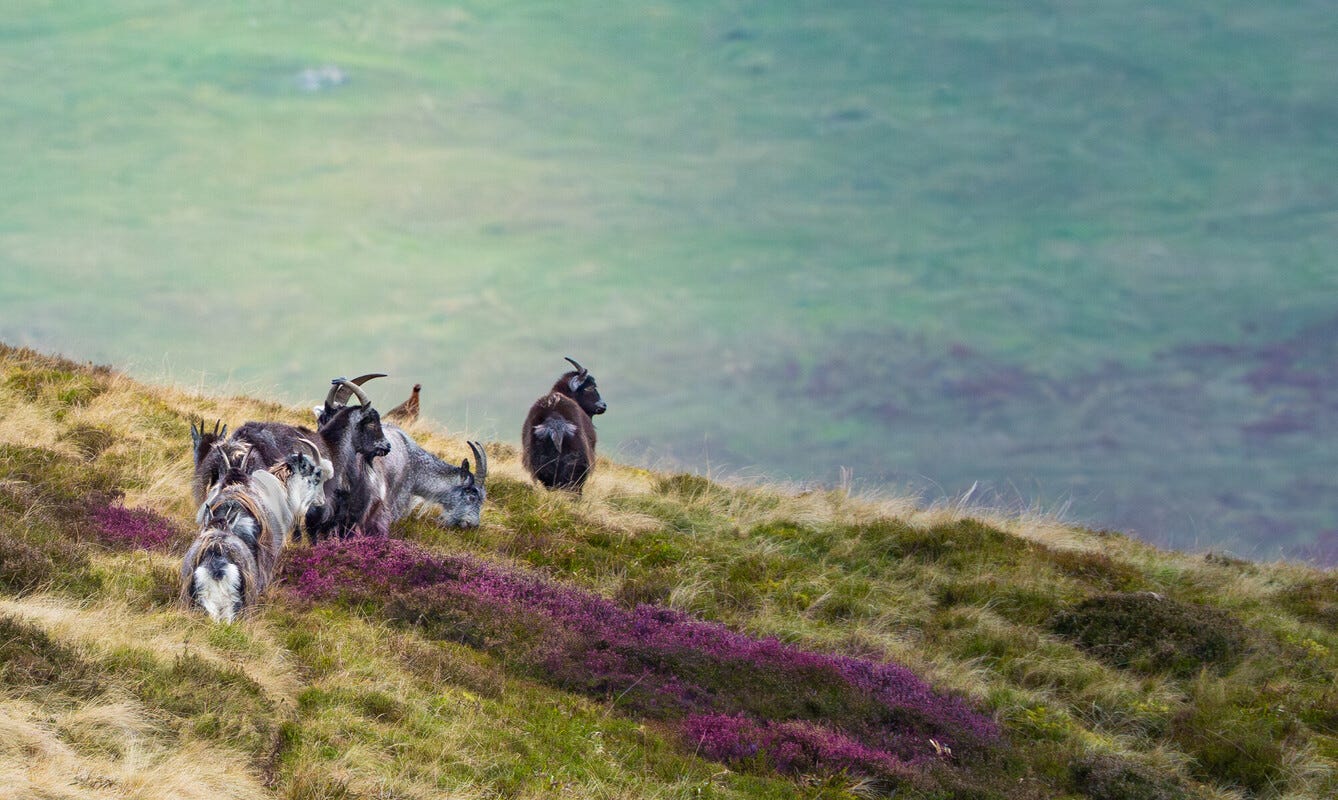
Residents of Wester Tor by Luke Donockley:
This photo shows a herd of wild goats on Wester Tor near Yeavering Bell. They're quite elusive animals, and roam freely around the slopes in this part of the Cheviots, so finding them to take photos was a challenge. I took this photo when there was a momentary break in the snow that had been falling, and the sun briefly lit them up. They're an iconic part of Northumberland National Park and deserve their moment in the spotlight.
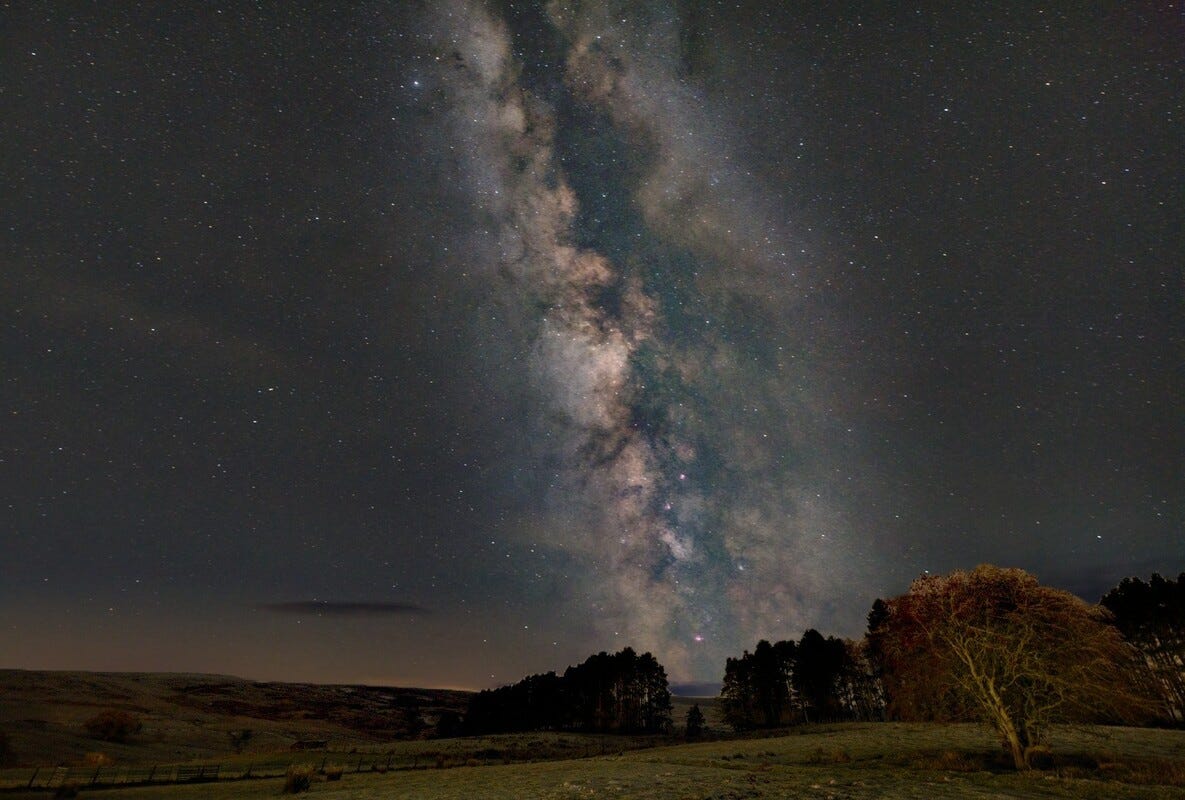
A quiet night beneath the Milky Way by Jacob Hunter:
This photo captures the dark skies of the National Park and reflects a passion that has become a large part of my life. The vastness and beauty of the night sky offers a window into quiet, peaceful moments beneath the stars. It is just one of many different and ever-changing views of the night sky throughout the year which I am fortunate enough to observe and appreciate.
Dodgy knee, dodgier drugs and drama
A former Newcastle United footballer, Sunderland detective and author walk into a bar and order one drink. They have two things in common. One: a dodgy knee. Two: they’re actually the same person.
Tony Nesbit, aka Tom Hair, was a team-mate of Paul Gascoigne in Newcastle United’s 1985 FA Youth Cup winning side. He made three first team appearances before having to give up the game aged just 19 after a series of knee operations.
He went on to have a 23-year career with Northumbria Police and was involved in running informants, monitoring sex offenders, working on covert operations, and being involved in various high profile crime cases.
He took early retirement from the force after injuring the same left knee - but not before fronting Operation Hopalong, an investigation named in honour of his dodgy joint which resulted in multiple arrests of people dealing in even dodgier drugs.
“My left knee was knackered... unbelievably I did exactly the same knee as a detective and it finished my second career as well,” Tony told Evening Chronicle legend John Gibson in an interview in July last year timed to co-incide with the publication of his first book, Betrayed Trust.
Being an author is now the third career for a man who at one time could never imagine a life outside of football.
“Oh, sure, but then I’ve been able to draw heavily on my experiences for my book. I was determined to tell it as it is and not romanticise or sanitise events. I wanted it to be real, warts and all. A lot of my characters, both criminals and coppers, existed in real life.”

The book was written under the nom de plume Tom Hair in honour of his late parents - his father was called Tom and his mother’s maiden name was Hair. And it has attracted the attention of Mack’em Productions, founded by producers Rebecca Davies, Carley Armstrong and writer-director Sasha Ransome.
They have secured the exclusive television rights to Betrayed Trust. The agreement also includes access to a wider catalogue of cases which could see the production of more crime dramas based on real-life regional events.
Development is taking place in Sunderland on the banks of the River Wear in the former Fulwell 73 offices where the company have ambitions to make drama rooted in the North East with strong international appeal.
BAFTA-winning producer Rebecca Davies’ credits include Sky drama COBRA, ITV thriller Protection, McDonald & Dodds, Channel 5 period drama Victoria and Cold Call. Writer-director Sasha Ransome also worked on Protection and COBRA and she is currently directing forthcoming Channel 4 drama Falling.
Producer and writer Carley Armstrong, whose background spans high-end television and feature film production, said: “Tom’s book offers a rare insight into policing and crime during a period that hasn’t really been explored on screen. Developing this work in Sunderland matters to us because these stories come from here. Our aim is to build bold television drama that feels authentic to the region but speaks to audiences everywhere.”
Author Tom said: “These stories come from real experiences during my time serving with Northumbria Police. I’m pleased to see them being developed by a team committed to telling them honestly and keeping the North East at the heart of it.”
And what can we expect from Betrayed Trust? John Gibson said: “His book is a story of drugs, crime and shattered lives, fast moving with dark undertones and darker comedy. It is based in post-industrial Sunderland, his home town, and is deeply rooted in what he knows best.”
Recommended reads

Nearly eight years ago, the Northumberland coastal village of Beadnell became one of the first in the country to ban any homes built on new sites being used as second homes or holiday lets. The number of permanent residents has increased, bringing what some say is ‘new life’ to the village but others argue the policy is not enough to save rural communities or think it an unwarranted attack on tourism. Jo Lonsdale from the BBC takes a closer look.

Vaccines have traditionally worked by teaching the immune system to recognise a specific virus or bacterium – in effect, showing it a wanted poster for a single suspect. But what if one vaccine could protect against dozens of different infections at once? Researchers have now developed a potential candidate for such a vaccine, and a new study in mice, published in the journal Science, has given promising results, says Neil Mabbott in The Conversation.

I followed the mysterious Fleet Street Fox for many years in the glory days of Twitter, long before it became known that she was in fact one Susie Boniface of The Mirror. She was made redundant after 23 years there but continues with the campaign for justice for British nuclear test veterans. Like many of us, she now publishes on Substack. And she has a lovely writing style of blending tabloid punch with broadsheet precision: “There is only one person who emerged from the bloodbath of the Gorton and Denton by-election with his dignity intact, and that man is Sir Oink A-Lot. The Monster Raving Loony Party candidate’s policies - ‘hamming it up’ and ‘bringing home the bacon’ - were arguably not well-attuned to a constituency which is 29% Muslim and 42% student or graduate. But still, he knew what he was there for, and he performed his function perfectly because he made everyone else look a bit of a prat.”