

The Summer of Love of 1967 was also the year that the first modern hospice opened in this country.
With death being the only experience that all of us must face, Professor Bob Hudson asks what has gone wrong with the way we treat people when it comes to the last moments of their lives.
The North East Mayoral Strategic Authority’s Cabinet meets tomorrow. A big item on the agenda will be rail and Mayor Kim McGuinness’ Rail Vision document - which includes an affordable and simplified fares system, extending the Northumberland Line to Newbiggin-by-the-Sea, bringing Northern Powerhouse Rail trains to the region by delivering the Leamside Line, and delivering the Metro to Washington with three new stations.
Arrests have been made and an emergency meeting has been called after “angry children” caused buses to be diverted from a part of Newcastle. There is renewed hope for the future of the High Borrans outdoor education centre, upgrades are on the way for the A1, and there’s global recognition for the 25-year-old Gateshead Millennium Bridge.
Brian Aitken
Editor
Vision on track
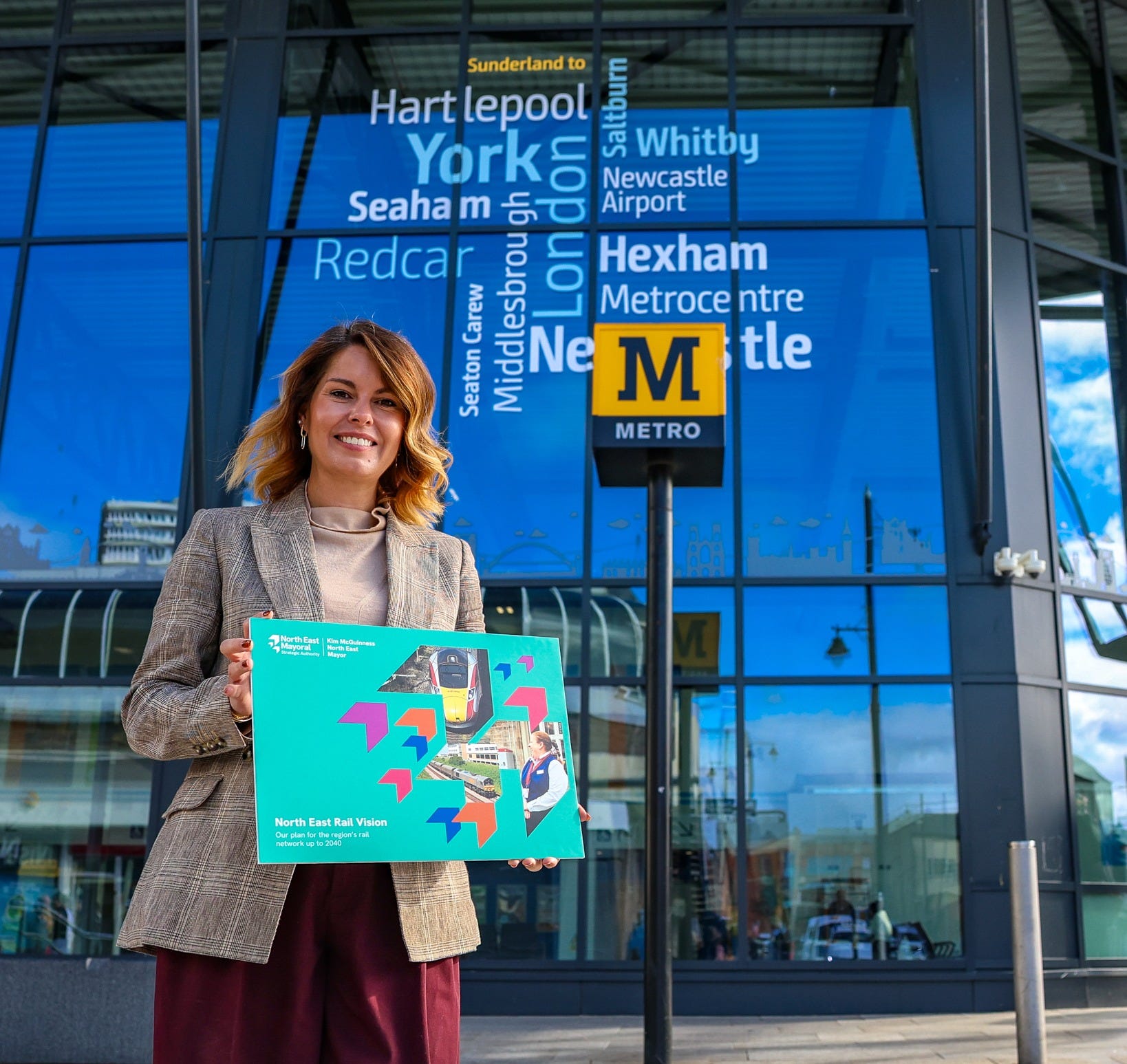
Greater local control over rail is the key to better services, more affordable fares and safer more accessible stations, says North East Mayor Kim McGuinness.
“Devolution is our chance to finally transform how the rail system is run and to make it far more affordable for local people,” she said. “We know now is the time to act – with the Prime Minister championing further devolution for our regions and the formation of the new rail body Great British Railways.”
The North East Mayoral Strategic Authority’s Cabinet meets tomorrow. A big item on the agenda will be rail and the mayor’s Rail Vision document - which includes an affordable and simplified fares system, extending the Northumberland Line to Newbiggin-by-the-Sea, bringing Northern Powerhouse Rail trains to the region by delivering the Leamside Line, and extending the Metro to Washington with three new stations.
“Getting a train should be affordable, accessible and safe, with a good choice of routes, frequent services and simple fares,” she said. “Smart, integrated tickets should make travel easy and guarantee you get the cheapest price available – other parts of the country have this already so it’s time the North East does too – our Rail Vision is just the start.”
A1 improvements
It’s not the dualling that so many people want, but the Government has confirmed that major upgrades are to be carried out at one of the most notorious junctions on the A1 in Northumberland.
Improvements will be made to the junction for Guyzance with a particular focus on the southbound carriageway, which has seen 19 casualties since 2005. North Northumberland MP David Smith said: “After two years of lobbying, and decades of unsafe driving, I’m delighted to hear that the dangerous junction at Guyzance will be improved.”
Meanwhile, Northumberland County Council leader Glen Sanderson has said he hopes Prime Minister Andy Burnham can work with North East Mayor Kim McGuinness to work out a deal to dual the A1.
Emergency meeting

Residents in Blakelaw and Cowgate are being invited to an emergency meeting with Northumbria Police, Newcastle City Council, Tyne and Wear Fire and Rescue Services, Stagecoach and Empowering People in Communities (EPIC).
The meeting, organised by ward councillors Irene Turnbull, Gavin Hutchinson and Rachel Davison, follows concerns raised by residents about anti-social behaviour and buses being diverted - as reported in Eyes & Ears 18.09.26. It will take place on Thursday at Blakelaw Social Club.
A police spokesperson said nine children have been arrested in connection with the reports and are now on police bail pending further enquiries.

A quick word
The Institute for Outdoor Learning is heading a working group to explore whether the High Borrans outdoor education centre in Windermere, which is due to be shut down by North Tyneside Council in November, can have a future outside council ownership. Former Northumberland councillor John Allen, who lost his seat after failing to turn up to a single council meeting for six months, was paid £18,888 and may be able to earn the same amount again after putting himself forward to stand in the by-election he triggered. It’s the 25th anniversary of the Gateshead Millennium Bridge and it has been accredited as a World Origin Site in recognition of its status as the world’s first tilting bridge. It becomes the first place on Tyneside to receive the accreditation, joining more than 50 World Origin Sites around the world. Alkemy Capital Investments has secured government funding of up to £18.3m for its lithium refinery at the Billingham Chemical Complex in Teesside. Two World War Two hand grenades have been destroyed in a controlled explosion after being discovered by metal detectorists in a field near Blyth. The Tyne Bridge will be closed from 8pm until 6am for five nights beginning tonight to allow the safe removal of scaffolding. Pedestrians and cyclists will still be able to use the bridge. North East Mayor Kim McGuinness has agreed to organise a meeting of interested parties to discuss the future of glassmaking in Sunderland.
Shorts story
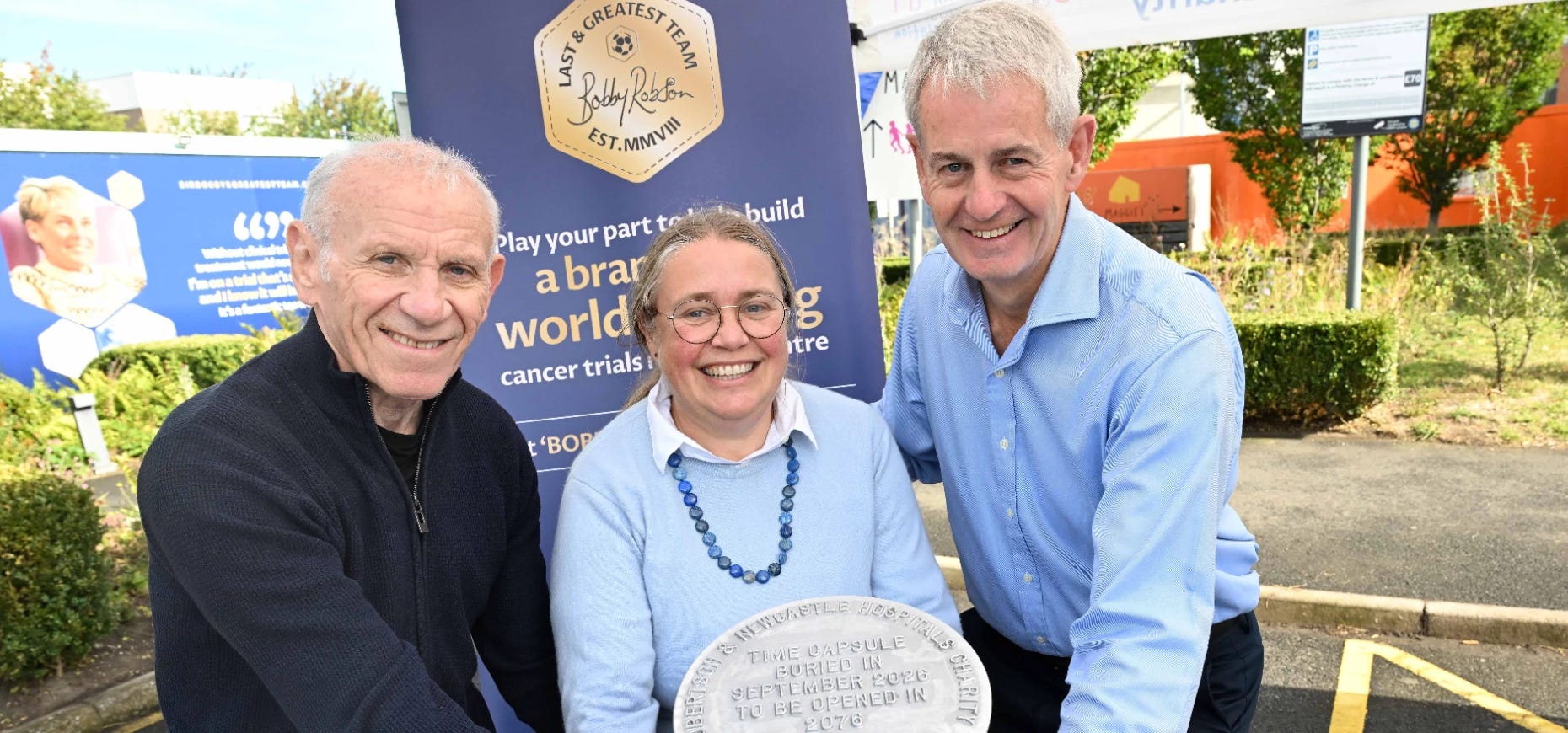
A campaign to create a world-leading cancer drug trials centre in Newcastle is entering its final fundraising push, with £1m still needed to deliver the £30m facility.
The Sir Bobby Robson Foundation, part of Newcastle Hospitals Charity, is funding the Sir Bobby Robson Institute, which is under construction at the Freeman Hospital and due for completion next year.
Former Sunderland manager Peter Reid, who took part in the Great North Run to raise funds for the foundation, visited the site of the institute to take part in a time capsule ceremony - donating a pair of his World Cup shorts from Italia ’90 when Sir Bobby was his manager.
We need your help
The Source is the new home of Eyes & Ears. Full details are in the article below (We’ve started: what now?). Would be good to know you are behind what we are trying to do. Becoming a paid subscriber would be a huge help. You can do that here:
Our immediate aim is to raise £35,000 to enable The Source to employ a reporter specialising in public benefit journalism. We have launched a Crowdfunding campaign for that specific purpose.
The first person to join the Crowdfunder was former Guardian regional affairs editor Peter Hetherington. He said: “This is a venture desperately needed in the North East: a regular source of independent journalism, good writing and information to underpin the ambitions (hopefully) of a mayoral strategic authority, hold it (and the government) to account where necessary, and provide a platform for those with ideas to drive forward the economy. All this while telling good stories.”

To donate:
www.crowdfunder.co.uk/p/thesource

Dying to know: Unraveling end-of-life care
By Bob Hudson
For those of us lucky enough to be around, 1967 felt like a good time to be alive: the sun shone down on the ‘Summer of Love’, the music was exuberant and the future brimmed with optimism. But all good things come to an end, and this was also the year that the first modern hospice opened in London. The driving force behind it – nurse, social worker and physician, Cicely Saunders – said at the time: “You matter because you are you, you matter to the last moment of your life’”
Fast forward almost 60 years and hospice staff from across England gathered in Westminster to demand urgent action on funding, as services are cut and pressures on hospices are said to be at ‘breaking point’. What has gone wrong? Do we no longer matter to the last moment of life?
Although the UK is not the only country in which End-of-Life-Care (EOLC) is seen as ‘add-on extra’, provision, our services do rely unduly heavily on voluntary endeavour. There are currently 135 independent adult hospice charities in England, each typically operating from a single location. In our region the providers include St Cuthbert’s (Durham), St Oswald’s (Newcastle), Tynedale Hospice (Hexham), Willow Burn (Lanchester), Teesside Hospice and Butterwick (Stockton). Alongside this there are two national charities (Marie Curie and Sue Ryder) operating across 12 locations, one of which is Newcastle.
Hospice activity can cover support in people’s own homes as well as in purpose-built facilities. A recent report by the National Audit Office (NAO) reveals how much of this provision lies outside of the remit of the NHS, such as counselling and bereavement support for family, friends and carers. In 2023-4 around 251,000 people were provided with palliative and EOLC, and 1,227,000 people received community visits. Death in a hospice still remains a relatively rare occurrence, only about 5% of the total. The bulk of deaths take place in hospitals, at home, or in care homes – locations that are not necessarily specialised to offer EOLC.
Why would such vital activity be at risk? As ever, follow the money. Charitable donations, fund-raising, legacies and retailing, generate most of the income, with government funding (via regional Integrated Care Boards) accounting for only about 29% of total funding. In the meantime, with an aging population in which people are living longer and with more complex health conditions, demand is growing.
This reliance upon charitable funding has implications for our region. The NAO’s report points out that a heavy reliance on charitable sources means that a postcode lottery applies to provision, advantaging wealthier areas. Patient bed availability was found to range from one per 2900 population to a staggering one per 54,300. Proximity to hospice care accordingly varies regionally – a median of 4.6 minutes of driving in London compared to 26 minutes in the North East.
Financial insecurity is beginning to take its toll. Almost two-thirds of independent hospices reported a deficit in 2023-4, and a combination of factors – declining donations, inflation, higher employment costs – is leading to a reduction in beds and to staff layoffs. The trade body, Hospice UK, estimates that the sector is facing a collective deficit of £77 million, the worst it has been for 20 years. Fund-raising activities by altruistic marathon runners and cyclists make headlines, but don’t cover deficits.
The impact of this here in the North East is evident:
Butterwick Hospice has reported its future to be unsustainable. Teesside Hospice has been kept afloat by some unexpected legacies but is still unable to cover its costs. Even the hospices own charity shops are now closing due to poor sales and, in desperation, the two organisations have now formally merged.
St Cuthbert’s Hospice has been forced to close its Community Outreach, Dementia Services and Adult Bereavement Service, with commensurate staff redundancies.
St Oswald’s Hospice is running with a budget deficit of over £1million, with the hike in national insurance contributions alone costing over £300,000.
The many problems facing hospices have recently been caught up in the parallel debate over assisted dying. The original bill, led by Labour MP, Kim Leadbeater, ran out of time in the last parliament, and new PM, Andy Burnham, linked further progress to EOLC, saying it would be ‘very challenging’ to pass the bill before palliative care was improved. The MP for Newcastle upon Tyne East and Wallsend, Mary Glindon, has expressed a similar view in strong terms.
It would be optimistic to conclude that the subsequent defeat of the assisted dying bill will lead to a resolution of the financial problems facing EOLC. Not only is there no significant new funding, neither is there a coherent commissioning strategy on the part of the regional Integrated Care Boards. The NAO report found that the proportion of total income that individual hospices receive from ICBs ranged from 0% to 80%, and in the absence of data collection there was no monitoring of the quality of care.
It is little wonder that a report by the All-Party Parliamentary Group for Hospice and EOLC described ICB hospice commissioning as ‘not fit for purpose’. In response to these criticisms, NHS England has now issued a guide to ‘good’ commissioning for palliative and EOLC but there appears to be no new funding attached to the guidance, other than a one-off bailout of £100m for capital spending. The problem also runs deeper than weak commissioning; it is about the absence of a national strategy, the last one of which was published back in 2008.
The palliative care expert, Dr Rachel Clarke, has pointed out that we would never tolerate a government that chose to defund most neo-natal services, gambling instead that charities would fill the gap. Yet this is exactly the situation faced by people needing EOLC. The Prime Minister, on a recent visit to Wigan and Leigh hospice in his Makerfield constituency, was so concerned about the need for support at the hospice that he pledged to donate 15% of his MP salary to it. He also made a similar pledge to the North East homelessness charity, Changing Lives, after his completion of the Great North Run.
Gestures like this are honourable, as are the many individual and collective fund-raising activities, but it is systematic government action that is required. Death is the only experience that all of us, without exception, must face – around 580,000 every year in England and Wales. And those who experienced the 67 ‘Summer of Love’ are now themselves reaching the end of their natural span of life.
So, back to Cicely Saunders, who wisely observed that ‘How people die remains in the memories of those who live’. We all know someone we love and respect who has died, and sadly not always in circumstances of their choosing. This is why EOLC care is about all of us. It is surely way beyond time for a new national strategy, supported by smarter commissioning and adequate, equitably distributed, funding.
Bob Hudson,
Visiting Professor in Public Policy,
University of Sunderland.