


Free - but not free
Schools across England face an annual shortfall of £310 million - enough to hire 7,700 teachers - just to cover the changes to the eligibility criteria for free school meals, according to a new report led by Northumbria University.
The Government changes were widely welcomed when they were announced earlier this year, but experts were concerned that the complexity of the funding formula would cause issues.
Many schools already need to take money from their teaching and learning budgets to top-up the difference between the funding they receive from the Government and the amount charged by caterers.
“Our findings are startling,” said Northumbria University’s Professor Greta Defeyter, “When we modelled the data to include the additional pupils who will be entitled to receive free school meals in the future it is clear that this will lead to a national deficit of over £310 million per year which schools are needing to fund.
“Headteachers have spoken to me in confidence, and in fear, about the decisions they have had to face as a result of these rising costs. Vacancies are not being filled; extra-curricular activities are not being funded and existing provisions have been cut back to prop up the costs.
“We urge the Government to explore funding models and mechanisms that are more socially just to all schools and school caterers regardless of size and geographic location.”
A life well lived
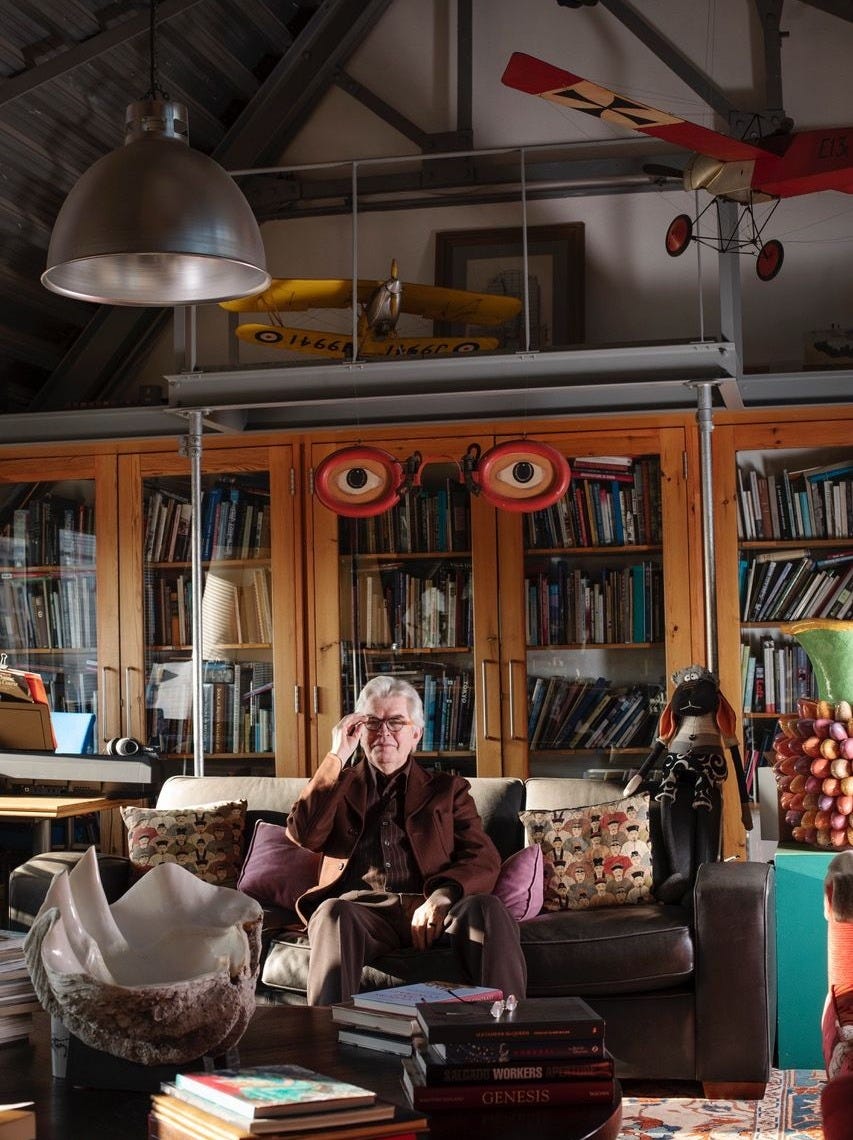
Anyone who finds themselves in Newcastle doesn’t have to look too hard to see the legacy of Sir Terry Farrell - the Quayside for starters, then there’s the Centre for Life and the Great North Museum: Hancock. And not forgetting the Farrell Centre.
He was a “maverick, radical and non-conformist” who relished being outside the architectural establishment, said his family after they announced his passing this week at the age of 87.
“As a youngster Terry would regularly catch a bus from the site that has become the Centre for Life and he was proud to later design our iconic building,” said chief executive Linda Conlon.
And Alastair Balls, who commissioned Sir Terry to transform the Quayside into what it is today, said: “As one of them, he enriched the lives of all Tynesiders.”
You can read more on the man, who was awarded the rare honour of the Royal Town Planning Institute’s gold medal in recognition of his outstanding achievements as one of the world’s most influential architects, planners and urban designers, by clicking the link below.

Renewed confidence
Newcastle City Council leader Karen Kilgour has survived a second vote of no confidence in 10 months after the opposition Lib Dems - who raised the first vote - decided not to support a motion brought by independent councillor Marc Donnelly.
His motion was backed by just seven councillors, including Nick Kemp, who resigned as leader in September last year after being accused of bullying by senior council official Michelle Percy, with 31 voting against and 19 abstaining.
Councillor Kemp was cleared of bullying following a lengthy £80,000 independent investigation, but members of the council’s audit and standards committee have been told they won’t be shown even redacted copies of the report despite a copy being seen by the Local Democracy Reporting Service.
The end of the bullying investigation means the council can now begin an investigation into the behind-the-scenes culture at the Civic Centre, something called for by the Lib Dems at a meeting on December 4 last year and, surprisingly, supported by Labour shortly after Councillor Kilgour survived her first no-confidence vote.
Anyone reading this article from 10 months ago about the “string of concerns” at the “controversy-laden North East council” will wonder why it was thought appropriate to delay looking into that.
Two suspended
Two Reform councillors on Northumberland County Council have had the whip removed while an investigation takes place. A Reform spokesperson said Nicole Brooke and Patrick Lambert were suspended pending an investigation for “breaching the Reform Council Group Rules in a manner that could be detrimental to the party’s interests.”
Keyboard con constable
A “lazy” detective used a keyboard trick to con his bosses at the North East Regional Organised Crime Unit (NEROCU) into thinking he was working from home.
Evidence showed DC Niall Thubron used key jamming for 45 hours out of a total of 85 he was logged in for and was frequently away from the keyboard for half of his working day.
Durham Chief Constable Rachel Bacon told a misconduct hearing: “I am appalled that the former officer has let down his colleagues in this way.” Thubron, who resigned in May, has been prohibited from working in any policing role.
Striking stories
A documentary telling the stories of 20 amazing women who put the backbone into the 1984-85 Miners’ Strike is going on national release from next Friday.
There will be a special showing of Iron Ladies on the same night at Redhills Durham Miners Hall. In attendance will be three ‘stars’ of the film, Heather Wood, who helped set up 14 support groups during the strike, Juliana Heron and Lynn Gibson, who will later take part in a Q&A with former MP Laura Pidcock.
Heather said: “We were a force to be reckoned with then and you know what - we are still here, decades later. But the ultimate lesson from the strike is that together we can achieve great things.”
Director Daniel Draper said: “Twenty amazing women from across the country shared their stories with us - tales of community, creativity and class solidarity.
“This is not just a story of the past. All our contributors are still politically active and live in the communities that bear the scars of 40 years ago.”
Tony V. Mary
Even if you have never heard of poet Tony Harrison, this article by David Whetstone is recommended reading. The Yorkshireman lived in Gosforth for many years and died at home recently aged 88.
“Many people will have memories of a man who put poetry at the heart of national debate, generated newspaper headlines and could have an audience spellbound with the readings he gave and the plays he wrote for others to perform,” writes David.
“I well remember the fuss whipped up by Channel 4’s decision to broadcast a film version of his poem V. in 1987. The Daily Mail called it ‘a torrent of four-letter filth’ while Mary Whitehouse, self-appointed guardian of public morality, rowed in with ‘this work of singular nastiness’.
“Tabloid newspapers in the 1980s, in whose newsrooms ‘four-letter filth’ would have been part of daily discourse, bobbed along merrily on a sea of hypocrisy. As for Mrs Whitehouse, she almost certainly never read Tony Harrison’s poem which is a reflection on the obscenities he found spray-painted on his parents’ grave in a Leeds cemetery.”
Going up
Greggs is set to introduce some price rises this week, including their breakfast meal deals, with chief executive Roisin Currie hoping the Chancellor will avoid springing any more “surprises”.
The bakery boss said she expected price pressures on the business to ease next year, but that the upcoming Budget could change that.
“What’s not helpful is when something comes out that surprises us,” she said. “That’s what happened with the National Insurance last year. It’s quite hard to plan and manage a business when you have a £20m hit that you hadn’t predicted.”
Giant Dan Burn?
Former Newcastle United CEO Darren Eales is part of a racing syndicate and has named a one-year old yearling Giant Dan Burn. That may seem odd to football fans as the popular defender from Blyth is known as Big Dan Burn (BDB) but apparently the syndicate insists that all their horses have a name that begins with a G.
Eales had to give up his role for health reasons but wanted to maintain contact with the club. He has distributed some of his shares to people at NUFC and a portion of future prize money will go to the Newcastle United Foundation and to blood cancer charity Bright Red.
Bravo
North East Screen has helped create more than 1,000 jobs in three years, according to a new report which revealed a 131% surge in regional production spend.
The 3 Years of Big Impacts report for 2022–2025 found that the North East was the fastest-growing region in the UK for screen industries, with more than £65m in GVA.
Chief executive Alison Gwynn said “This report is a testament to the power of our unique public sector and industry collaboration. Everything achieved here is thanks to the incredible talent, crew, businesses and world class stories that are rooted in our region.”
A quick word
The consultation period for the Government’s fair funding review has ended - but not before Northumberland County Council made the case for the higher cost of delivering services in rural areas. Addressing the poor oral health of food bank users should be part of Gateshead’s anti-poverty strategy, a report to the council’s health and wellbeing board has recommended. Real estate firm Avison Young has been tasked with finding a developer to build 1,100 homes and commercial buildings on the former leadworks at Forth Yards in Newcastle. Cancer charity Daft as a Brush has applied for permission to give Ray Lonsdale’s statue of prisoner of war Len Gibson a permanent home in South Shields. The statue depicts Mr Gibson, who was from Sunderland and imprisoned by the Japanese, handing a homemade banjo to a Burmese boy. Newcastle City Council is to spend £50m on potholes but admitted that more needs to be done. The opening of Darlington’s revamped railway station has been pushed back from December until Spring next year. Tees Valley Combined Authority are to review the proposed £250m Darlington bypass linking the A66 to the A1 (M).
Funding call
The CEO of a hospice which has laid off staff and cut some services has called for more government support for the sector.
Laura Barker, who runs St Cuthbert’s Hospice in Durham, said it was facing a funding “imbalance” and had become more reliant on donations. “We know the need for hospice care is only going to grow. We absolutely need to make sure that funding is in place to sustain us into the future.”
You can’t have that
I’ve heard of a pub with no beer - but not a pub that has beer but can’t sell it.
That’s what’s happened at the Fiddlers Three in High Heworth near Gateshead where an ‘administrative oversight’ when renewing their lease means they are not licensed to serve alcohol again until Thursday October 9.
They took to Facebook to say: “We’ll be practicing sober October right up until next Thursday, but our kitchen will still be open and soft drinks will be available.”
Museum boost
Plans to transform Sunderland Museum and Winter Gardens have been boosted by a £5.2m lottery award. This cash from the National Lottery Heritage Fund will support an estimated £13.1m four-year redevelopment of the museum, plans for which have been shaped by the views of residents and visitors. Tony Henderson has the full story for Cultured. North East.
Business bites

Business support company UMi has chalked up a significant milestone by unlocking £1 billion in investment for companies across the UK. Chief executive Nicki Clark said: “Since 2007, we have seen so many businesses go on to achieve great things because of the funding they have received.” Founders Kane Haig and James Ogilvie are looking to grow their marketing company The Social Co. after securing a six-figure investment through the Finance Durham Fund. Sunderland-based wealth management firm Fairstone has acquired Norfolk financial advisers Allen Tomas & Co and bosses say they are looking for more partners in the East Anglian area. Tekmar has secured a $1.5m contract and told the stock exchange: “This award further strengthens Tekmar’s position in the growing ports and harbours development sector, an area that represents a significant growth opportunity for the group.” County Durham company Casa Group - which used to be called Castledene until a rebrand earlier this year - has acquired Edinburgh property and mortgage brokerage Cox & Co in a seven figure deal. The first of three planned warehouses at Merchant Park in Newton Aycliffe - home to Hitachi’s train manufacturing facility - has been completed. It’s hoped the development will eventually support more than 1,000 jobs.
1975 ad break
Who else but Penelope Keith was going to be asked to play the head of a finishing school where girls were taught how to spend daddy’s money.
This amusing ad for Parker Lady Pens won Commercial of the Year at the British Arrows Awards in 1976.
It was directed by Alan Parker who hit the big time that year with the film Bugsy Malone. He went on to have cinematic success with a variety of films including Midnight Express, Fame, Mississippi Burning, The Commitments, and Evita.
THE WIDER VIEW

‘The platforms leaving on platform…’
Imagine a train where every carriage is first class. Quality food is brought to your seat, headphones will play your choice of music. There’s a games area, and a carriage with flashing lights where DJs will have you dancing to the latest sounds.
Most of the dancers are in platforms. Nothing to do with train platforms. And the dancing carriage is a “discotheque for teenyboppers”. For this is February 1973 when platform shoes were a big fashion item, and it’s the maiden journey of the League Liner, a train owned by the Football League and hired out to clubs (not to be confused with discos!) for matchday travel.
The video below features that first journey - Burnley fans on their way to London for a match against QPR. Burnley, along with Middlesbrough and Crystal Palace were among the few teams to take advantage of the Liner before it was taken out of service three years later. Cost and rowdy behaviour were factors in that decision.
I came across the League Liner in a fascinating article in The Athletic headlined Football and trains: The vital role railways have played in the English game, published on September 27, the 200th anniversary of the world’s first passenger rail journey.
“In the 19th century, Britain was the world leader in railways and in football. The relationship between the two shouldn’t be underestimated,” says author Michael Cox.
“Broadly speaking, there were three major reasons for the explosion of sport as a spectator activity in this period.
“The most important was the novel practice of workers getting their Saturday afternoons off, a victory for a lobbying group named the Early Closing Association, which had been formed in the 1840s. This opened up that time slot for leisure pursuits.
“The second was the ‘golden era’ of the British press. Whereas previously newspapers had been aimed at the upper class, the increased literacy rates amongst the British population created a market for newspapers aimed at the lower-middle class. Coverage of sport proved popular, and promoted it beyond the capabilities of clubs and associations.
“And the third was the expansion of the railways. Without this latter development, in an era before motorised transport, the concept of people travelling halfway across the country to participate in, or watch, a mere game of sport would have been absurd.”
First class
Popular weight-loss drugs like Mounjaro and Wegovy are “so effective” they should be the first choice to treat almost all cases of obesity and its associated health impacts.
Obesity Management Working Group expert Dr Andreea Ciudin’s study, published in Nature Medicine, also suggested the use of these drugs could help treat kidney disease, neurodegenerative disorders, heart failure and certain cancers associated with obesity.
Not so mobile home
My ears first picked up on this story when it was featured on Vernon’s Vaults, a daily feature on Vernon Kay’s Radio 2 show. My eyes came across it this week on the Off The Fence Substack column.
In 1972, the BBC magazine programme Nationwide paid a visit to an 84-year-old widow who loved the caravan holidays she used to go on with her late husband.
So much so that she would not contemplate getting rid of the two, that’s not one but two, caravans she lives in INSIDE her house. And there’s a third one at the bottom of her garden.
Brian: I think it would be great if you could give some coverage to this: https://www.healthworksne.org.uk/our-latest-impact-report-launched-today/ . I attended the event and it was really excellent and uplifting to see such excellent work happening in the North East. The CEO is Paul Court and I am sure he would be happy to talk to you.