

Shout about it
Keir Starmer is quietly, probably too quietly, showing Boris Johnson how Levelling Up should be done - and the North East is doing rather well out of it.
Labour has spent £2bn more in its first 12 months in government than Johnson, the creator of Levelling Up, did in his first 12 months at No.10.
By the end of this parliament, investment in the North East will be seven times higher than under Johnson, and five times higher in the North West and Yorkshire and Humber, according to an exclusive article in The New Statesman using analysis by the Independent Commission on Neighbourhoods.
The Government is on track to invest £36bn in levelling up schemes - three times the levels under Johnson, with 51% of the money going to northern regions compared with 41% under the former Tory leader.
I would be expecting to hear all this from a Government communications team desperate for some good news to impart. But, as the magazine’s Britain Editor Anoosh Chakelian, points out: “The funding analysed is drawn from 46 different pots – it doesn’t cohere into one plan, with a vision and a story to tell, to tackle Britain’s areas of greatest disadvantage.”
The neighbourhoods commission is chaired by Labour peer Hilary Armstrong, the former North West Durham MP. She said: “The government has made a good start. We need to keep up the pace of investment and ensure that we develop a robust strategy for ensuring that record investment leads to record results.”
Phil’s doing it
Wild new innovations including the world’s first motor-powered running and walking shoe, self-inflating coats, skin-cooling T-shirts and shoes that influence your mind…
Nike, after a period that could mildly be described as wobbly, are determined to put the swoosh back into their sales - and at the heart of it is a lad from Wallsend who dreamt of playing for Newcastle United but became a long-distance runner for Great Britain.
Phil McCartney is now chief innovation, design and product officer at Nike based at their headquarters in Beaverton, Oregon, having begun his working life as a 15-year-old in a running store in Newcastle where he began obsessing over shoe design and tech.

His passion began when an older team-mate at Wallsend Harriers gave him a pair of Nike ‘Flame’ spikes and he slept in them the night before a race, believing they made him run faster.
Fast forward to today, and internally Nike is signalling that fresh direction with a six-word mission statement: “Create Epic Shit, Make Athletes Better.”
It is provocative and bombastic. In other words, classic Nike. But, as Phil explains to The Guardian in an in-depth feature, it is also a tribute to one of its most famous athletes.
“Create epic shit is something that we got from Kobe Bryant,” he says. “He used to walk the halls here and say: ‘Are you creating epic shit?’ It’s a standard of excellence. It has a bit of an attitude to it. And we’re already starting to use it when we look at our innovations. Is it that? If it’s not, then we shouldn’t do it.”
Tax credits call
The country’s largest listed residential landlord has urged the Government to offer tax credits to incentivise private sector investment in social rent homes.
Newcastle-headquartered Grainger plc said the investment case for substantial Government subsidy is compelling and could unlock the delivery of 90,000 properties.
Other proposals in the report Making Social Rent Homes Viable include a ‘Flex Rent’ model linking rent to household income, and a reform of the Right to Buy scheme (more on that in The Wider View section below).
Fiona Fletcher-Smith, CEO of London & Quadrant Housing Trust, said: “Delivering social rent homes at scale is not just a policy ambition - it’s a social and economic necessity. But to meet the scale of need, we must be bold: that means long-term investment, innovative funding, and a shared commitment across government, industry, and society.
“The time for incremental change has passed; we need decisive action to ensure everyone has a safe, secure place to call home and I am delighted that Grainger has convened the industry and policy makers on this critical issue.”
The next stop is…
It is hoped that the new Metro extension to Washington - the fourth largest town in England to have no train services - will be open by 2033. But transport bosses don’t want to stop there.
North East Combined Authority director of transport Tobyn Hughes has reported that the authority is “actively exploring plans to continue to develop the Metro and local rail network for more stations and future expansion”.
The where and when will have to wait until publication of NECA’s rail strategy. But Mayor Kim McGuinness launched her Local Transport Plan (LTP) last year which had an ambition to include the west end of Newcastle in the network as well as new stations to serve Gateshead Quays, Belford in Northumberland, and the north west of North Tyneside.
On top of the world
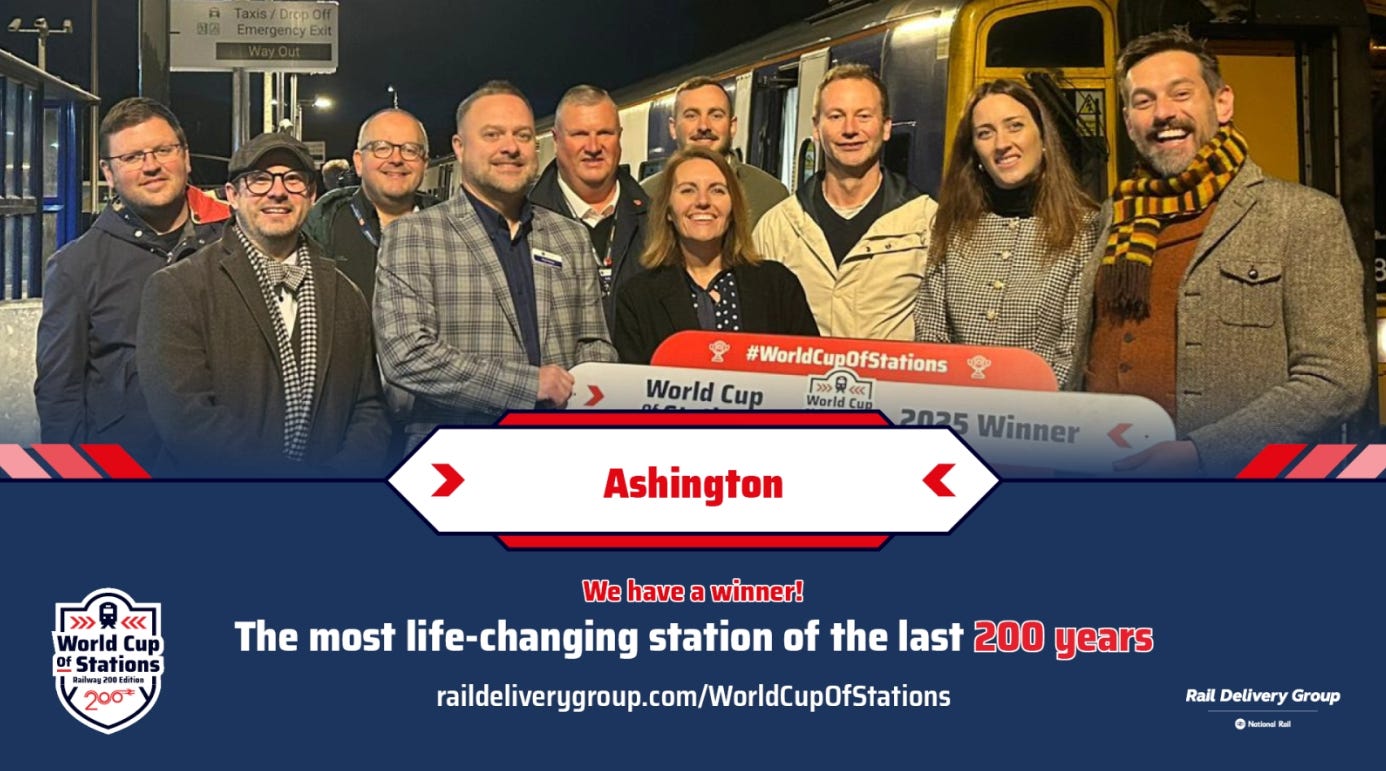
The North East gave railways to the world 200 years ago - so it’s only fitting that the 2025 winner of the World Cup of Stations is from the region.
World Cup? If Americans can say that the winners of the Superbowl are world champions, then no one is surely going to begrudge Ashington its world crown.
There was a public vote after the Rail Delivery Group (RDG) shortlisted 20 from 330 entries (none from overseas) and the new Northumberland Line station received more than 28% of the votes cast.
Jacqueline Starr, RDG chief executive, said: “As we celebrate 200 years of rail history, Ashington shows how investing in stations can transform lives linking people to opportunity, pride, and possibility.”
Another black hole
Newton Aycliffe and Spennymoor MP Alan Strickland raised the subject of spending cuts to Durham Pride and the cancellation of the Lumiere festival at this week’s Prime Minister’s Questions.
This provoked a response from Durham County Council’s deputy leader Darren Grimes who sounded rather like Keir Starmer and Rachel Reeves after they’d had a look at the country’s books 15 months ago.
“While Alan Strickland attacks from his gold-gilded chamber in Westminster, we’re here in Durham grappling with a £70 million black hole left behind by Labour and their Lib Dem hangers-on,” he told Chroniclelive.
He went on to say that the funding decision on Lumiere was made by the previous Lib Dem-led council.
New boss appointed

Darlington Building Society has announced the appointment of Alex Windle as their new chief executive.
He is currently chief customer officer at West Brom Building Society, the UK’s 8th largest building society, and will take over from Andrew Craddock who steps down in April next year after seven years as CEO.
Alex is joining at an exciting time, the announcement coming in a week when the society reached £1bn in total assets. Another important milestone came earlier this month when the society hit the £1m mark for charitable donations made since 2017 when it launched its pledge to share 5% of profits with local good causes.
Alex, who was previously chief transformation officer with Cumberland Building Society, said: “Darlington Building Society has been a force for good for almost 170 years and my aim is to build on the strong foundations that have been laid, so that we can help more people achieve their dream of home ownership and save for the future.”
Stuart Miller, chief commercial officer at Newcastle Building Society, is to take up the role of CEO with Cumberland Building Society early in the new year.
A quick word
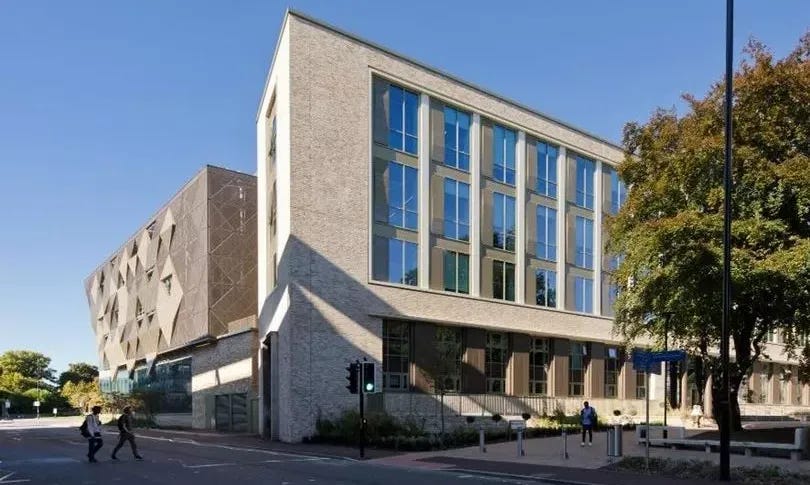
The Stephenson Building at Newcastle University has been named national Project of the Year at the prestigious RICS Awards in London. It had earlier won the refurbishment and revitalisation award. Author and TV presenter George Clarke is to become the fourth Chancellor of Northumbria University, taking over from Baroness Tanni Grey-Thompson who stepped down from the role in July following a 10-year term. Newcastle City Council has again withdrawn proposals to end free school transport for post-16 pupils with special educational needs and disabilities (SEND). The Cultural Spring has been awarded £1m by Arts Council England to extend its award-winning work in Sunderland and South Tyneside for three more years. Reform UK has belatedly confirmed that a third Northumberland councillor has been expelled. John Allen had been investigated for posting comments online about wanting to kill the Prime Minister. Northumbrian Water has been shortlisted seven times in only six categories in the annual Utility Week awards. Chief executive Heidi Mottram said: “To be shortlisted in so many categories and to be the only water company recognised for Utility of the Year is a huge honour for us.” If you were planning to see the Magna Carta and the North exhibition at Durham Cathedral then time is running out. Sunday November 2 is the last day and it’s likely to be at least eight years before they can be shown again. A cutting-edge cancer testing facility is to open at Newcastle University - a partnership with global leader Curium International. Professor Quentin Anstee, pro-vice-chancellor for the Faculty of Medical Sciences, said: “This partnership brings further leading-edge care, research and innovation to the region.” Opposition parties on Durham County Council have criticised Reform UK’s changes to the way complaints will be handled, saying they reduce the influence of the council’s monitoring officer and the Independent Person.
Double tops
Two North East companies have been named among just five national winners at the British Chambers of Commerce Business Awards 2025.
Southern Asset Management won the Digital Revolution award, recognising their innovative use of technology to drive growth and efficiency, while Square One Law took home the People and Work award for their commitment to developing talent and fostering an inclusive workplace culture.
Chamber chief executive John McCabe said: “Having two of the five national winners come from the North East is a fantastic achievement and a reflection of the strength, innovation and leadership within our regional business community.”
Business bites

Northumberland-based Osbit is to design and build a subsea trencher for Danish power cable firm NKT - a contract win that emphasises the North East’s leading position in the offshore energy sector. Amazon has received planning permission from Darlington Borough Council to build a fenced compound where delivery drones would take off and land. Newcastle entrepreneur Jeremy Middleton is backing a new investment initiative founded by his COO David Alprovich. Alpro Capital will help owners of profitable small and medium-sized enterprises with an exit strategy “while acting as a good custodian of the companies they’ve built.” North East mayor Kim McGuinness performed the opening ceremony as subsea specialist SMD opened their third facility in the region - Tech Works at the Neptune Energy Park on the Tyne, dedicated to underwater technology development and innovation. Leading law firm Womble Bond Dickinson has reported another year of steady growth and said it expects that to continue as the North East becomes home to a new AI growth hub. Energy consultancy Troo has secured a seven-figure investment through NEL Fund Managers to continue its rapid growth in recent years. Hartlepool-based Camerons Brewery is making a move on Manchester, opening a Head of Steam bar in the city’s Northern Quarter. Newcastle-based property, care and leisure company Malhotra Group has reported a drop in profits but an increase in revenues and said diversification remains key to the continuing success of the business.
1982 ad break
I’m back to Heineken for this week’s ad from the past. Two weeks ago I featured the one shot below deck on a galley slave ship in a scene styled on the 1959 epic Ben Hur. It started going round in circles after the exhausted men rowing on one side of the ship were given Heineken as a reviver.
This week we’re in the Lake District with William Wordsworth, who is struggling for inspiration until he has a small alcoholic refreshment. And there’s a lovely poetic twist to the Dutch brewer’s famous slogan ‘refreshes the parts other beers cannot reach’.
THE WIDER VIEW

Beware the side-effects
Antidepressants are one of the most widely prescribed drugs in the world. While they can be very effective at treating mental health disorders, they can also cause a range of physical side-effects — including weight gain, blood pressure changes and altered heart rate.
But a recent paper has shown that physical side-effects can vary significantly between different types of antidepressants, says an article in The Conversation. For example, someone could gain 2kg on one type of antidepressant, but could lose 2.5kg when taking a different type. The author of the study explains what you need to know.
Not right to sell
Introducing the Right to Buy scheme was the single biggest mistake the Thatcher government made. No one will ever convince me otherwise.
I was able to buy a flat in the early 80s on a trainee journalist’s salary. House prices have risen 12-fold since then but average salaries have only increased about 4-fold (not even close to that if you’re a trainee journalist!).
Home ownership among under 35s has halved since the 80s, falling from 59% to 29%. The scheme removed a huge number of council houses from the public stock, forcing more people into private renting where costs are higher and security lower.
Even before seeing the Grainger plc story at the top of this edition, I was reminded of the disastrous societal consequences of Right to Buy when reading an article in the Sheffield Tribune about an investigation by the Big Issue into so-called ‘yo-yo’ homes.
Data obtained under the Freedom of Information Act has revealed that Sheffield is one of the councils which spends the most in buying back former council homes outside London. But it’s happening all over.
Under the current law, if a former tenant sells their Right to Buy home within 10 years, they must first offer it to their old landlord, which is usually the council.
Data from 53 councils in England shows that they sold 20,836 homes under the Right to Buy scheme in the past five years, earning £2.25bn. They spent almost the same amount buying properties - more than half of them previously sold under Right to Buy.
Cost neutral - but there’s 12,246 fewer homes in the public housing stock.
Nick Gallent, a professor of housing and planning at University College London, told the Big Issue: “We’ve always known that Right to Buy was the biggest sale of public infrastructure, at massive discount, that has ever been seen in the UK.
“This study appears to show very clearly that the housing that was sold should have been retained, hence local authorities are trying to buy it back to meet urgent needs at huge cost.”
Digital killed the video star

MTV is shutting down its music channels in the UK 44 years after Video Killed the Radio Star by Buggles became the first video to be broadcast to the world on the pioneering TV station.
The channel started in the US and was aimed squarely at the American market, showcasing music videos 24/7 to boost record sales - but it was British bands such as Duran Duran, the Human League, Culture Club and Eurythmics who benefited in the early years.
Their videos were ready-made and visually striking, and it took a while for US record labels to catch up and realise that videos were not a promotional extra but an essential marketing tool.
I feel quite sad that Paramount Global are closing the music channels on December 31 - even though it’s probably been 15-20 years since I last tuned in. I’m part of the problem I suppose, in much the same way as the people who haven’t bought a newspaper or magazine in ages bemoan their decline.
Paramount say people now consume music almost entirely online through the likes of YouTube, TikTok or Spotify.
I found myself in the odd position of agreeing with former Made in Chelsea star Jamie Laing whose LinkedIn post brought the MTV closure to my attention.
”We’re all in our own algorithm bubbles, watching different things on our phones,” he said. “We consume more content than ever, but experience less and less of it together. And that changes how we relate to each other.
“Shared culture matters. It builds connection. It means people feel like someone living 200 miles away in another town is a bit like them. It’s a great antidote to division and isolation. And we’re quickly losing the last places where it happens.”
It’s not April 1st
A woman didn’t want to risk spilling coffee on a bus so she tipped what was left in her reusable cup down a nearby drain - and was fined £150.
She was stopped by three enforcement officers (three!) at the bus stop and given a fine under Section 33 of the Environmental Protection Act 1990, which makes it an offence to deposit or dispose of waste in a way likely to pollute land or water, including pouring liquids into street drains.
My OTT-ometer readings were going off the scale when I read that a council spokesperson said they had reviewed body-cam footage and were satisfied the officers acted appropriately (body-cam footage!).
Richmond Council later cancelled the fine because they said it was “likely” that the woman’s appeal would have been successful.