


Yes, but…
Education Secretary Bridget Phillipson’s laudable plan to bring back maintenance grants for university students from poorer backgrounds could backfire if they were funded by a 6% levy on international student tuition fees.
Universities warn this would push up overseas fees, deter international students, and worsen the financial crisis already hitting campuses which have seen 15,000 job losses in the past year.
A study from the Higher Education Policy Institute found that the levy would cost Durham £10m and Newcastle £9m, putting them in the top 20 worst affected institutions in the country.
Research by Public First has also warned that the North East stands to lose £87m in the first year of a levy due to the fall in international student numbers.
It names Newcastle Central and West as the constituency potentially suffering the eighth biggest hit in the country, just under £30m in Gross Value Added (GVA), with the City of Durham predicted to lose £14.5m and Sunderland Central £12.5m.
Dr Tim Bradshaw, chief executive of the Russell Group, said: “Universities like Newcastle and Durham, and many others across the North East, contribute a huge amount to their local areas. If the proposed levy goes ahead, it will add greater pressure on an already financially precarious sector to the detriment of the very students and communities that government is looking to support.”
Labour is considering lowering the tuition fees cap below £9,000 a year on campuses where teaching standards aren’t met, according to an article in today’s Sunday Times.
Spend it
More than £40m is sitting in Newcastle City Council’s bank account waiting to be spent on community services and local infrastructure projects.
The money is from Section 106 payments - contributions made by developers to offset the impact of their applications that receive planning permission.
Independent councillor Marion Williams said it was alarming that the council was “sitting on all this money” when budgets were under pressure and wanted to know how Newcastle compared to other core cities.
I can help there. A 2024 Home Builders Federation (HBF) freedom of information survey of 208 councils in England and Wales found that the average unspent S106 contributions held in civic coffers was £19m.
‘I wanted to make things better’

A Reform councillor says she has been kicked out of the party for challenging the leadership in Northumberland.
“There is no scandal here,” said Nicole Brooke, who will now represent her Berwick ward as an independent. “Just a group of committed local councillors attempting to improve the performance of their party and better serve their residents.
“In hindsight, my colleagues and I could have handled things more carefully. But the central issue remains: this situation was triggered by a breakdown in leadership and was compounded by an absent, disinterested head office.”
New beginning
Sunderland’s new £31m footbridge, Keel Crossing, will open this coming Saturday when Sunderland have a home Premier League match with Wolves.
The official opening will be marked with entertainment on Keel Square, including a meet-and-greet with former players. A fan parade will depart at 2pm to Sheepfolds and the Stadium of Light.
Council leader Michael Mordey said: “This bridge is about much more than crossing the Wear; it’s about opening up opportunities for residents and showcasing the confidence and momentum driving our city forward.”
Closure warning
Entertainment sector leaders have warned the Government that proposed business rates reform “fails to distinguish between the Amazon-style warehouses it is explicitly intended to target, and live music venues”.
Big concert venues, including Newcastle’s Utilita Arena, have written to Treasury minister Dan Tomlinson warning that the changes will result in higher ticket prices and may even force some to close.
Bob’s home truths
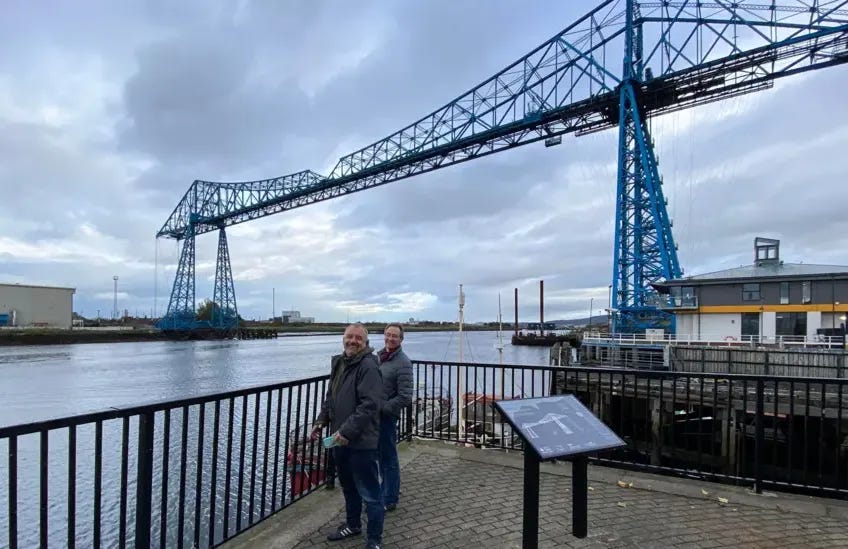
Everyone’s favourite Would I Lie To You guest, Bob Mortimer, has published a new ‘cosy crime’ novel called The Long Shoe. He spoke to Scott Makin on BBC Radio Tees about the book and how the big thing in his life right now is travelling to watch Middlesbrough play football with his two sons.
The 66-year-old also said he wanted to come back to his hometown for the Gone Fishing series he does with Paul Whitehouse. “I think next series we’ll do the upper Tees again, and we’ll try the River Wear as well.”
Morning all

Another Middlesbrough icon (apologies to Bill Nighy - see final article) who has published a novel is back on our screens doing live TV.
Steph McGovern teased us a few weeks ago to say that she was looking forward to presenting a show that was nearly as old as she was. That show, it transpires, is Crimewatch which is being screened on weekday mornings on BBC1.
‘Environmental vandalism’
Contractors working for Northumberland County Council have been accused of “environmental vandalism” after driving heavy machinery across a wetland habitat at Eastwoods Park in Prudhoe, undoing years of volunteer effort and community investment.
MP Joe Morris has written to the council who have said they will the repair the damage at what used to be a waterlogged area of the park.
Shock horror probe

This is concerning. An automated PR tool called ‘Olivia Brown’ is being sold for £250 a month and is being used to bombard journalists with AI-written press releases.
“It is not surprising that AI tools can be trained to read websites, fabricate press releases and then shower journalists with pitches,” said Press Gazette editor in chief Dominic Ponsford. “It is shocking that this low-quality content is being published by some of our biggest and most established newsbrands.
“As Rob Waugh’s latest Reality Wars investigation reveals, this carelessness risks undermining the whole news ecosystem.”
The tool appears to invert the traditional PR process, which normally starts with a story and then looks for publishers willing to cover it. Olivia Brown uses AI to invent press releases designed to chime with the existing output of target publications – even down to creating expert quotes.
And the really concerning part is - it’s working, often because publishers and editors are not being the effective gatekeepers that they once were. And they’re also desperate for clicks.
Alastair McCapra, CEO of the Chartered Institute of Public Relations, said: “Coverage delivered without purpose or strategy is not influence, it is noise, and corrodes the industry’s credibility with press, the public, and clients alike. In PR, trust is the currency of the profession, and once spent carelessly, it is very rarely earned back.”
End is Nighy
Just happened to catch the fabulous Bill Nighy on This Morning this week (that sounds odd) and I heard him talking about his Banned Word List.
Turns out he has launched an advice podcast Ill-Advised by Bill Nighy where he fields questions from listeners about life’s awkwardness - everything from bathroom protocols to how to hide at parties. And that’s where he has introduced his Banned Word List.
The list also includes phrases. That’s why “blue sky thinking” and “touch base” are there, as you would expect. Over-use has brought “iconic”, “move the needle” and “authentic” on to his list. “Passionate”, especially around job descriptions, is also there - good job he wasn’t around in the Noughties when the er, iconic, branding campaign Passionate People, Passionate Places, was at its peak.
I’m disappointed and a tad frustrated to see “curated” (a ‘word that’s been stretched from museums to sandwich menus’) on his list. I describe Eyes & Ears as my curated round-up of what’s been happening in the region in the past week.
How am I supposed to describe it now, Bill?