

The John Lewis Christmas ad is always talked about. This year there’s not just a strong North East connection but North Shields is all over it.
The country’s largest electricity sub-station is to be built on the site of the former Redcar steelworks - paving the way for data centres. Better Teesside than Texas or Abu Dhabi, says Mayor Ben Houchen.
He doesn’t want to introduce a tourist tax in the Tees Valley - but North East Mayor Kim McGuinness is all for it in her mayoral authority. If only the council leaders in the region felt the same way.
There may be trouble ahead - despite it looking like the councils would be powerless to stop the introduction of a levy.
The continued effort to decentralise power from London continued this week with the announcement of the creation of eight water boards, bringing together local authority leaders, customers, farmers and developers.
A 134-year-old Newcastle institution closed its doors this week, a police chief urged parents to lead by example and challenge harmful attitudes towards woman and girls, more North East buildings have been added to the Heritage at Risk register, and a newly-launched radio station could be in Dire Straits already.
Brian Aitken
Editor
Taxing times ahead
Proposals to implement the so-called tourist tax took a step forward with the introduction of the Visitor Levy Bill in the Commons on Wednesday.
Housing Secretary Angela Rayner said the levy would allow communities to benefit from the millions of people who visit our wonderful towns and cities each year. “Every pound raised through these levies will stay in the local area. This is about giving mayors and local leaders the choice to invest back into what matters most to local people, while protecting lower-cost stays and making sure businesses have their say.”
Choice. An important word here.
Areas that want to introduce a visitor levy must set out their plans, including proposed rates, thresholds, exemptions and how money will be spent, alongside an impact assessment. The Government said a local consultation will then follow to ensure local people and businesses have their say.
We know that North East Mayor Kim McGuinness wants to introduce the levy because she is adamant it will create jobs and allow investment to bring in even more tourists. But her Tees Valley counterpart Ben Houchen will choose not to.
The leaders of five North East councils - Northumberland, Sunderland, Gateshead, Durham and South Tyneside - would choose not to have a levy in their areas. But the choice would not be theirs because they would lose the power to veto the charge if the Bill is passed.
Mayor McGuinness has already been accused of megalomania by one senior Reform politician and there will be a lot of people with plenty to say in the consultation if this BBC report is anything to go by.
To be continued.

Powering on
Power company National Grid has bought a large plot of land at the Teesworks site to create the country’s largest electricity sub-station - paving the way for the creation of data centres on the site of the former Redcar steelworks.
Tees Valley Mayor Ben Houchen said: “Everyone who’s tried to build a data centre or large-scale advanced manufacturing, technological or energy-intensive industrial developments in this country knows the biggest problem is getting enough power to the site quickly.
“If Britain is serious about having its own AI capability and other advanced manufacturing technologies, with sensitive data stored safely on British soil, it needs somewhere to physically put it, and I’d much rather that was Teesside than Texas or Abu Dhabi.”
Further south, energy giant Drax has announced a partnership with Brookfield and AI business Radiant to develop a data centre at its North Yorkshire power station. The overall investment could top £20 billion, with an initial £2.5 billion committed as part of the first phase.
Data centres aren’t getting the most positive press at the moment, especially on the other side of the Atlantic, and Chancellor John Healey said in last week’s Budget that any new data centres would have to show that they would benefit local communities, create jobs, and protect local water supplies.
Talking of water supplies…
Water councils introduced
Eight regional water councils are to be set up. The bodies, which will bring together 10 to 15 people including mayors or local authority leaders, customers, farmers and developers. It is expected they will agree regional priorities on flooding, drought, water quality and supply,
Mayors will also receive new powers through the strengthened Water Bill to hold water companies to account for their performance. The reforms, announced yesterday by Environment Secretary Angela Eagle, are part of the Prime Minister’s drive to move power out of Westminster.
“I know how desperate people are for change when it comes to water,” said Andy Burnham. “I share their frustration at seeing sewage and pollution blight our rivers, lakes, and seas, while decisions about their local areas are taken miles away. That’s not right. So for the first time, local people will have a real say over what they need from their water company.”
I hope you are enjoying The Source. It needs the help and support of people like you so that we can provide quality journalism that is independent, politically neutral but North East biased. Read all about it here…

Held to account
The Government is setting up a Local Audit Office to lead the reform of the auditing of the accounts of councils, combined authorities and some other public bodies, some of which have fallen into a state of chaos and delay in recent years.
The four members of the Tees Valley Group – Tees Valley Combined Authority and the Hartlepool, Middlesbrough and South Tees development corporations – are repeat offenders, having missed the last two audit deadlines, reports Peter Morris in North East Bylines.
The Government says it is now taking action to rebuild assurance and create a system that is simpler, more resilient and better able to support public accountability.
“At a time when the Government is piling extra powers and funding on mayors and other local leaders to help it achieve its ambition of good growth in every postcode, it is essential that there should be effective accountability as well,” says Morris.
“The current system of overview & scrutiny and audit & governance committees has been weak at best and a catastrophic failure at worst, as we have seen in Tees Valley. The new Local Audit Office has a chance to do much better. It must be robust at exercising its powers.”
Talking of development corporations…
Regeneration bodies to go
The Middlesbrough and Hartlepool development corporations are to be dissolved within a year, pending a vote at next week’s Tees Valley Combined Authority Cabinet meeting. Labour Mayor Chris Cooke is happy to see the back of the development corporation in his town centre, believing that it has achieved “very little”.
North East sparkles
There’s a real North East influence in this year’s John Lewis Christmas ad. Sam Fender covers the Rolling Stones’ You Can’t Always Get What You Want, backed by the Easington Colliery Band and the choir from his old school, the John Spence Community High School in North Shields.
Then the ad’s opening scene sees Kristin-Scott Thomas open the door wearing a necklace and bangle from North Shields fashion brand TUTTI. John Lewis stocks TUTTI jewellery but founder and creative director Kate Rose was unaware of its supporting role until she saw the ad.
Misogyny call to parents
Parents should lead by example and challenge harmful attitudes towards woman and girls, says Northumbria’s Police and Crime Commissioner Susan Dungworth.
Her comments followed a YouGov survey which found almost one in three parents had noticed misogynistic behaviour among children at their child’s school - with 17% saying they had noticed it among their child’s friends and 7% saying they had noticed it in their own child.
She is encouraging parents to sign up for free active bystander training - helping them build the confidence and practical skills to safely challenge sexism, harassment and misogyny if they see it.
Demolition bill doubles
The cost of demolishing the A167 Gateshead Highway flyover has almost doubled to more than £32m. The council, meanwhile, has announced that it has applied to the Department for Transport’s £1 billion Structures Fund to restore the strategic road network through the town.
Buildings ‘at risk’
The Londonderry Institute in Seaham and the 19th century Christ Church in Felling, Gateshead are among the buildings added to Historic England’s Heritage at Risk register this year. Other sites added include the Church of St Edmund in Edmondbyers, County Durham, Northumberland Hall in Alnwick, the Church of St Mary in Blanchland, Haggerston Dovecote in Ancroft, and Featherstone Castle near Haltwhistle.
Loftus Conservation Area in Cleveland, meanwhile, has been removed from the at risk register after a derelict church was transformed into an artists’ space, a new training hub was created, and shopfronts were restored in the town. Holmslinn lead mine in Allendale and West End Dovecote in Houghton le Side near Darlington were also removed.
A quick word
Northumberland County Council has agreed a revised contribution of £7.5m to revamp The Maltings in Berwick. Work is due to start at the end of the month with the venue, including a theatre and two cinemas, expected to be open in spring 2029. Stockton councillor John Coulson has resigned from the Conservatives to sit as an independent, saying he has had enough of political fighting and point-scoring. The school meals subsidy in South Tyneside is to be reduced to 80p, increasing the daily price of a meal from £3 to £3.50. The council said the poorest families will not be affected, with 46% of children in the borough eligible for free school meals. A meeting about child protection failings in Durham had to be postponed for a second time because not enough councillors were in attendance. Police and Crime Commissioner Joy Allen was due to update councillors on the force’s progress in September - but that meeting was postponed for the same reason. Stockton councillors have agreed to buy Billingham town centre for £13m with a view to halting the centre’s decline and paving the way for future regeneration. The scheme to dual the A66 between Scotch Corner and Penrith may end up costing £2.67 billion - more than double its initial estimate, according to National Highways. A public consultation in South Tyneside on giving powers to tackle the use of face coverings and balaclavas during incidents of anti-social behaviour or crime will close on Sunday November 22. So far, 300 people have taken part. An organisation that wants to see lynx reintroduced to the UK has lost a High Court challenge over Natural England’s refusal to assess whether the animals could be released into Kielder Forest.
Mourning Mark Toney
Mark Toney is/was a Newcastle institution. Sadly the 134-year-old business has closed both its ice cream parlours and cafes in the city centre. Regular reader Jack Arthurs got in touch to say: “We’re mourning Mark Toney’s closing, Brian”! He shared the bad news with playwright, poet and publisher Peter Mortimer who said: “Mark Toney’s was like a sealed time capsule while the rest the world went helter-skelter speed beyond their doors.”
Marketplace award
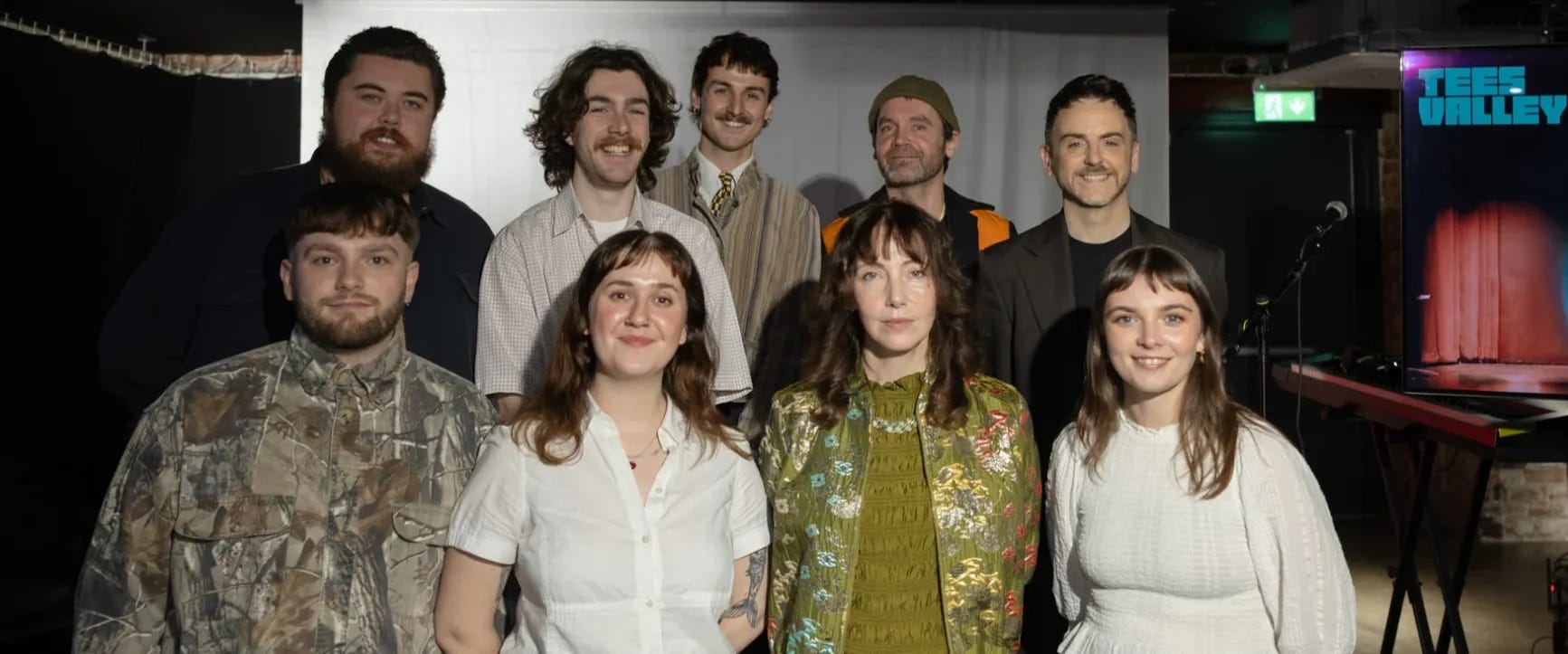
Hartlepool indie band Marketplace has become the first group to receive an award from the Tees Valley Artists of the Year programme. Now in its third year, the programme provides each recipient with almost £30,000 in financial backing, alongside mentoring, professional development, business support and access to industry networks.
The other winners announced at The Auxiliary in Middlesbrough this week were dance artist Anthony Lo Giudice, writer Carmen Marcus, Hartlepool visual artist Stuart Langley and singer-songwriter Jodie Nicholson. The initiative forms part of Tees Valley Combined Authority’s wider investment in the region’s creative industries, cultural sector and visitor economy.
Business bites
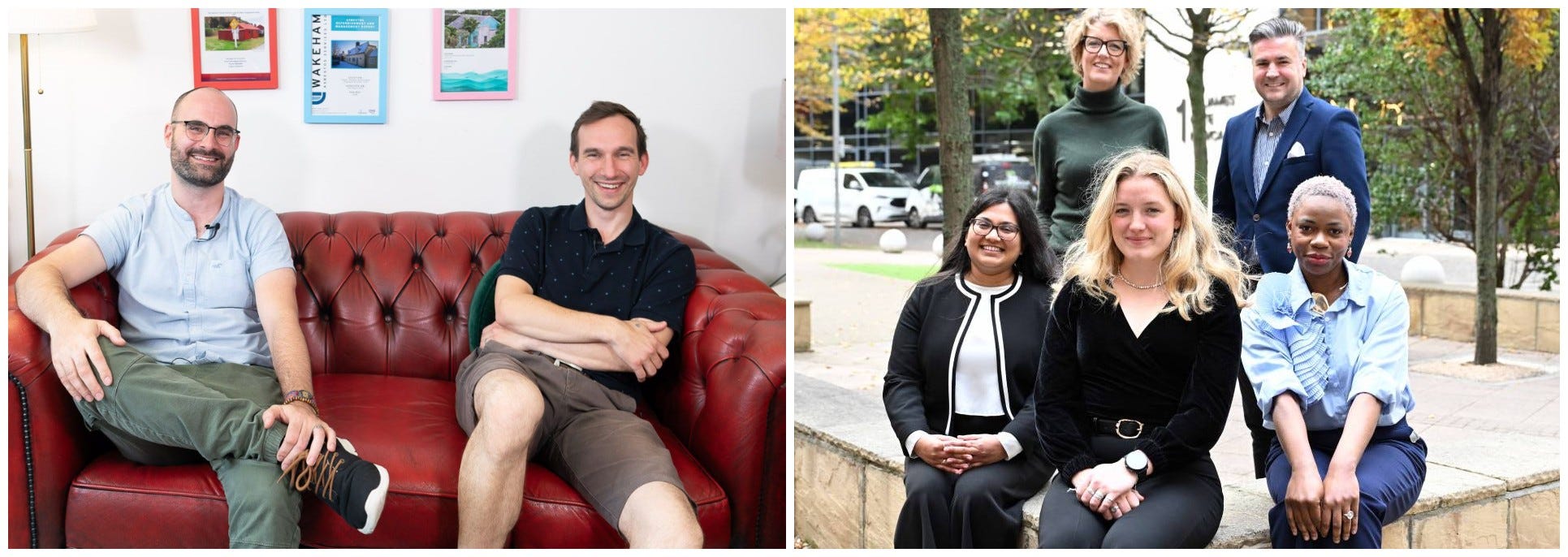
Two Newcastle entrepreneurs are harnessing the power of AI to help organisations tackle the challenges of managing asbestos risks across their buildings. Brothers Paul and David King, founders of Flow Software Solutions, have launched Dutyholder.ai, a platform designed to simplify asbestos management for councils, housing associations, universities and other property owners. Paul said: “The industry has been crying out for innovation like this.” Two Gateshead factories which were home to Zentia and its 180 staff before its collapse earlier this year have been acquired by Turkish ceiling manufacturer Prosista in a multimillion-pound deal. The move could create job opportunities for more than 100 people. The deal includes machinery, stock and intellectual property, with Prosista already recruiting former workers. The vacant Debenhams store in Sunderland is to be converted into an indoor go-karting centre, creating around 40 jobs. South Shields engineering firm METEC UK has landed four major contracts worth a combined value of more than £3.6m. Biodiverse Consulting, founded in 2019 by managing director Vicki Mordue, has been acquired by Global Ecology and Environmental Group in a move which will see all 32 staff join the London-based company. Mercia Ventures is encouraging female entrepreneurs to seek investment from the North East Accelerate Fund. Mercia, which manages the fund, has backed seven businesses that were female founded or have women in senior roles since February and is keen to back more. Weardale Lithium has secured investment of £500,000 from Business Durham to progress preparatory works at the former Eastgate cement works in Weardale. The project aims to establish the UK’s largest lithium extraction facility, producing battery-grade lithium carbonate from geothermal groundwater. Technology firm Kromek has landed a £1m follow-on contract to supply detector components for its client’s medical systems. The order is expected to be completed over the next 12 months. British Steel is encouraging local people to apply for next year’s apprenticeship and graduate schemes. More than 40 new workers will be employed across sites in Scunthorpe, Teesside and Skinningrove, starting in September 2027. They will join 70 apprentices and 16 graduates who started this September.
1999 ad break
Not many 30-second commercials stay with you. Yet more than a quarter of a century after its debut, the Jaffa Cakes “Full moon. Half moon. Total eclipse!” remains one of the most quoted advertising catchphrases of the 1990s. And I’m willing to bet that the vast majority of you who remember the advert will not realise that boxer Chris Eubank played a part in it. He does the short voice-over at the end. Have a listen. It’s definitely him.
THE WIDER VIEW

Boro in focus
The i Paper’s housing and society correspondent Vicky Spratt went to Middlesbrough after it was named as the hardest place in England to grow up in a recent report by the Children’s Commissioner Rachel d’Souza.
“As I spoke to young people in Middlesborough, the same issues kept cropping up,” she said. “Poor transport links, the loss of thousands of industrial jobs and the hollowing out of the town centre have made getting a foot on the career ladder feel impossible.”
She met James who is currently on the Movement to Work scheme, which is offered by the Government as a way of breaking the cycle of young people needing experience in order to get jobs by offering them quality work experience, either within the civil service or with major employers like the National Grid and Tesco.
Labour’s welfare tsar, Alan Milburn, is set to deliver his report on how to fix Britain’s youth unemployment crisis soon. “But spending time in a town like Middlesbrough lays bare the problems he is facing – and that’s before we get into where the money comes from.” You can read her article here.
Music - ‘a glorious soup’

This week saw the launch of GB Music Radio, a station funded by GB News owner Paul Marshall that will only play a song if the singer or the “main proportion of the band is British”.
All British, All Day is their slogan, promising a solid diet of Rolling Stones, Dire Straits, Ed Sheeran, Dua Lipa and Adele. Writer Otto English does a really good job of explaining the problem they have set themselves in Byline Times.
“Music is born out of fusion,” he writes. “The best of it is a glorious soup, spawned from many and varying ingredients. Its very hybridity defies the ‘purity’ of ethnonationalist logic and all attempts to control, contain or cancel it. It reaches out and embraces the world beyond too and that is what long made British pop so good.
“There would have been no rock and roll at all if it hadn’t been for African American artists like Leadbelly, Sister Rosetta Tharp and Big Mama Thornton and as it seeped across the Atlantic big names absorbed everything that followed.
“Delta blues informed the Rolling Stones, and Chuck Berry, Little Richard and Ravi Shankar all variously influenced the Beatles. Caribbean migrants gave us ska, reggae, jungle, drum and bass, dubstep, garage, and the grime scene.”
You get the picture.
Otto gets more specific. “The GB Music press release bigged up Dire Straits on their playlist – but are Marshall’s minions aware that lead singer Mark Knopfler is the son of a Hungarian Jew who came here as a ‘fighting age refugee’? Dua Lipa is the daughter of Kosovan refugees too – so are her hits OK with these self-appointed gatekeepers”?
The British rule means no royalties for Georgian-born Katie Melua, Kosovan child refugee Rita Ora, Anglo-Indian Cliff Richard, Argentinian-born Irishman Chris de Burgh and all the lads in Boyzone, Westlife and U2. And what about Fleetwood Mac, a British band who became quite American. “Will GB Music only play their early stuff, or will they ‘go their own way’?”
Second helpings
Long-time readers may remember a small article I did a year or so ago about ‘second mentions’. This happens in news stories when journalists try to avoid repeating the same words.
So, in a story about strawberries, for instance, the second time they go to write the word ‘strawberries’ they may say ‘sweet red fruit’ instead. That’s the second mention. And it avoids the repetition.
Juliet and Matthew Maguire are the husband and wife team behind the Twitter account @SecondMentions. They became fascinated by the journalistic habit of the “elegant variation” and eventually wrote The Little Book of Second Mentions: The Art of Avoiding Repetition (which I got as a present last Christmas).
Among the second mentions they spotted in newspapers: Marmite - “the beloved yeasty spread”; Snakes - “the hissing reptiles”; and Tiramisu - “the coffee-centred pudding”
I was reminded of second mentions this week. There was a story about Rice Krispies no longer containing any rice (I think that means they snack and crackle but don’t pop) and the second mention described them as “the tiny toasted puffs”.
It’s an art form.