


An estimated 350,000 people in England are fully-funding their own care, either at home or in a care home.
They will all have assets worth more that £23,250, a figure that, astonishingly, has not increased since 2010 - inflationary increases would have seen that limit set at £36,400 today. With care costs of around £1,300 a week, £23,250 will barely cover the first four months.
“Adult social care is one almighty mess,” writes today’s columnist Professor Bob Hudson. “Most people will know little about the nature of social care provision - indeed many might have assumed that, like the NHS, it is state-run and free at the point of use. Discovering it is hugely expensive and that there is little or no help available to arrange the best support for a loved one is a shock.”
His column is an eye-opener.
Before that, here are a few Eyes & Ears Extras - with some recommended reads at the end on vet charges, Brexit and Christianity, which is being revitalised at a grassroots level but radicalised at the margins.
In for a dollar…
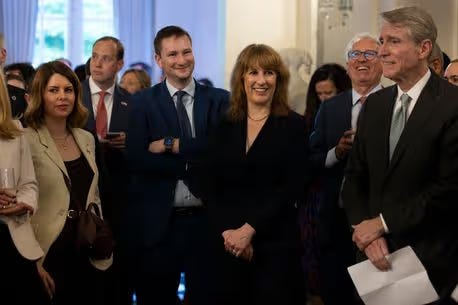
North East Mayor Kim McGuinness joined Rachel Reeves in Washington last week to showcase the region as an area ripe for American investment.
The Chancellor hosted an Investors Roundtable during the IMF Spring Meetings which was attended by Mayor McGuinness - the only regional mayor in the UK party - and key investors such as Citigroup and BNY Mellon as well as Lockheed Martin, who are involved with the space skills centre at Northumbria University.
“The opportunities on offer in the North East are huge,” said Reeves. “Whether it’s supporting its existing strengths in car manufacturing, backing the region’s net zero sector, or getting behind the trailblazers in AI, this government is putting its weight behind the region, and there’s no doubt it’s an attractive destination for businesses from around the world to invest in.
“The North East has the talent, ambition and vision - now with government and business working in partnership to back the North East we will drive growth, boost jobs and put more money in people’s pockets.”
The mayor said: “I am working tirelessly to bring new investment and new jobs to the North East. We’ve already seen deals done with some of the biggest companies in Japan that will bring new jobs and opportunities to County Durham and the banks of the Tyne, so I am proud to now be taking our region’s exciting manufacturing, green energy and technology story to the United States.”
Mick the unsung hero
Mick Ross, CEO of music development agency Generator, has been named Unsung Hero at this year’s Music Producers Guild Awards.
The award recognises individuals working behind the scenes in the recording industry who make an exceptional contribution to supporting artists and producers.
The driving force behind Generator’s ambitious suite of activity to “put the North East on the global map” Mick’s efforts have helped secure landmark events for the region including the MOBO Awards and Mercury Music Prize ceremonies - with the latter returning to the Utilita Arena Newcastle later this year.
Sharing the news on social media, he said: “A massive thank you to those that nominated and voted for me, and by doing so recognised the huge contribution our Generator team delivers for the North East. They work tirelessly for this region the year round and I couldn’t be more proud of them.”
Domino effect

A large-scale domino run is set to sweep through Newcastle city centre this summer, transforming streets and public spaces into a moving chain of sculptural performance.
Dominoes Newcastle will take place on Sunday, August 9, forming the headline finale of this year’s NOVUM Summer Festival (Aug 7-9).
Presented by internationally acclaimed performance company Station House Opera, the ambitious project - which has been seen all over the world in locations including Melbourne, Toronto, Copenhagen and Marseille - will see thousands of breezeblocks carefully arranged across the city before being toppled in a single, continuous chain reaction.
Stretching from east to west, the route will wind through Newcastle’s streets, public spaces and venues, even incorporating dramatic drops from buildings and pauses for large-scale sculptural structures. Sam Wonfor has more in Cultured. North East.
Lucky dip
Today sees the start of a week-long mystery parcel event at Newcastle’s Eldon Square. King Colis is a fast‑growing French retail start‑up that buys unclaimed or undeliverable parcels from logistics warehouses and lets customers pick sealed packages without knowing what’s inside.
Shoppers get 10 minutes to rummage, choose items by feel and weight, and pay £2.50 per 100g before opening them. The format has gone viral in cities from Paris to Berlin, with occasional high‑value finds such as iPads, watches and designer clothing helping fuel the hype. The Newcastle pop‑up in Eldon Square, next to Fenwick, is the company’s first North East event.
A standard bar of Dairy Milk or a small apple would weigh 100g so the person/people who struck it lucky with a (presumably boxed) iPad would have paid around £25 for it.
A quick word
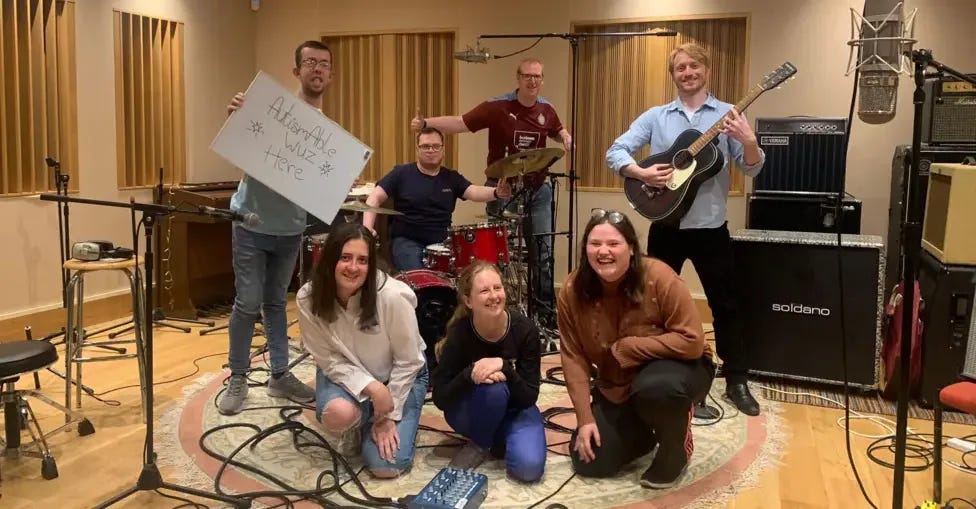
Labour has accused three Green Party candidates in next month’s local elections in Newcastle of making “horrendous anti-semitic” comments. The Green Party said it was investigating anything brought to its attention that doesn’t fit with the party's values and views. South-Shields based AutismAble, an organisation for neurodivergent people, has thanked musician Sam Fender for a £25,000 donation which has been matched by the charity Youth Music. South Shields-based UK Docks Marine Services, has signed a major contract with the Bangladesh Navy to help restore and modernise HMS Enterprise, the Asian country's most recent purchase. Newcastle-based clean-tech company Kinewell is continuing to scale up its operations with the acquisition of ForeCoast Marine. Sunderland residents are being invited to help shape a major new digital artwork set to take centre stage at the city’s new cultural hub. Timepiece, an ambitious audio-visual installation, is being created for Culture House Sunderland by a North East-led creative team including Ross Millard of The Futureheads, alongside video artist Jeremy Bradfield and creative technologist Ben Lawrence. The welfare of butterflies would not have been high on the agenda of Michael Caine’s Get Carter character. But times change and now a fundraising appeal has been launched to support nature at a location near to where Jack Carter is shot on Blackhall Rocks beach in County Durham at the end of the iconic 1971 film. A coroner has ruled that Northumberland council must make changes at a dangerous bend on the A1068 between Guidepost and Ashington after a mother and daughter lost their lives in a crash in September 2024. Leading law firm Ward Hadaway says it is on track to achieve ambitious growth targets and that more mergers are on the cards on the back of the successful integration with the Teesside-based Endeavour Partnership.
Standard bearers
I love newspapers. I’ve always loved newspapers. I take no pleasure in seeing what managements have done to them over the past 25 years or so.
Here’s a stat that shocked me, courtesy of Press Gazette. The Evening Standard (who hasn’t returned from London without a copy to read on the train home?) had 346 staff when the Lebedevs bought it in 2009. Today it has a staff of 16.
Funding your own care: the forgotten means-test
By Professor Bob Hudson
Debates about the virtue of universal versus selective models of welfare provision rarely get a hearing these days. Rather the battles are about where to draw the line on means-testing.
Parties to the right are seeking to make it harder to qualify for support – Kemi Badenoch routinely decries the evils of ‘benefits street’, while Nigel Farage has pledged ‘the biggest benefits cut in history’. Meanwhile the Government is struggling to respond to criticism of the pernicious effects of some current benefits cut-off points, for example with carers allowance and the repayment of student debt.
There is, however, one means-test that rarely gets a mention yet has huge consequences for those affected by it – the capital limits governing access to funding for adult social care.
The most important regulation here is that people with assets worth more than £23,250 must fully fund their own care. This threshold includes the value of the person’s home if they are in a permanent care home placement and their home is not occupied by their partner or a child.
This is a very strict means test, pulling into its orbit people with modest assets that soon diminish – the proceeds of a house valued at £100,000 would pay for little over a year of dementia care. Astonishingly, the £23,250 limit has not even been adjusted in any way since 2010.
It is impossible to imagine any other welfare benefit being frozen in this way, and even if only adjusted in line with inflation it would now sit at £36,400. The consequence is that more people every year are dragged into self-funding their care, and the sums involved are enormous – typically around £1300 per week, rising to £1500 for dementia care.
Successive governments have pledged to reform this situation but have failed to deliver. Most recently in 2024 the incoming Labour government scrapped its predecessor’s plan to increase the upper capital limit to £100,000. Instead, the government asked Baroness Louise Casey to consider longer-term reform with a view to making recommendations by 2028. In a bleak interim assessment published earlier this year she called for ‘a moment of reckoning’, but we are no nearer to a solution.
Given the gravity of their situation, remarkably little is known about the numbers, nature and experiences of these self-funders. One estimate by Melanie Henwood and colleagues suggests there are 350,000 people in England paying for care in their own homes or in residential care, representing around 35% of all people using adult social care. Many self-funders will have relatively modest means and will be anxious about running down their savings. Once these are exhausted it might be necessary to move to a cheaper home – a complex, unsettling and life-threatening experience.
Adult social care has been on an enormous political journey since the 1970s, from a public service largely provided by local councils to a market of tens of thousands of independent providers of many kinds. In the process care has increasingly become seen as a commodity purchased by individuals in the market rather than one provided by a public body. But to what extent are self-funders genuine consumers?
Henwood et al depict self-funders as ‘bystanders’ in their own care – a paradox of strong purchasing power but little genuine choice of purchase. The initial problem is lack of information. Most people will know little about the nature of social care provision - indeed many might have assumed that, like the NHS, it is state-run and free at the point of use. Discovering it is hugely expensive and that there is little or no help available to arrange the best support for a loved one is a shock.
Hunting down the best option at the best available price will be a task beyond most vulnerable older people. Research by Kate Baxter has found that the task tends to fall to family members and friends, but where do they look?
The uninviting options for most will be arranging a myriad of personal visits to homes, scouring staid CQC inspection reports online, or looking at regional newspaper pieces on ‘the top 21 care homes’. One anticipated source of advice and support is local councils but (notwithstanding duties under the Care Act 2014) they tend to leave self-funders to their own devices.
A market requires consumers who seek and digest information to inform their choice of product, but the care home market is incapable of meeting this requirement. Entry is often unplanned, made in response to a personal crisis, and with very low rates of switching to a different provider in the event of dissatisfaction.
Levels of complaint are low amid fears of retaliation and – as a final insult – providers are sometimes reluctant to refund fees paid as ‘deposits’ once a bed is no longer required. None of us would even choose an internet provider in such circumstances, let alone a life-changing decision on where to live.
Ultimately this tale is of the failure of privatising a public service. The sad death of Lord Jeremy Beecham is a poignant reminder of the halcyon days of local authority social services in the 1970s. As Chair of the newly created social services department in Newcastle, Beecham built up widely admired local authority provision across the city, only to see the Thatcher reforms of the 1990s effectively destroy them. A similar tale applied across the region and the country.
Was it worth it? The promise was that the ‘dead hand’ of local authority bureaucracy would be removed and people needing support would then be free to exercise ‘choice’ from amongst competing providers. In practice there is little spare capacity for the exercise of choice, and the market is extremely fragile. Most of the sector consists of small for-profit and not-for-profit companies operating on a shoe string, but large profit-maximising multinationals are making inroads, handing out large dividends to shareholders and locating their HQ in tax havens.
Adult social care is one almighty mess, and few will envy Louise Casey the task of finding a solution. She has called for a ‘cross-party consensus’ – something that seems out of tune with these polarised times. And while there is much talk of improving the capital limits, better funding for councils, and more cooperation between local councils and the NHS, the market model remains unchallenged.
This is a major omission. The philosopher Michael Sandel argues that markets have expanded into spheres of life where they do not belong. There is no better example than adult social care.
Bob Hudson,
Visiting Professor in Public Policy,
University of Sunderland
Recommended reads

Around 60% of veterinary practices are owned by six large corporate groups. Many of these groups are also operating clinics, referral centres, diagnostic laboratories and pharmacies – what’s known as being “vertically integrated”.
These features create a potential conflict of interest, as pet-owning David Reitzke, a senior lecturer in economics discovered after being hit in the wallet when his dog Buddy ate a tub of chewing gum.
“Corporate owners have financial incentives to encourage more treatment, while vets are bound by professional obligations to act in their patients’ best interests,” he says. “This isn’t just a theoretical concern. The CMA found that some processes, including financial targets and internal performance systems, place pressure on vets when it comes to recommending tests or treatments.”

One way or another, we’re moving closer to Europe, writes journalist Ian Dunt is his Substack column Striking 13. It can happen subtly or vividly, slowly or quickly, under Keir Starmer or a successor, but it’s happening. We are no longer discussing whether we should do so. We are discussing how.
“There are basically four models on offer. Status quo, customs union, single market, and full EU membership,” he says - then goes on to look at all in some detail.

The most active, vibrant and socially engaged forms of Christianity in Britain today are often found among ethnic minority and migrant communities, says Mathew Guest, Professor in the Sociology of Religion at Durham University.
At the same time, there are signs that a US-style conservative Christianity is gaining ground in the UK.
“If Christianity can offer belonging and solidarity to black migrants navigating a hostile environment, it has also become, in a very different register, a badge of white ethno-nationalism.
“Political activists have found that Christian language resonates with their message. And they have become increasingly willing to borrow from the rhetoric of their American political allies.”
Thank you for your well considered views on social care in England today. Perhaps this difficulty could be considered in the light of the idea that we are no longer seen as human beings. Instead, we are made into commodities to be priced and auctioned to that greedy section of society which has now become so thoughtless as to be unconscious of any real values of human interaction.
Forgotten are the decades of education, values, and activities that have truly enriched the society by those now being left behind. Now those debts can be ignored while the future is further impoverished by the robot thinking adventurers who care not for values, people and consequences. They only see the immediate profit to themselves while they leave the rest of society to try to heal the wreckage of lives, structures, and the planet.
On ‘care’:
I’m a southerner trespassing here - with admiration - so you can cut me off if this is too far out of line. It’s something no one seems willing to articulate.
The right to die bill was introduced by a northern mp, and is itself being killed by a bunch of rightwing diehards (sorry) who seem to confuse the most rigorous process with something out of the Third Reich. Presumably because that’s what the Daily Mail wants. Even the Scots made a hash of it.
However, while anyone too far gone with dementia could not be deemed capable of making that decision, it should surely be possible for a person to add to a Living Will - a legal document - the fact that they would chose death over incontinence, the inability to recognise one’s loved ones, and yes, the certainty of bankrupting them to pay to keep them alive.
I’ve written this into my Living Will, saying that that would be my choice if it ever became legal.
The current means test is a mess, but talking about the cost of care while refusing ever to let anyone die, even when they say they want to, is absurd.
A grownup debate is required, but that seems to be beyond our legislators - and likely to remain so while religion still plays a disproportionate role in public life.