

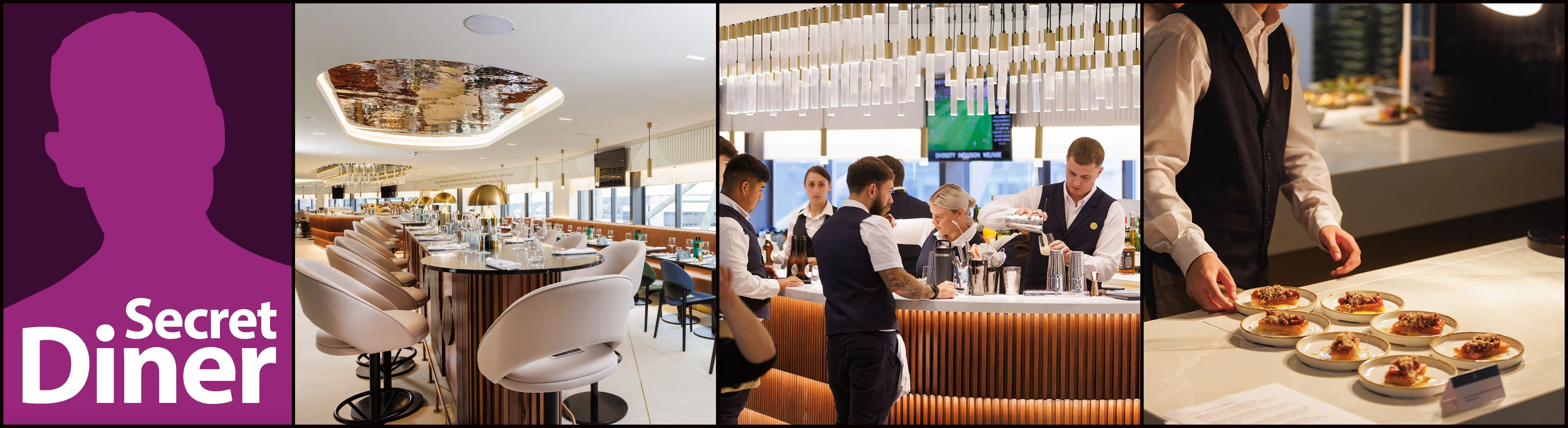
Something old and something new in this week’s long read. The old is provided by Secret Diner, the food columnist I introduced to The Journal many years ago. He caused quite a stir in North East culinary circles with his knowledge and the brutal honesty of his dining reviews.
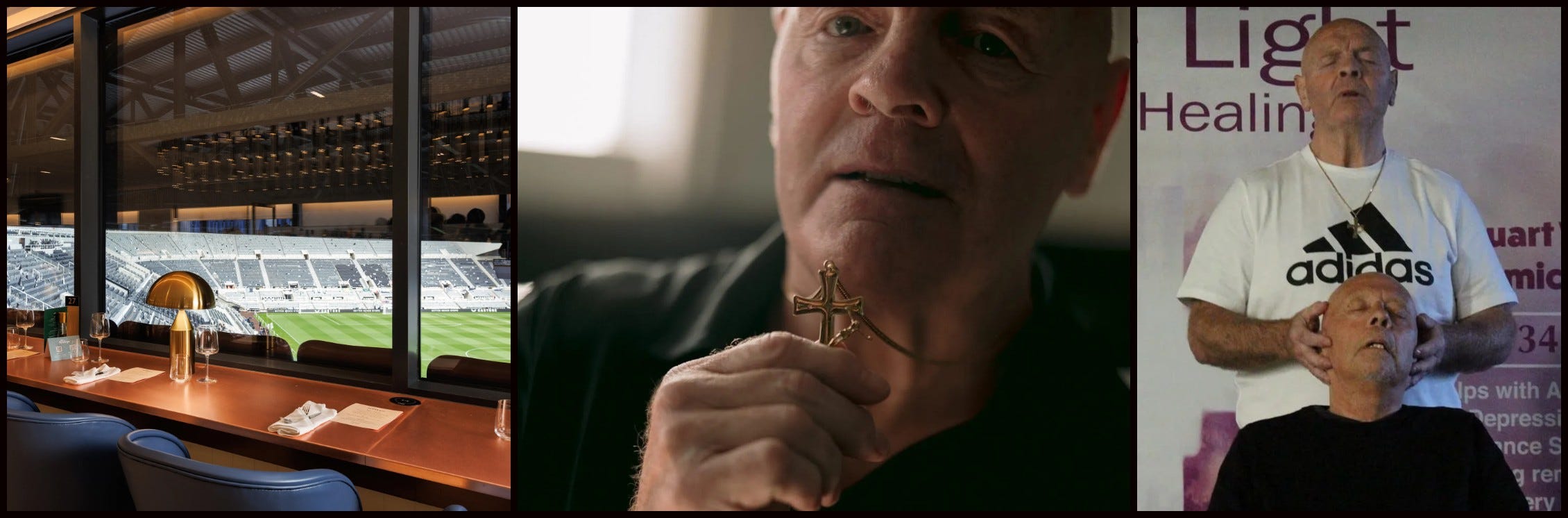
He’s been away, but he’s back! I asked him to be my Plus One when I was invited to hospitality for a Newcastle United match before Christmas. What would he make of the food in The Rooftops? It’s not a full-on Secret Diner review, more an amuse-bouche!
The new is provided by young journalist Liam Geoghegan who makes his Eyes & Ears debut with an enthralling interview with Stuart Watson, a notorious hardman and gangster from the 80s and 90s who is now a spiritual healer.
“Today, the same hands that once cracked heads and gripped guns wield a different sort of power – the power to heal.”
It’s a long read. But it’s worth it. Depending on your browser and the device you are reading this on, the article may end abruptly. It will say ‘message clipped’. You just need to click on ‘View entire message’ to get access to the full edition and finish reading the gripping story.
Sophistication meets celebration
The Secret Diner visits The Rooftops with Fenwick at St James’ Park
“Garbage?” I said. “That doesn’t sound very appetising.”
That’s what happens when the Secret Diner becomes the Senile Diner. He needs his reading glasses to read the menu.
“Ah - Garbure,” I said, sight restored.
Brian Aitken looked at me, eyebrows raised.
“What’s that?”
I think he was testing me.
“It’s a thick soup from the South of France. A kind of warming winter vegetable stew, with bits of preserved goose leg normally.”
It was December 6th, the day when Saint Nicholas is supposed to arrive, though he had turned up in Fenwick’s Christmas window display a whole month earlier, to start jingle-belling himself into the ears of unwary shoppers.
You can see why Fenwick lends its name to The Rooftops, one of the more recent additions to the hospitality options at St James’ Park. It’s the right market for them: a large bright space with a huge bar, it’s a kind of upscale private club for Magpie fans who don’t mind watching the game from the top West of the Gallowgate end of the stadium, because they’ve come mainly for the champagne, cocktails and the food.
One-off matches, like the upcoming Champions League game against PSV Eindhoven in a couple of weeks’ time, will cost you £980 a seat. That’s the same price as a table for six at Newcastle’s best restaurant, Solstice (yes, Kenny Atkinson’s fine dining joint wins the Secret Diner trophy hands down – remind me to send him a sticker for his window). The view from The Rooftops is much better, though – it overlooks the whole ground.
There’s unlimited amounts of champagne and cocktails, and the place feels like an exclusive retreat full of merry Newcastle United supporters. My kind of place. I bumped into a friend there who has signed up for a table for two for the entire year. “The best money I’ve ever spent,” he said, urging me to do the same. I wish.
Brian had invited me to be his Plus One (I never found out who stood him up). Thus, in one stroke I broke two of the cardinal rules of the Secret Diner – never accept freebies, and never go to fine dining restaurants run by national catering chains.
I was pleasantly surprised.
There was a range of interesting small plates. We had smoked salmon and crab in a slightly too fishy gelée, with caviar. And a very good chicken and duck parfait with quince jelly. There was a tiny hash brown cube topped with aged beef tartare, pickled red onion, and “duck egg”, except our duck had hatched and flown away, unless it was referring to the blob of mayonnaise that was holding the little jewel together. It was still pretty good.
Effectively you could create your own tasting menu, and then order and reorder it forever. Brian must have ordered half a dozen “bonbons” of truffle, leek and suckling pig (pork balls to you and me). For him it was almost as tasty as the goal Guimaraes scored directly from the corner half an hour into the game. Maybe not quite as impressive but still classy. Finally, there was Christmas lunch in a bun. Admittedly a brioche, but the posh name didn’t make the turkey, cranberry and sprout puree any less boring. I hate Christmas lunch. Especially on December 6th (Editor’s note: I loved it!).
Back to the broth. It wasn’t garbage, but it wasn’t garbure either. It was a thin gruel, with tiny bits of vegetable. Not unpleasant, but not quite what it said on the menu. Newcastle United didn’t really deliver either, but at least we won. We had been allocated comfortable padded seats with a top view (not a compliment) but accompanied by one of the best audio tracks in the Premier League – the sound of the Gallowgate fans in full chorus.
In a way that only the Magpies know how, we nearly threw away the game to Burnley. We grimly hung on to the end – and coffee, chocolates, and more cocktails. We won. That’s all the mattered. There were more drinks and cheese in the interval too. By the time the final whistle blew, I had almost forgotten how to cheer.
Back in The Rooftops, the party was only just starting. People were getting their money’s worth. Thanks, Brian. For the record, the food was great and you couldn’t beat the service and ambience. Or the company.
Stars (out of 5)
Food ✪✪✪✪
Service ✪✪✪✪✪✪
Ambience ✪✪✪✪✪✪
A quick word
An NHS trust has apologised and said it had taken “significant action” after systematic failings were found at its breast cancer service at the University Hospital of North Durham and Darlington Memorial Hospital. Members of the University and College Union (UCU) at Durham University are being balloted on possible strike action over claims of untenable workloads and worsening job security. Voters in the Murton ward in County Durham will return to the polls later this year after Reform councillor David Cumming stepped down for employment reasons. Tyne Tunnels operator TT2 has paid shareholders a dividend for the first time after posting a fourth year of profit since the cashless toll system was introduced. Greggs reported a sales increase of 7.4% over the last three months of 2025, bringing its annual sales to £2.15 billion - an increase of 6.8% on the previous year. The company expects profits to be flat this year due to weak consumer confidence. The North East Chamber of Commerce has launched a Future Leaders Programme with Gateshead College in response to an identified gap in communication and soft skills.
Stripped Tees
Friday’s edition (Eyes & Ears 09.01.26) reported on the massive dividends paid out to shareholders of Teesworks Ltd. If you want to better understand what is going on at the site of the former steelworks at Redcar then I can recommend an outstanding piece of investigative journalism to you.
Private Eye has made their eight-page special report “on how Britain's flagship regeneration scheme secretly turned into one of the biggest giveaways of public money on record” free to read. It’s called Stripped Tees. For a reason.
Talent unit launched
Screen movers and shakers gathered on Thursday for the launch of the Tyneside Cinema Talent Unit, an initiative designed to help young people break into the industry.
The unit, funded by the Sir Graham Wylie Foundation, includes editing suites, podcast studio, rehearsal space, film and sound equipment for hire and spaces for collaborative working.
The aim is to nurture talent regardless of circumstance, so those from low-income backgrounds will not be disadvantaged. David Whetstone reports for Cultured. North East.

Apologies for the faulty link to Friday’s article on Denmark’s success in persuading over-65s to stay in work. I know many of you tried to open it. You can read the full story now by clicking here.
The gangster turned cosmic healer
“I’ve had someone put a gun to my head, pull the trigger, and nick the bullet twice. Today, I know why I’m still alive”
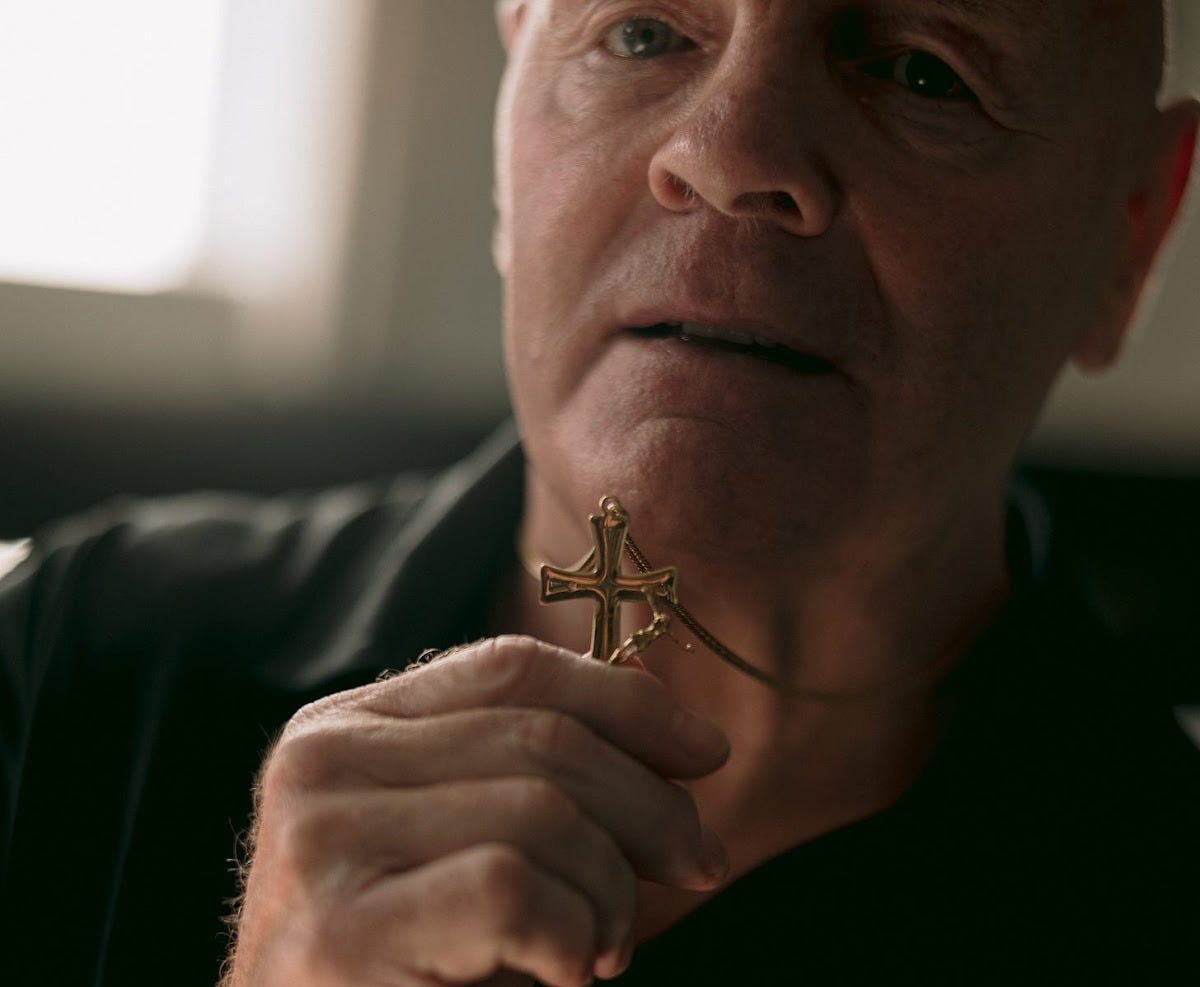
Journalist Liam Geoghegan first met Stuart Watson in the car park of the Teams Social Club in Gateshead, which he has owned for 15 years. It was the beginning of quite a story.
“This is not the place I’d expect to find a spiritual healing clinic,” I say.
“And I’m not the person people expect to be a spiritual healer,” Stu responds.
If you know anything about the tapestry of Newcastle’s 80s and 90s organised crime scene, chances are you’ve come across the name Stu Watson.
A notorious hardman who built a fearsome reputation working the doors before turning to a life of crime, Stu would be served a seven-year prison sentence in 1996 for his role in a Bensham gunfight before he began to change his life around.
Today, the same hands that once cracked heads and gripped guns wield a different sort of power – the power to heal. At least, that is what Stu and his many clients claim.
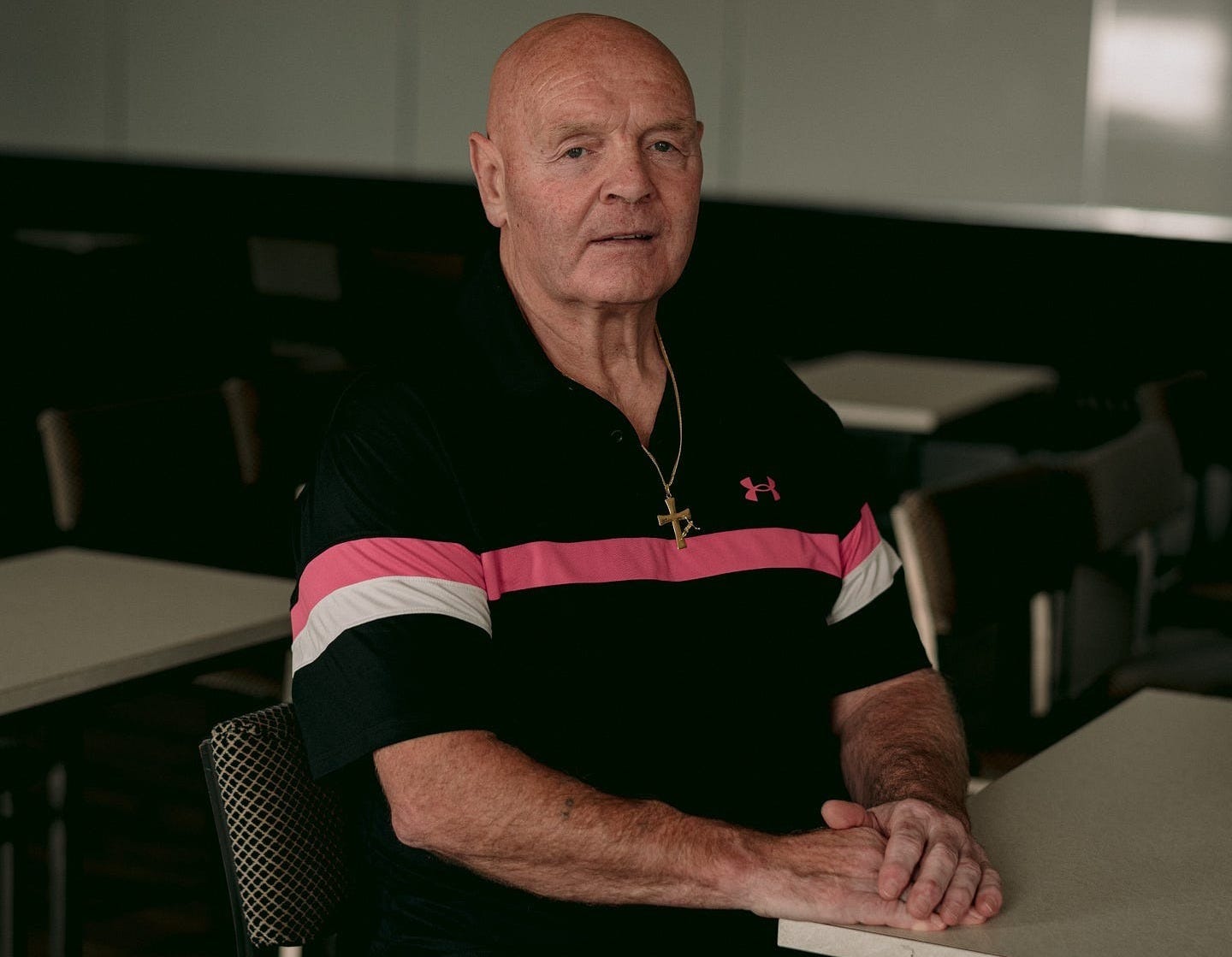
I first met Stu on a Thursday night in the car park of the Teams Social Club in Gateshead, which he has owned for the past 15 years. A man who once weighed 17 stone when he worked the doors, Stu’s appearance today still shows strong signs of his former self.
5’9’’, stocky build, dressed in a black tracksuit, gilet, and a pair of Air Max 95s. He leads me past the club entrance and into a small connected building. It’s the Divine Light Cosmic Healing Clinic, where Stu has been holding his one-to-one healing sessions for the past six years.
The banner reads ‘Helps with Arthritis, Depression, Anxiety, Grievance Support & PTSD’. Anything from a sprained ankle on a young footballer to dementia in an elderly person, Stu says he can provide healing to all with his God-given powers.
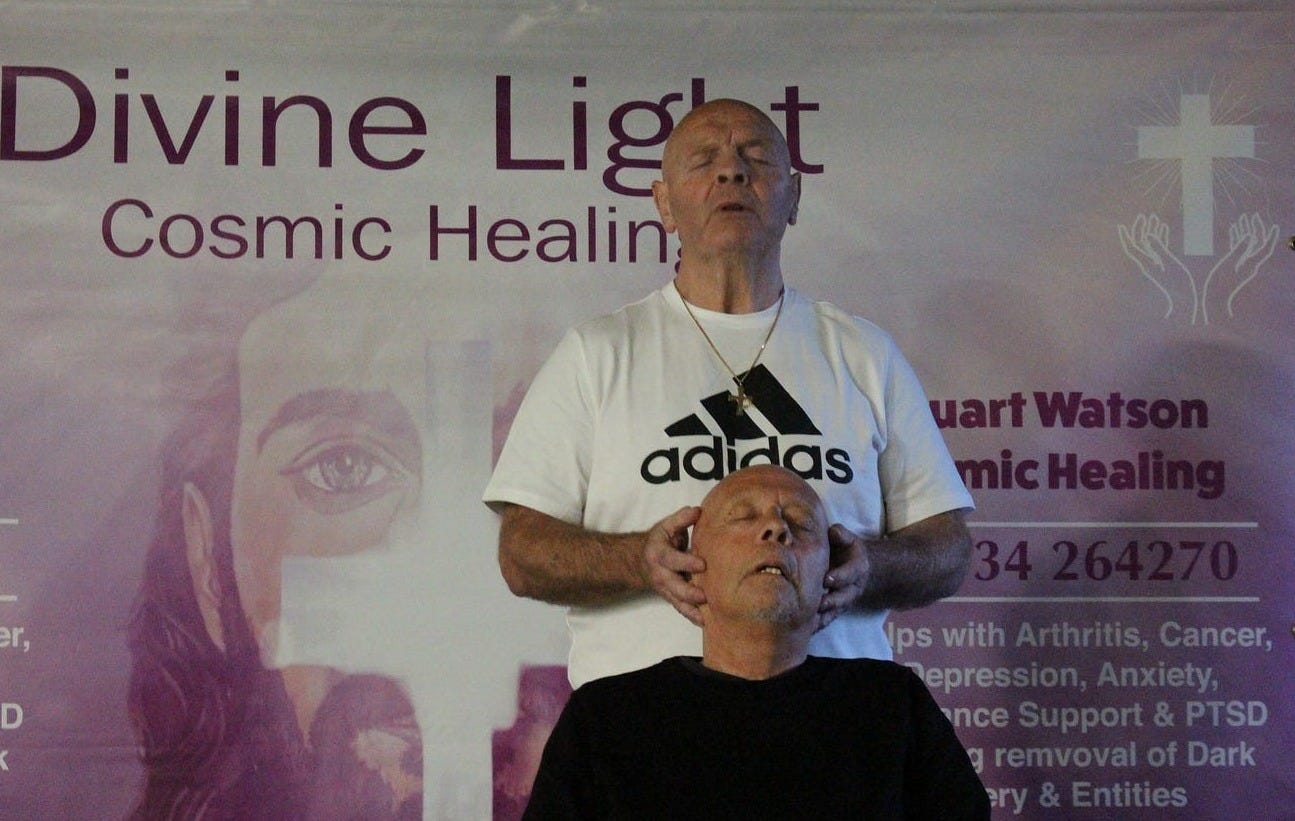
My first cosmic healing session
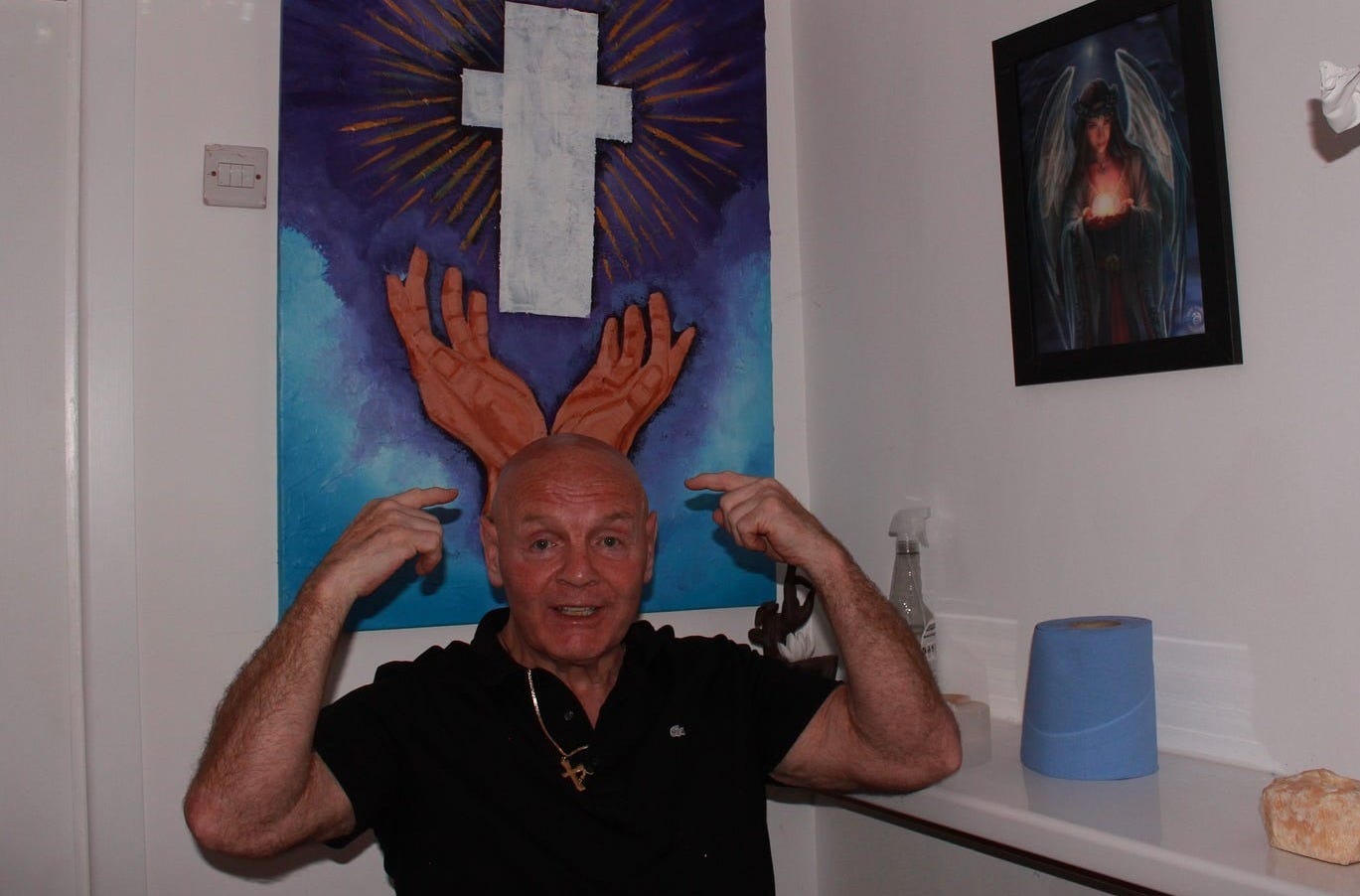
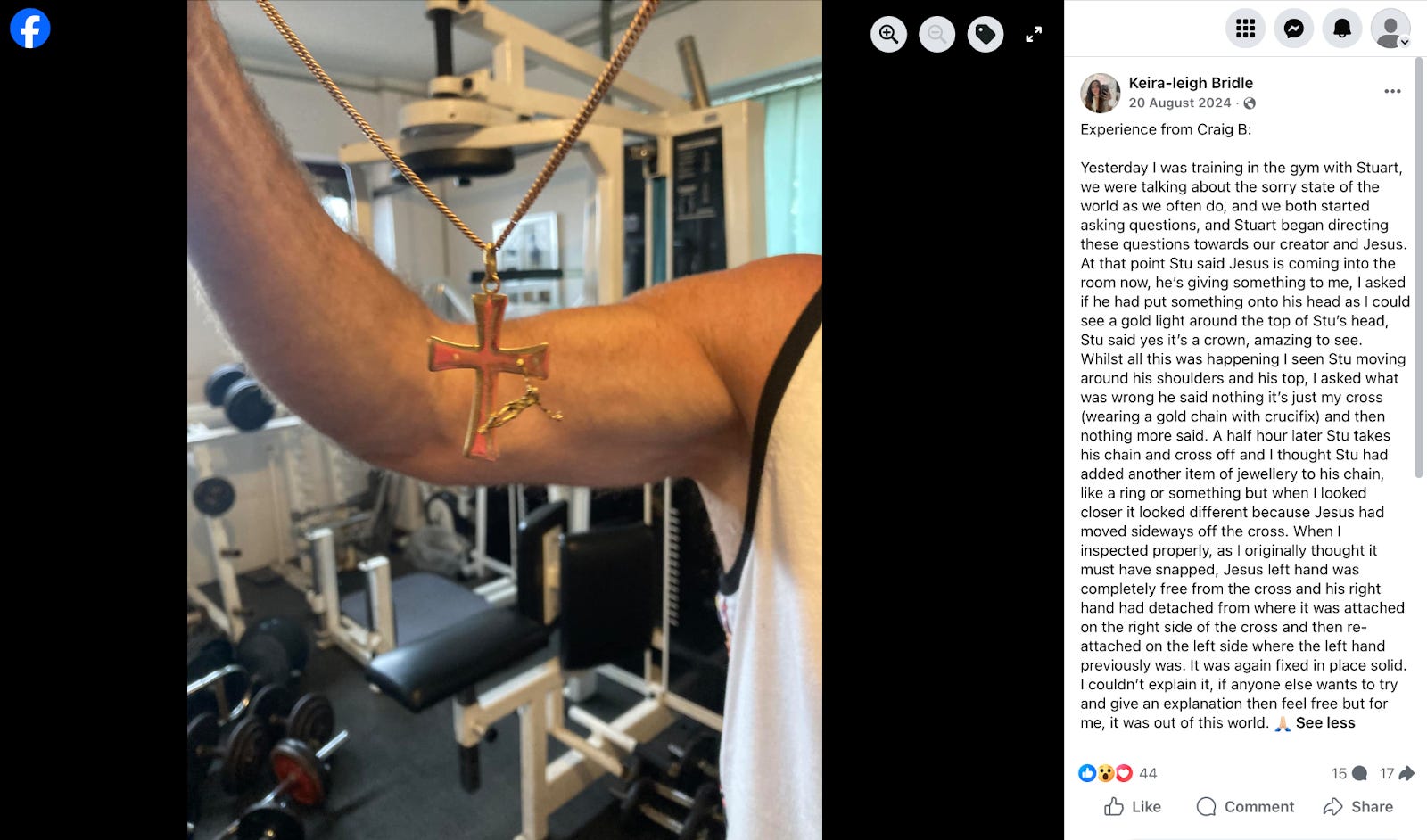
The room is so dark that I could hardly make out Stu’s facial features as he sits across from me. His figure is lit up by the red glow of a salt lamp which rests in the corner. Over his black polo shirt he wears a golden necklace, the pendant depicting Jesus’ crucifixion hangs low on his chest.
The walls are decorated with canvas artworks portraying Jesus and the cross. Above Stu to the right, there is a framed picture of what appears to be an AI-generated angel, in the form of a young attractive woman. To the left side of the room, there’s a massage table.
Following Stu’s request, I lay down on the massage table facing the ceiling.
“I want you to enjoy the experience, open your mind to a higher energy. I’m going to bring Jesus into your body. I’m just going to stroke the side of your face now,” he tells me.
I feel his middle knuckle brush the top of my cheek, maybe three or four times.
“Here he comes,” he exclaims, clutching my head with his large hands.
He begins taking deep breaths, followed by powerful exhales – the same way a weightlifter would just before attempting a set. I can’t make out most of what he says for the next 15 minutes. Perhaps I’m too distracted by his hands which dance above my body, or maybe it’s the rambling, fragmented style of his prayer coupled with his thick Gateshead accent. But I do catch a few words...
“Holy God, deliver us from evil. I love you, I love you, I love you. I ask for your protection. Thank you, Father.”
Next, Stu asks me to stand, face him, and put our hands on each other’s shoulders. He stares intensely into my eyes.
“Do you see any colours? Feel any tingling in your body? Your stomach was going mad! Have you had any problems with your stomach?” he asks me.
“No, not particularly,” I tentatively respond.
“Well, that’s your hub. That’s where your anxiety and stress all come from. And that was getting hoyed all over the shop! I could see it!” he tells me.
The session came to an end. I’d found the whole situation disorientating, but it did seem to have some relaxing effect on me towards the end. I was looking forward to getting some fresh air and a pint.
Drugs, guns, money, and Jesus
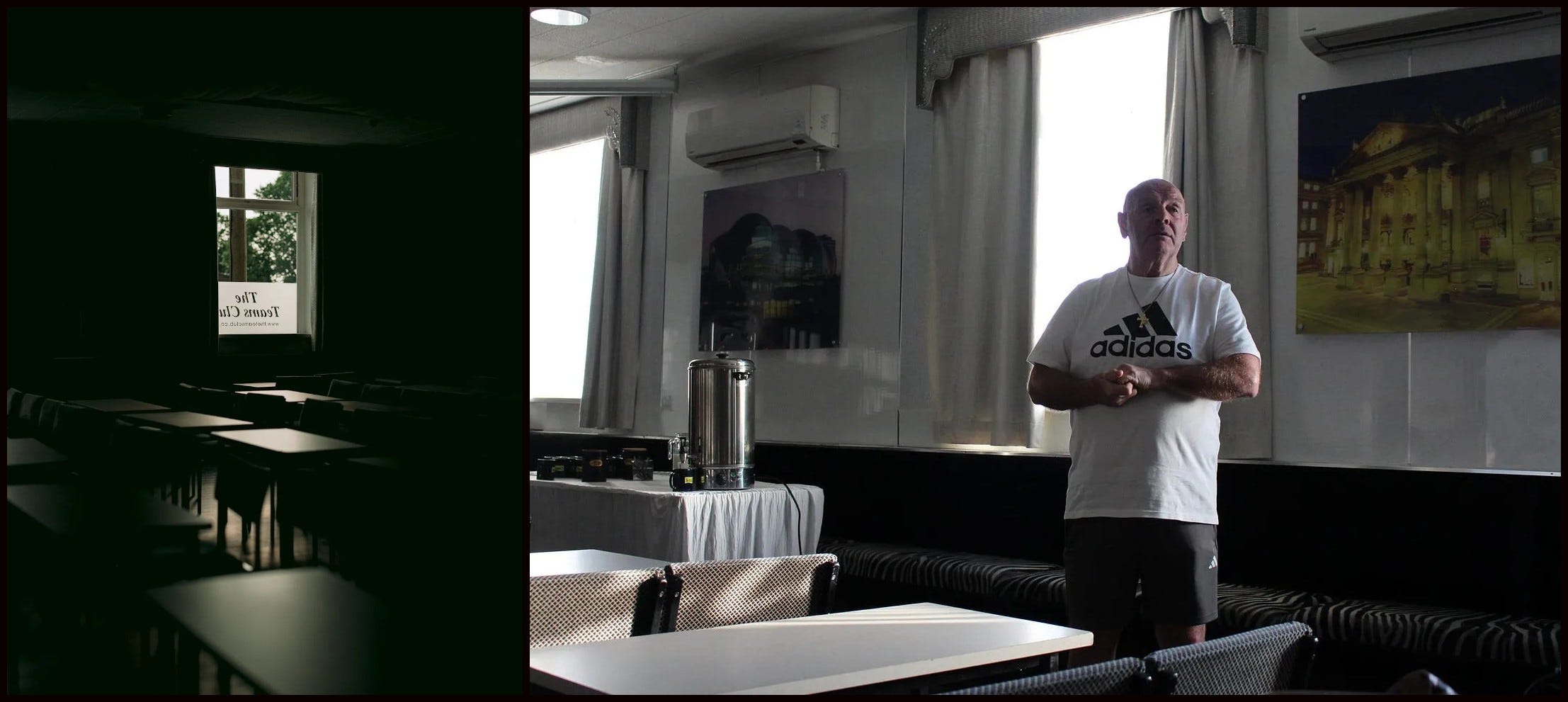
The Teams Social Club is similar to any you’d find across the city. I counted about 80 seats, but the place is empty tonight. Even the staff slip away into the back bar as Stu shows me to a table. He grabs me a beer, and we sit down for a chat.
I begin by asking Stu how he has changed as a person since the beginning of the Divine Light phase of his life.
“I’ve changed a hell of a lot. But I still have a fiery temper. Not like what I used to have, but still fiery,” he chuckles.
“I’ve had someone put a gun to my head, pull the trigger, and nick the bullet twice. Today, I know why I’m still alive.”
Before I know it, the conversation quickly moves to Stu’s beliefs about deep state paedophile rings, transgenderism as a mental illness, Covid conspiracies, ‘invading’ immigrants, and the ‘inevitable’ civil war that our country faces.
We find some common ground over our shared love for the underground rave scene, myself as a punter, and Stu as a trail-blazing organiser, as well as being a past punter himself.
He pauses his rant for a few moments to reminisce with me about his time at the top, painting a picture of himself and his entourage of hardmen, elevated in the VIP section of the top clubs in Ibiza, being sent bottles of champagne by the owners.
Up for days on end, fuelled by a cocktail of drugs and heavy drinking, partying with world DJs like Brandon Block and Alex P. Dressed in designer clothes, rocking heavy gold jewellery, pockets bursting with cash - they were invincible.
This may seem like a bit of a tangent, but I think it leads us to a crucial part of Stu’s past. How did he get to this point in his life?
The 80s & 90s in Newcastle
The 80s and 90s were a time of great urban and industrial decay in Newcastle. The ship building and coal mining industries significantly declined, leading to widespread job losses and economic hardship.
Simultaneously, there was the rise of the entertainment industry. Two main factors can be attributed to the spike in crime during this time: the rise of the house music scene and the introduction of drugs such as ecstasy.
As a result, the city ramped up its production of a particular breed of man. Incredibly violent, money-hungry, bodybuilding thugs, all hoping to get their slice of the pie.
Stu, now 64, was born and raised in Teams. He grew up with his Mum, Dad, three brothers and two sisters. They were poor. His Mum looked after the house. His Dad, who Stu describes as a ‘strict but hardworking man,’ worked as a labourer.
Stu recalls being exposed to a level of violence from a young age. Stu’s older brother Harry would make an arena of sorts and make Stu fight with the other younger brothers - really fight.
“Stitches and everything. I was a man by the time I was 14-15. It was a rough upbringing,” says Stu.
After school, Stu began working as a labourer in the steel industry in Gateshead. He says he was always a scrapper, getting into fights whenever he went out in the town. Once the work in that industry began to dry out, Stu started a new job as a doorman.

Viv Graham
Working the doors was a very dubious role during this time, and the doormen and their counterparts were often associated with protection rackets, fixing, and other criminal activities. Notorious crime figures such as Viv Graham would make their fortunes from charging pubs and clubs a ‘protection fee’ for keeping away gangs who would have otherwise extorted the business.
Viv was famously murdered on New Year’s Eve 1993. He was blasted three times with a gun on Wallsend High Street on his way home from the pub. No one has ever been brought to justice for the murder.
This was not the first time an attempt had been made on Viv’s life. Bizarrely, shotguns were sold openly in pubs in Newcastle in the late 80s, and Viv’s enemies were keen to capitalise on this.
Those who argue for Viv claim he was effectively keeping drugs off the streets and made a lot of enemies in doing so. However, his senior former partner said that although Viv did not sell drugs himself, he did allow others to operate in pubs and clubs for backhanders.
In fact, it was an incident with Viv Graham which would prove to be a pivotal point for Stu in his own criminal career.
In a moment which would go down in Tyneside folklore, Viv Graham would attack Stu while he was working on the door of a club called Hobos in Bath Lane. There had been tensions building for months before this, in a battle for territory and reputation.
The savage incident was recorded on CCTV and witnessed by multiple undercover officers, who had orders not to intervene. The plan was to catch Viv in the act and finally get him sent down.
“They used me as bait - I was a lump of meat to them. That’s a conspiracy to murder from the police!” says Stu, attributing this moment to his spiral into the world of organised crime.
“I wasn’t even a villain at the time. They turned me into that! They turned me into a man who says, ‘where is the law in this country?’ They sent me down that darkened path.”
Viv was sentenced to three years in prison for leading the attack on Stu. His associates were sentenced to two and a half years each.
The ‘Dark Path’ and the Doorman Registration Scheme
Shortly after his release from jail, Viv ended up landing a job with Stu. The pair were in the process of squashing the beef and would be working the doors of what would become the main gay club in town, Rockshots. They were hired by the owner Adrian Gadd primarily to keep the gangs of the West End out.
However, according to Stu, a dispute developed between them over wages after Viv refused to show up for work for some weeks, which left Stu to work the doors on his own. During this time, Stu says he was receiving death threats from people at the door almost every night, often with guns and knives being waved about.
Stu says that he refused to give Viv his wages and instead used that money to employ more door staff and began building his own team. The two never saw eye to eye from this point – but Stu says no real violence came between them.
By this time, Stu had begun to get involved with the drugs game. He cites the introduction of the Doorman Registration Scheme in 1992 as one of the reasons for this shift.
This scheme was the first of its kind in the UK, organised by Northumbria Police and Newcastle City Council because of the growing number of crimes allegedly involving bouncers. It was clear early on the sort of impact this would have on the nightlife scene in the city and the criminal underworld which centred around it. Two months after its introduction in July 1992, The Independent reported: “Last year, 78 bouncers were arrested for alleged crimes involving violence and drugs. This year’s total so far is fewer than 10.” (September 1992).
Stu says his past criminal record, which consisted of a scrap metal offence, failed MOT, and a fighting offence from when he was younger - ‘slap on the wrist stuff’ as he describes it - had stopped him from passing the scheme and halted his career as a bouncer. He attributes this as a reason for his push into a life of crime. There was also a lot of money to be made in the drugs trade.
Sleeping with a machine gun
As he got deeper into the game, life became more dangerous for Stu, and his paranoia started to take over.
Back at his home in Bensham, Stu would sleep with a machine pistol under his pillow every night and wouldn’t leave the house without it. In the morning, he’d have two men check the street before escorting him to the car outside to start the day.
By the mid 90s, a nightclub turf war between Stu and his associates with another notorious crime figure called Paul Ashton had reached boiling point.
Following on from a series of shootings and violent clashes between the two groups (including one incident where an associate of Stu’s was stabbed with a bayonet on a street in Gateshead), Stu would be sentenced to seven years in prison in February 1996 after five loaded guns were found in his house. The reveal came after police raided the property in Bensham following a shootout in January 1996. Paul Ashton and his associate had pulled up outside Stu’s house in a blue Jaguar. There was a standoff involving Stu and four other men in a van before the gun fight broke out on the residential street.
Describing it as ‘not the ideal situation to be in,’ Stu was beginning to feel it was time to turn his life around.
Murky memories and crystal-clear waters
The next transition from hardened career criminal to spiritual healer is a blurred one to say the least. Stu doesn’t attribute any event or life-changing moment to this change in himself, but there is one story which keeps coming up whenever he’s asked about this period of his life.
Sat at the table in his social club, Stu takes us back to Ibiza once again.
Following on from a two-day bender, Stu decided it was time to spend some time with his family who had also travelled out to Ibiza with him. He hired a pedalo at the beach and headed out with his wife and two children.
“We went far out, then I dived in. I was off my face, I hadn’t been to sleep in two or three days. When I got in the water, they started peddling off. It was about twice as deep as the height of this room, and I just sank down,” says Stu.
“I started panicking, spewing up in the water, throwing my arms about. They kept peddling off laughing, thinking I was just f***ing about.
“Then I went down a third time, and everything went calm. I was on the sea floor thinking ‘this is your time Stuart’.
“So I’m lying there on the seabed, when my arm suddenly hits a chain. It was from the anchor of a yacht. I pulled myself up, and the lass and the two kids came back for me. I swear on my kid’s life that the yacht wasn’t there when I went down. I think that was a sign from the big fella upstairs. I knew he was watching over me.”
Stu says he received many signs from God, but it wasn’t until he returned home that he would begin to consider spiritual healing.
Stu’s clientele and the group healing session
Although Stu accepts that he is not a tech-savvy person, he has gradually made his way online to connect with those interested in his work.
He has a Divine Light podcast on YouTube, and a page on TikTok where he streams virtual healings. He’s made appearances on Dodge Woodball’s Eventful Lives podcast, and Shaun Attwood’s True Crime podcast, as well as a few others.
“I can’t get it out there. I could do this to the masses. I could heal 50,000 people if I was linked up to them.
“I’ve gone to three different churches, and I’ve asked them for me to come in once a month to see the parishioners. I told them that I see Jesus and I see God.
“They’ve said to me that they’d have to take this up with the Vatican. I won’t deal with them”, says Stu.
In his Divine Light Cosmic Healing group chat on Facebook, Stu uploads post-healing interviews with clients, as well as many examples about his beliefs surrounding numerology and other conspiratorial ideations.
Although he clearly has big goals with Divine Light, most of his work today centres around his social club and clinic in Gateshead, and most of his clientele are relatively local to the area. But there are a few exceptions.
One is a client called Elaine, who Stu was introduced to through someone he met on holiday in Mallorca. She has flown to Newcastle to see Stu and has even gone as far as paying for Stu to fly out to Switzerland to provide his services.
As well as helping her non-verbal son to start speaking, Stu also claims he was able to remove the cancer from one of Elaine’s friend’s lymph nodes on the same trip. This isn’t the first time someone has come to Stu for help with cancer.
Back at his social club, I am introduced to a man called Gordon Gofton - one of Stu’s top clients. We meet at one of the Divine Light group healing sessions which is held in a function room connected to the main bar. The sessions cost £5 each. One-to-one healing costs £50, however Stu does do healings on children and those struggling with money for free.
There are a lot of empty seats. About 10 people have turned up to the session. Stu seems confused about the level of interaction he gets with his social media pages in comparison to the amount of people that actually turn up on Thursday nights.
Gordon, 74, has known Stu for 17 years, but had never stepped foot into this room until he was diagnosed with Stage 4 Bowel Cancer in July 2024. Two days after the diagnosis, Gordon and his wife contacted Stu, desperate for any help they could get.
Gordon’s wife Joan tells me: “Stu has been given a special gift for healing the body and mind. Gordon could not have coped without him. Stu was with him every day. Even in hospital Stu would come to give him healing. He would call him every night.
“His first operation failed. We were told he had a 3% chance of surviving the second operation. He’s been given the all clear now. We go on a cruise in three weeks – isn’t that great?”
Both Gordon and his wife are in absolute awe of Stu – they can’t tell me enough how grateful they are of this man.
Gordon says: “I know people look at me and think I’m a cracker, thinking that the cancer has got to my brain. I know it’s been hard for him (Stu) too, people thinking he’s a cracker as well.
“I would not be alive today without him. I wish I could get on the telly and say to people ‘I’ve had cancer – go and see this bloke!”
Stu goes round the group one by one for their healing. Afterwards, each person talks of feeling uplifted, their physical pains reduced or gone completely, seeing visions and waves of bright colours. Compared with when we all first came in, the room is buzzing.
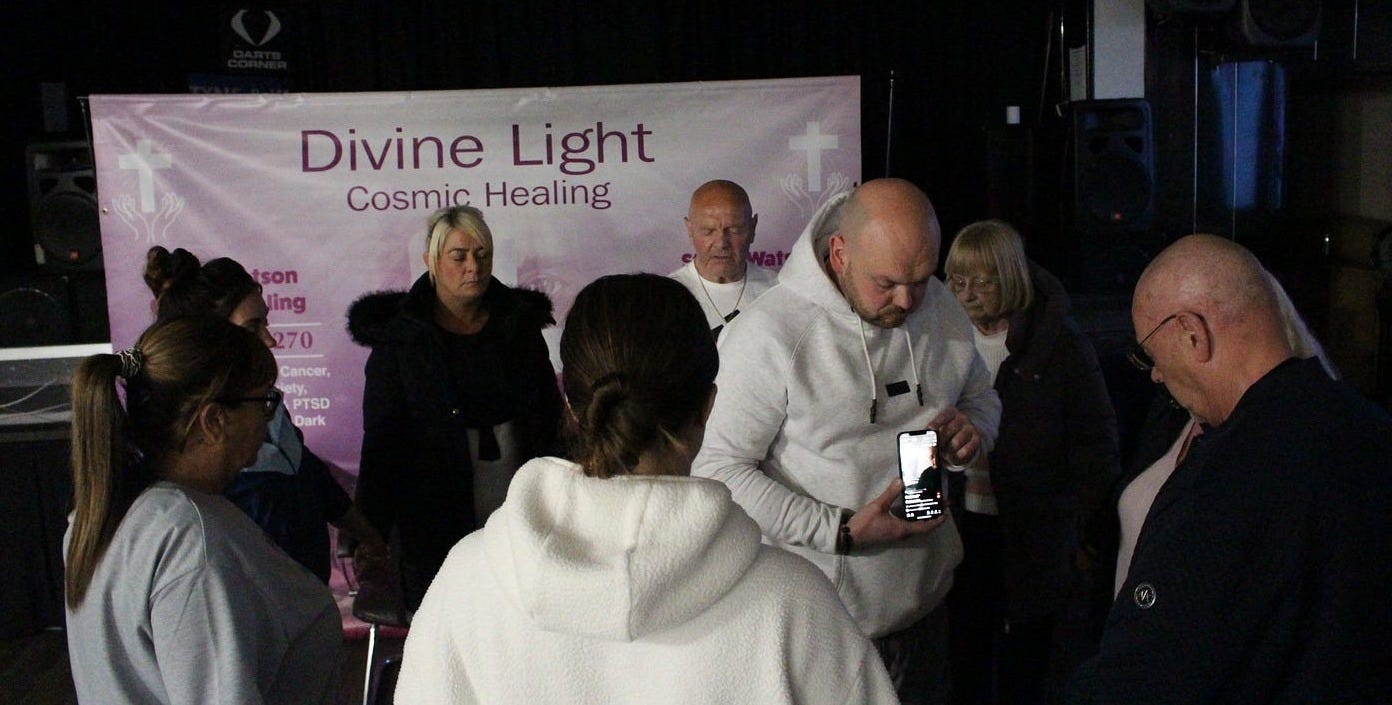
“I can see people’s energy fields. I can tell which people are good and which people are bad. I can see people with dark energy,” Stu tells everyone.
I was hoping he wasn’t referring to me at this point – after all, I was the only person who was not there for a healing. I was sitting at the back with two cameras, piercing the silence in the room with each snap.
Once the last individual healing comes to an end, Stu invites everyone in the group to the front to link together in a circle. A friend of Stu’s stands in the middle of the circle, pivoting with his phone camera which is livestreaming on TikTok.
As I circle around the group, looking at the different faces through the lens of my camera, a question begins to stir in my mind.
Why Stu? Why would each person in this room pick Stu, an ex-gangster from their city to be their ‘spiritual healer’? Why is he the ‘chosen one’?
In all honesty – I don’t get much in terms of a response from this question. When I ask if there was something about Stu’s past that attracted her to these sessions in particular, one woman called Jenny tells me: “I think it’s just more curiosity than anything.”
The question of ‘why’ doesn’t seem to mean as much to Stu and his clients as it does to me. They believe it works, and that’s all that matters.
As Stu summarises: “If I tell you to go step in a horse’s sh**e, and it works – then you go step in a horse’s sh**e.”