

It’s fair to say that William Armstrong was a genius. The Victorian inventor and engineer became Britain’s largest industrialist and one of the wealthiest men in Europe. His Elswick works employed more than 20,000 people and his home at Cragside in Northumberland was the first house in the world to be lit by hydro-electricity.
His reputation, however, is being called into question again over his links to selling arms to the Confederate pro-slavery forces during the American civil war. This has led to calls for Newcastle University’s oldest building to be renamed.
It’s nonsense, to politely paraphrase Henrietta Heald, the leading authority on Armstrong who writes for The Source today. She tells you why in her article at the end of today’s edition.
I have another emotive read for you, this time from Simon Rushworth who writes about his friend Andy Taylor, the former Duran Duran guitarist who died this week aged 65 from prostate cancer. Simon’s story begins after the days of Rio and Girls on Film but also takes you back to Andy’s formative years in the fishing community of Cullercoats.
Culture plays a big part in today’s edition. A new creative industries cluster around publishing is to be established in the North East. That huge news came just after it was confirmed that the Old Post Office in Newcastle has been acquired by Northumbria University and New Writing North to establish a Centre for Writing and Publishing.
More positive news came from the Tyneside Cinema where they announced a fundrising campaign which began in the best possible way - with a £500,000 donation from the Barbour Foundation.
Elsewhere this week we have a World Cup coming to the North East (hopefully), opposition to data centres and solar farms (no surprises there), and the return to the region of NHS England chief Sir Jim Mackey.
Have you never see a High Street store having a closing down price increase? It’s a reasonable question asked by a parent whose child is going to a council-run nursery in South Tyneside where the fees are going up just a few months before the doors are closed for good.
Then there’s the council that took in more than £1.5m in parking charges last year - and still managed to make a loss - for the second year in a row. What are they spending their maintenance money on?
Brian Aitken
Editor
Great story - with a North East heart
A new creative industries cluster around publishing, to be led by Northumbria University’s Professor Katy Shaw, has been awarded £6.75m by UK Research and Innovation (UKRI) via the Arts and Humanities Research Council.
The news follows the announcement that the Old Post Office in Newcastle has been acquired by the university and New Writing North to be a Centre for Writing and Publishing.
Funding from the North East Mayoral Strategic Authority, along with direct or ‘in kind’ resources from other partners, brings the total investment in the venture, known as UK Publishing Futures, to £11.6m.
With Newcastle, Durham and Sunderland universities included among more than 20 regional, national and international partners, Northumbria University say it confirms the North East’s place at the heart of publishing innovation.
UK Publishing Futures is one of five creative innovation clusters announced by the Department for Digital, Culture, Media and Sport and UKRI as part of a wider £45m funding package, tying in with the Government’s 10-year industrial strategy.
Professor Shaw said: “We believe this is the biggest creative industries research and development investment in North East history, and the biggest ever in UK publishing. We can’t wait to get started.”
New Writing North chief executive Claire Malcolm said: “It’s a real opportunity to develop enterprise, scale and grow businesses while developing the next generation of creative talent from the region.”
North East Mayor Kim McGuinness said: “This region is a creative powerhouse. We’re full of talent and the home of world-class storytellers. Securing this funding is recognition that the Government knows it too. David Whetstone has the full story here. The video above is well worth a watch.
Data centre opposition
Stockton MP Matt Vickers’ petition opposing plans for a £10m data centre on fields to the west of the Teesside town has gathered 4,000 signatures. Protesters want Tract to use brownfield land for the 13-building development. The plan has not yet been officially submitted to the council and a series of consultation events are planned in early December.
Stepping down
Sir Jim Mackey is to step down as chief executive of NHS England ahead of its scheduled abolition and merger with the Department of Health and Social Care in April. The recruitment process for his successor is underway. He will be free to return to his role at Newcastle Hospitals NHS Trust at the end of a handover period.
World Cup coming
With no other country bidding, the UK has been confirmed as the host of the 2035 Women’s World Cup. The tournament will see 48 teams play in 104 football matches over 39 days. Newcastle and Sunderland are among an initial list of 19 potential venues.
Before then, England, Scotland, Wales and the Republic of Ireland will jointly host the men’s European Championship in 2028, with Newcastle one of the host cities.
Stadium puzzle
Follow up question to the World Cup announcement - what sort of stadium will Newcastle United have by 2035? The club has been mulling over expanding St James’ Park or building a new stadium for a long time now.
Bosses have given their clearest hint yet that they favour building on Leazes Park (not without its issues) on ground adjacent to the current stadium. And the club’s Saudi Arabian owners have instructed JP Morgan to sell a stake of up to 25% in the club to raise funds to help pay for the estimated £1.3bn cost of a new build.
Newcastle had to give a reassurance that the stadium would remain as it is for the Euros in 2028. But after that…
Rail plans backed
North East council leaders have agreed to spend £2.1m on feasibility work to push forward with a dozen railway infrastructure projects across the region. Projects include the extension of the Northumberland Line, the development of new stations in Gateshead, Backworth and Mill Lane in South Tyneside, the reopening of Ferryhill station and improvements at Sunderland, Heworth and Manors.
At a meeting of the North East Mayoral Strategic Authority’s cabinet, Mayor Kim McGuinness said: “Transport is one of the biggest things people rely on in the region. We want to see the Northumberland Line extended, it has been successful so lets take it further. We want more trains at Sunderland, and a new train station at Ferryhill. There’s still more to come.”
£5m safety pledge
The North East MSA Cabinet approved the spend of £5m over two years to improve safety for women and girls on the region’s bus and train network by increasing “visible staffing”.
North Tyneside Mayor Karen Clark said she was delighted by the funding. “As a woman, a mother of two daughters and the grandmother of a teenage girl, the stories she [her granddaughter] shares about being on public transport are horrific, quite frankly, and deeply concerning.”
Pathway for dualling A1
Northumberland’s deputy leader Richard Wearmouth raised the issue of dualling the AI at the North East MSA cabinet meeting and called on the mayor to set out a route for getting Government approval for the long-awaited scheme.
Mayor McGuinness said: “The A1 needs to be dualled and it is still not okay that it isn’t. Your point about a pathway to getting it done is crucial. Cross-party, we’re absolutely together on this. It is not something we can just sit by and let go.”
£2m and it’s yours
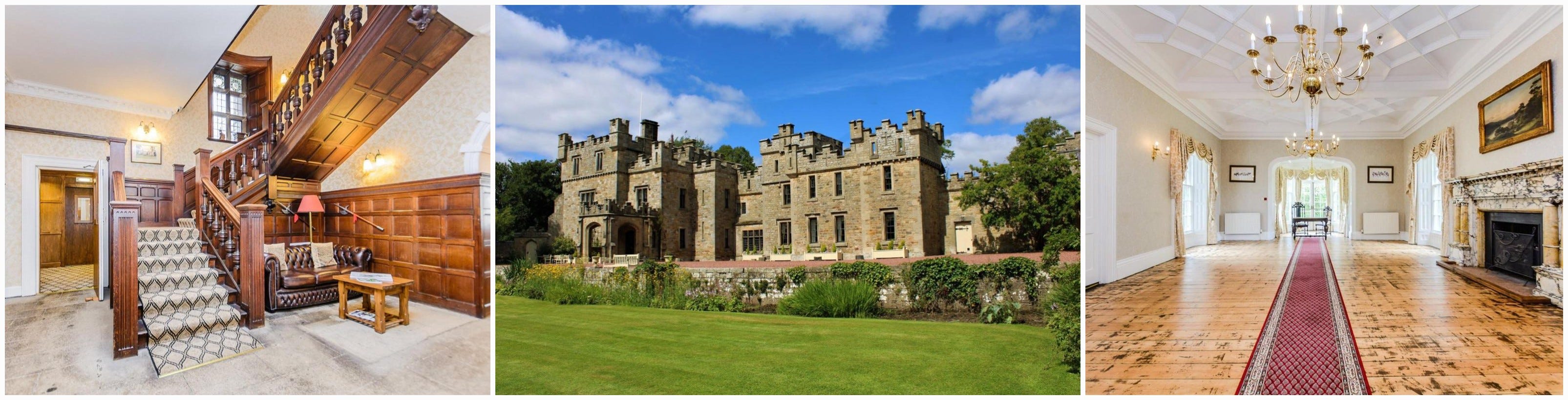
The historic Otterburn Castle is up for sale with owner Elena Wynne looking for offers over £1,950,000. The 18-bedroom hotel has only been open for six months but Ms Wynne has confirmed the hotel, restaurant and events business is no longer operating. Strutt & Parker are handling the sale and you can see the brochure here.
From Cullercoats to Ibiza, via Rio
Many words have been written in the past couple of days about Duran Duran guitarist Andy Taylor who died this week aged 65 from prostate cancer. Here Simon Rushworth offers a personal perspective on the Rock and Roll Hall of Famer, proud family man and charity champion. It’s a unique insight, picking up from when Andy was looking to leave Duran Duran but also looking back to his Cullercoats roots.
“Whenever a close friend passes away there’s always an immediate regret that those unique conversations you shared together will never happen again. Andy and I could talk for hours and we often did. I’d always ask him how he was getting on and he’d always assuage my fears by sounding like the worst was over and he was, effectively, bulletproof.” Read Simon’s tribute to Andy here.
Warning shots

We reported last week (Parkinson’s, paralysis and fear 20.11.26) that farmers in Northumberland were only going out in groups because of threats and intimidation from people taking part in illegal hare-coursing.
Northumbria Police said it has seized several vehicles and sent out warning letters to individuals. “We want to be clear that rural crime will not be tolerated under any circumstances. We continue to take robust action to protect property, support victims and maintain safe, resilient communities where people can live and work with confidence.”

It’s a no - for now
Durham’s planning committee went against the advice of planners and refused an application for a major solar farm on the outskirts of Murton.
Grupotec Solar UK 9 Limited wanted to install panels and battery storage facilities on a 120 hectare site on South Sharpley Farm. Landowner Jo Hare argued the solar farm would “protect the future” of his family’s farm. Sunderland City Council is yet to make a decision on part of the scheme within its boundary.
Durham planning and highway committee chairman Scott Woodhouse said it was a “big win” for residents but warned that the decision could be successfully appealed.
That’s meagre all right!
The Labour-led Durham County Council decided in 2015 to stop paying for playground upgrades. The council has continued to maintain them but when equipment reaches the end of its life then the only way it will be replaced is if money can be got from parish councils, residents’ associations, local councillors budgets or donations.
The leadership of the council has changed twice since then, but the policy still remains. Today more than 30 playgrounds across the county are on an ‘at risk’ list.
A scrutiny meeting this week heard that the budget to maintain all 189 play areas was only £50,000. Geoff Knight, the council’s environment and design manager, said the strategy is due to be looked again in March, but warned: “Some play areas may close over the next 20 years, but only if no other funding is found. This is just how we manage the very, very meagre budgets that we have.”
A quick word
South Tyneside Council is to increase the fees at the 10 nurseries they have already decided will close in July next year. Parents are not happy. “You never see a High Street store having a closing down price increase,” said one. Health bosses want to reduce the size of the new Shotley Bridge Hospital in Consett by about 20% - but the population is growing and now Durham councillors are asking if the planned facility will be able to cope with the “population explosion”. Restaurant Pine in Northumberland has been included in La Liste 2027, a ranking of the worlds top 1,000 restaurants - the fourth year in a row it has been included. Pine received a score of 85 out of 100, placing it 35th of the 75 UK restaurants listed, making it the highest-ranked restaurant in the North East. The North East Ambulance Service has recorded the fastest response times in the country. In October, ambulances in the region reached the most seriously ill patients in just five and a half minutes. That was the quickest response time in the country for category 1 incidents and more than a minute-and-a-half quicker than the next best. Sunderland University staff will be balloted for strike action in an ongoing dispute over a £40m savings plan which could see 188 jobs being cut. How popular - or unpopular - are cockerels? Darlington Bird Rescue founder Laura Hewitt said she had been called out to rescue more than 50 birds this year including 22 abandoned on one occasion. The dumping has increased despite the council overturning its decision to ban cockerels from allotments. A fire thought to be caused by an electrical fault has significantly damaged a grandstand at Sedgefield Racecourse. Bosses have reassured visitors that racing will go ahead as planned on Tuesday. Many councils see car parks as a revenue stream. Redcar & Cleveland has some of the highest parking charges in the Tees Valley and raised £1.575m in the last financial year - but spent £1.821m. The deficit of £246,000 is more than double the loss in the previous year. Former roads minister and Conservative MP Guy Opperman has been banned from driving for six months. The former Hexham MP was caught speeding in South London in May and already had nine points on his licence.
Anniversary celebrations
A £5.6m fundraising campaign, a £500,000 donation from the Barbour Foundation to kick-start it, and a year-long programme celebrating the North East’s screen heritage have been announced as the Tyneside Cinema prepares to turn 90.
Nic Greenan spoke with both passion and emotion at a gala dinner on Tuesday where guests were given an insight into the scale of the cinema’s anniversary ambitions. Sam Wonfor has the full story here.
Graffiti returns
More celebrity-themed graffiti has appeared in the West Denton area of Newcastle with a group calling itself The Mellow Birds taking responsibility for the messages which have gone viral. The latest include Holly Willoughby owes Love Honey £200 on Klarna, Ben Shephard puts the bins out in his wife’s flip flops, and singer Lily Allen gets a ‘too-good-to-go’ bag from Londis.
The graffiti has been condemned by police and council leaders and a 33-year-old man was arrested in connection with earlier graffiti, and issued with an out of court disposal.
Business bites
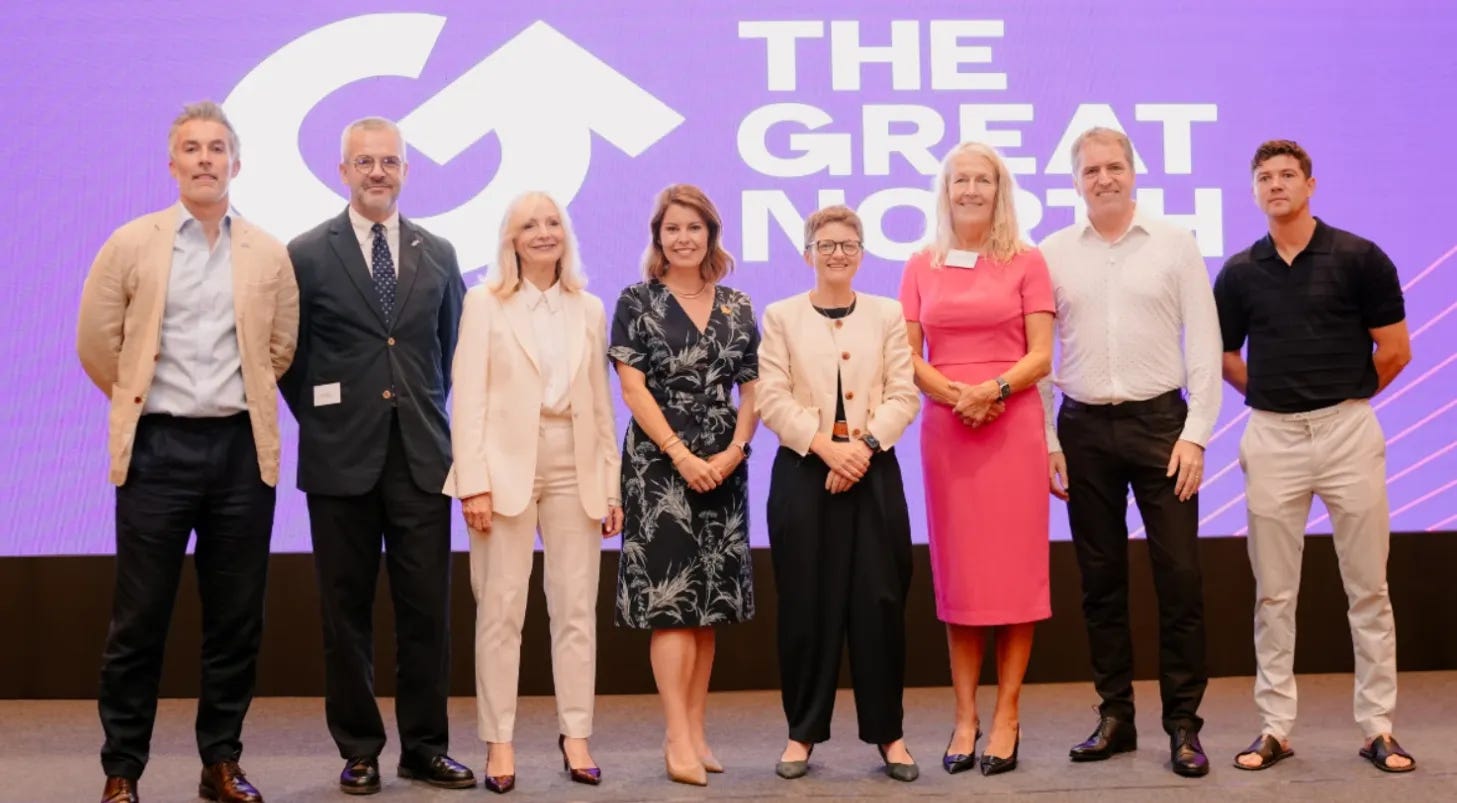
The number of Northern firms looking to expand in India has soared after The Great North trade mission last month. New figures show that 10% of Northern exporters expected to sell to India for the first time in Q4 – up from less than 1% in the previous quarter. That’s the highest rate of any UK region, and more than twice the national average. Three business growth funds set up by the North East MSA have driven £30m investment in local firms, helping to create and secure more than 250 jobs in their first year. The programme includes the North East Accelerate and Elevate Funds, and the North East Spinout Inspire Fund, which sees the MSA invest alongside the region’s universities to commercialise their research. County Durham-based Casa Group has continued its expansion by joining forces with Whitley Bay estate and lettings agency Cooke & Co. The deal means that Casa Group now manages around 2,000 properties, serving clients from North Yorkshire to Edinburgh. North East-based Vertu Motors has acquired four dealerships in Hampshire and Dorset in a deal worth £16.1m. A management buyout has been completed at Blaydon-based utilities contractor R J Utility Services. The company, which was established in 1997, has been acquired by Brad Thompson who joined the firm in 2003. Seaham-based social housing provider believe housing has appointed Matt Sugden, currently chief executive of Railway Housing Association, as its new chief executive, succeeding Alan Smith, who will retire at the end of December. Malhotra Group Chair Meenu Malhotra was presented with the Lifetime Achievement award at the Property Investors Awards 2026 in London. Fast-growing wealth management group Fairstone has expanded its presence in Scotland by acquiring Edinburgh-based 336 Financial Management.
2016 ad break
Today’s choice of an ad from the past was based purely on the fact that I have become a grandfather again. This ad for Doritos, first shown during the Super Bowl in 2016, was not how Brodie William Aitken-Drummond came into the world.
Armstrong and slavery
By Henrietta Heald
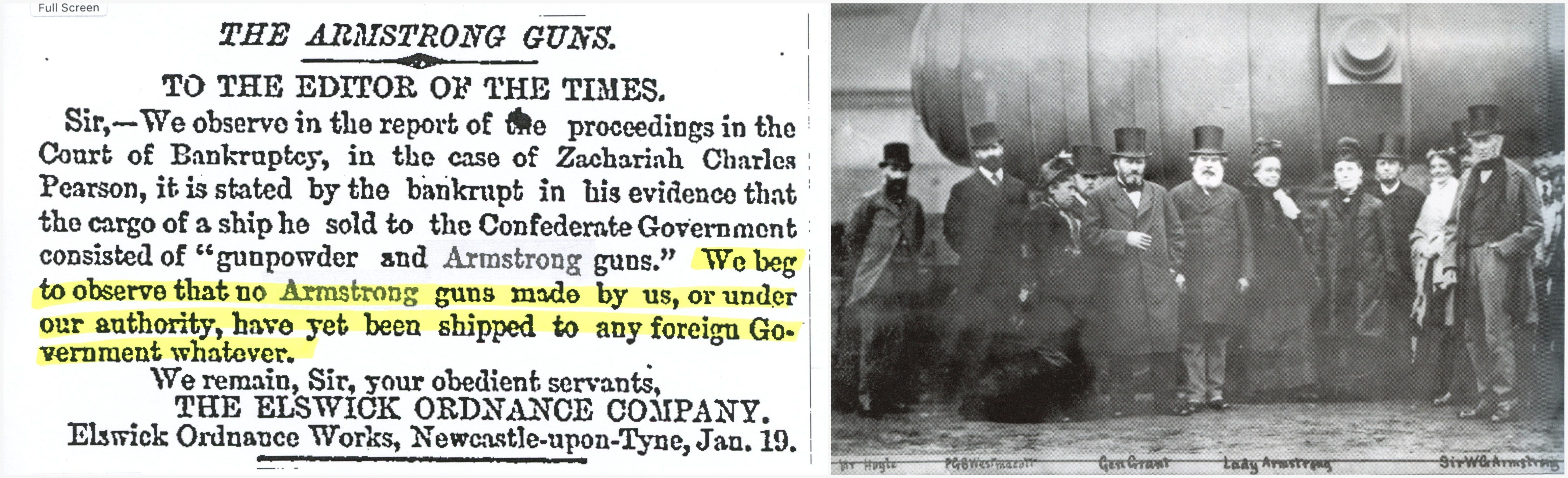
Was Sir William Armstrong, Baron Armstrong of Cragside, inventor, engineer and industrialist, an enthusiast for slavery – such an enthusiast, in fact, that he was relaxed about supplying guns to the Confederacy during the American Civil War (1861–65)?
It seems unlikely in a man whose early mentor was James Losh, the prominent reformer and abolitionist, and who served for 40 years as president of Newcastle’s renowned progressive society, the Lit & Phil – to say nothing of his own published remarks on slavery (see below).
But that is the claim made by Dr Fionnghuala Sweeney* in her account of a trip to Britain in 1886–87 by the American abolitionist Frederick Douglass, well-known leader of the African-American civil rights movement, as reported in a BBC story on November 23 2026.
Douglass was in Newcastle on June 15 1887, when William Armstrong laid the foundation stone for a building to house the Durham College of Science – a building that would later bear his name. Set up with fanfare 16 years earlier, with Armstrong playing a seminal role, the college was championed by North East England’s great and good as an groundbreaking advance in the nation’s education. It would eventually evolve into Newcastle University.
In Dr Sweeney’s eyes, Douglass and Armstrong, together at the ceremony, were on ‘two incompatible trajectories’, with Douglass, a former slave, representing those who had taken ‘principled stances on anti-slavery, educational inclusion, the alleviation of poverty and peace’; whereas ‘Armstrong’s interest in promoting Britain as a modern industrial powerhouse showed little intention of allowing ethical concerns to curtail the economic opportunities of global militarisation’.
This charge, and Sweeney’s characterisation of Armstrong, proprietor of the Elswick Works, as an amoral imperialist bogeyman, springs almost entirely, it appears, from her belief in his support for the Confederacy. But how well founded is that belief? In truth, there is no reliable evidence for it, and what evidence there is points in the other direction.
Almost four years into the American Civil War, when there was public debate about supplying arms to the belligerents – which the government was banned from doing, but private firms were able to do surreptitiously through middle-men – The Times of London published a letter from the Elswick Ordnance Company in 1864 which read: ‘We beg to observe that no Armstrong guns made by us, or under our authority, have yet been shipped to any foreign government whatever.’
In June 1864, an article in the same newspaper about the competition between Armstrong and Joseph Whitworth to produce the most efficient gun included the following statement: ‘Both Sir William and Mr Whitworth have received overtures from almost every important government to be supplied with their ordnance. Not a single Armstrong gun has gone abroad …’
The acknowledged expert on Armstrong and guns is the Canadian academic Marshall J Bastable, whose Arms and the State, published in 2004, is subtitled Sir William Armstrong and the Remaking of British Naval Power, 1854–1914. Much confusion has arisen from the misreading of a sentence at the start of chapter 5: ‘Amongst Elswick’s first customers were each side in the American Civil War.’ In the exposition that follows, Bastable makes no mention of the Confederacy. Instead, he describes the tangle that beset the Armstrong firm while dealing with a middle-man called John Scott Russell, who made off with the Union side’s cash that was destined to buy Armstrong guns – with the result that the transfer of weapons never happened.
Bastable’s notorious sentence should have read: ‘Amongst Elswick’s would-be first customers …’ There is no doubt that both sides sought to buy Armstrong guns, but in the event both these would-be customers were unsuccessful in getting what they wanted.
A second ambiguous sentence adds to the confusion: ‘[The Order in Council] did not … prevent Armstrong, Whitworth and Blakely from selling guns to each side.’ This means that the law was not effective enough to prevent the sales – not that they actually happened.
It could be said that these unfortunate ambiguities, unintentional on Bastable’s part, have echoed round the world, to the detriment of Armstrong’s reputation.
The idea that Armstrong sold guns to the Confederacy was reinforced in the memoirs of Elswick’s business manager, Stuart Rendel, who was keen to highlight his own contribution to international arms sales, to boost his prestige. The Personal Papers of Lord Rendel (1931) reveals that Rendel ‘went to Paris to see the military agents of the Southern States there’. However, ‘[he] soon became mixed up in the Northern order …’ We can be sure that, if the discussion with the Southern States had borne fruit, Rendel would have told us about it!
Indeed, it was Rendel who had persuaded a reluctant Armstrong to consider foreign sales by Elswick in the first place, when Armstrong severed ties with the British government in 1863, after serving for four years as Superintendent of the Royal Gun Factory at Woolwich. In Rendel’s words: ‘[Armstrong said] he could not possibly, so soon as he had left office, start upon the supply of his guns to foreign powers.’ In the event, Rendel put pressure on an ‘indifferent’ Armstrong to allow him to pursue his desired scheme.
By early 1865, Elswick had a set of guns in its yard ready and waiting to ship to America but was still awaiting payment by Scott Russell. When his scheme was exposed, Scott Russell was disgraced and expelled from the Institution of Civil Engineers, and the Elswick firm, which he had cheated out of £5,000, had to put the episode down to bitter experience.
‘The American difficulty [i.e., Scott Russell] having blown over, I am a little relieved from that pressure which was getting stronger every day,’ wrote Armstrong in a letter to his wife. ‘I hope the Yankees will now let us alone till we get our artillery quite perfect and then if they have a brush let them come on.’
These are the personal, intimate views of Armstrong the engineer: are they likely to have been the expression of a man who was happy to sell guns to the Confederacy? In the event, his guns were sold to neither side – and then, wrote Bastable, ‘The American demand for British guns evaporated completely with the end of the war in 1865.’
Armstrong’s own thoughts about slavery, revealed in his book A Visit to Egypt in 1872, speak for themselves: ‘Nominally, the traffic in slaves is illegal, but, practically, it is carried on without restriction … The manner in which the poor creatures are kidnapped is atrocious, and is by far the worst part of the business. There are gangs of ruffians on the White Nile who do this horrible work, and their mode of proceeding is to make incursions into adjacent lands, and there, surrounding the villages, they set fire to everything that will burn. When the people rush out of their houses, the men are shot down, the children captured, and the women left to starve or provide for themselves.’
*Dr Fionnghuala Sweeney in Slavery and Abolition journal, September 14 2026. Dr Sweeney is Reader in American and Black Atlantic Literatures at Newcastle University.
Henrietta Heald is the author of William Armstrong, Magician of the North, McNidder & Grace (2012).
Read our Substack on this matter as it was inspired by The Victorian Society article about war art. Its a shame is being woke take away from the history, as Mary Beard promotes living with it, understanding it, and reflecting on it, so we can do better in the future. Nnot hiding from it. I hope you read it. Enjoy!