

Next Sunday - it’s a date
Welcome to the last Eyes & Ears before Christmas. I hope you and yours have a good one this year.
I won’t be publishing an edition on Boxing Day but look out for next Sunday’s issue which will feature another beautiful piece of writing from Harry Pearson.
He has already written about how dementia has affected his family (If you didn’t laugh, you’d cry), the weighty funeral instructions he received (Ashes to ashes), and the poignant story of the missing hunting horn that came to dominate his father’s thoughts for some time before his passing.
For the benefit of new readers, and those who want to enjoy the stories again, I have added links here. Harry continues the story next week in his own inimitable style. You won’t want to miss it.
As for today’s edition…
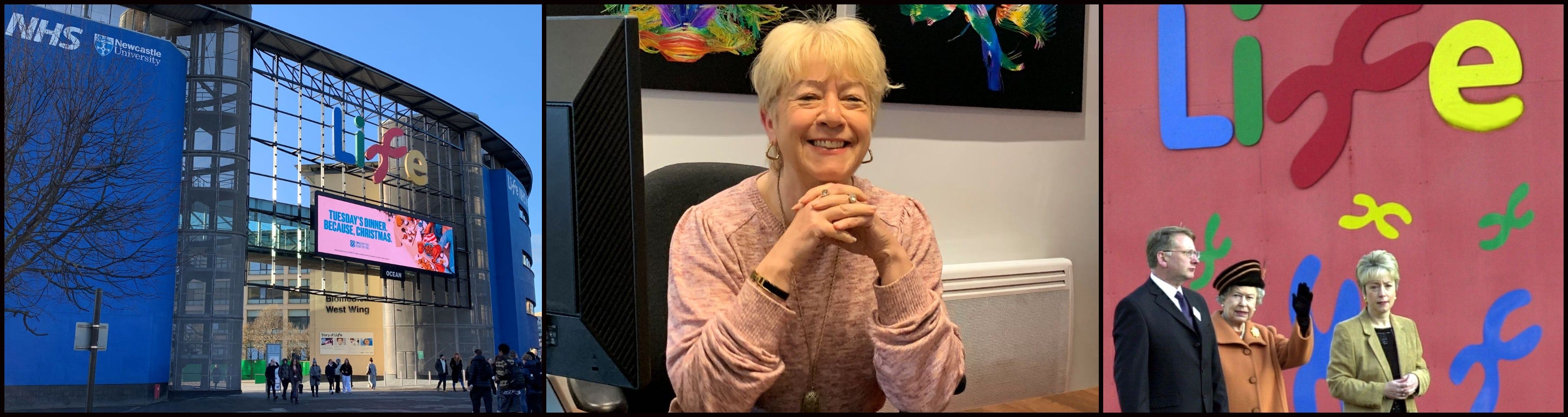
Having notched up 25 years, how’s life at the International Centre for Life? Chief executive Linda Conlon spoke to David Whetstone about past achievements - and testing times ahead. It’s a lovely, insightful interview.
But first, a little Eyes & Ears Extra.


Full steam ahead
Atom Bank has officially opened its new headquarters at the historic Pattern Shop in the heart of Newcastle (it’s behind Central Station).
The 10-year-old challenger bank, and its 600 staff, moved from Durham to one of the original workshops where Robert Stephenson built the world’s first generation of steam locomotives.
Economic Secretary to the Treasury Lucy Rigby unveiled a commemorative plaque, toured the bank's operation, and held a discussion with 12 female founders from the region about their successes and challenges they faced.
Atom Bank CEO Mark Mullen said: “Our new office represents not only a commitment to the North East, but a commitment to our people—providing a modern, flexible and collaborative working environment that allows us to build a bank that will be here for another hundred years and beyond.”
The bank’s move is good news for the city. A Newcastle City Deal was agreed with the Government in 2012 and four Accelerated Development Zones (ADZs) were created, allowing the council to ring-fence all the business rates in those zones for 25 years. Pattern Shop sits in the Stephenson Quarter, which is one of the four ADZs.
It does raise questions, however, about the development of Stephenson Quarter. Phase 2 is being delivered by the council in a joint venture partnership with PfP igloo. That has been in operation since 2020 yet the speculative build at Pattern Shop is the only thing to come out of the ground since then.
That seems odd, given the financial benefits of bringing business to this part of the city. The QT started to look into this last year. Eyes & Ears has made an inquiry in the last few weeks - and I’ve since discovered that a freelance journalists has been asking questions as well.
To be continued…
Celebrating Tish
A major exhibition of photos by the late Tish Murtha is to be a summer highlight of Baltic’s programme for 2026, writes David Whetstone in Cultured. North East.
It’s been a long time coming, and represents further significant endorsement of a photographer whose career grew – quite literally – from the rubble of Newcastle’s West End, when Elswick streets were being razed and she found a battered old camera in a condemned house.
She died in 2013, aged 56, and her reputation has grown steadily since, largely due to the efforts of her daughter Ella, who has protected her archive, but also because the art world has come to recognise her importance as a naturally gifted documentary photographer.
Her story was told in Paul Sng’s film Tish, released in 2023 and a hit at the Tyneside Cinema and elsewhere, and musician Sam Fender recently paid homage, using Tish’s photography on the sleeve of his Mercury Prize-winning album, People Watching.

What is Life anyway?
By David Whetstone
The ice-rink’s back at the International Centre for Life, allowing skaters to see out another year in traditional style, slithering, sliding and whooping; occasionally tumbling.
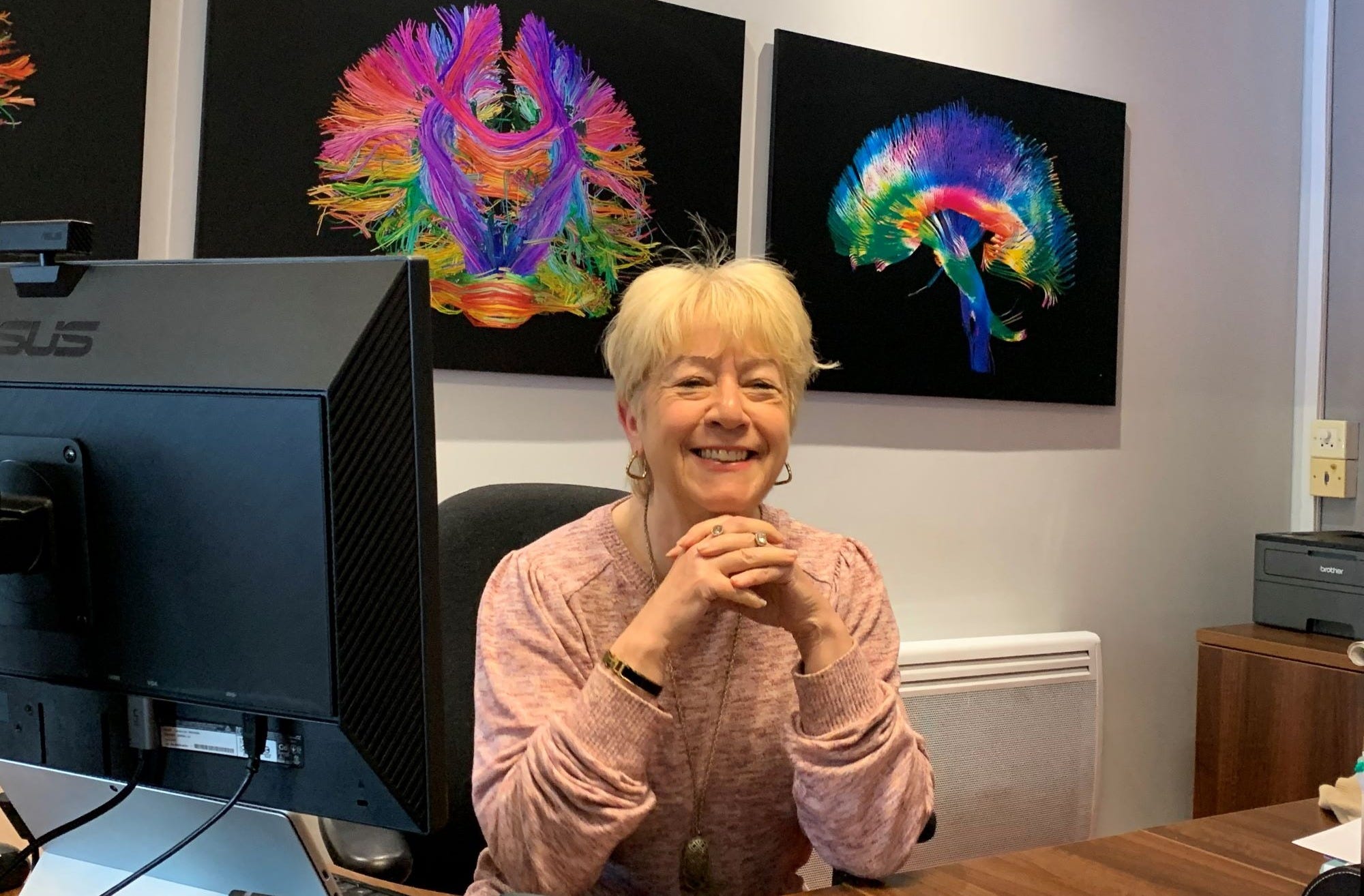
Inside, Linda Conlon, chief executive, leads me to her office, pausing to invite me to choose an item of fruit from a cardboard box. “To ensure no-one in this office gets scurvy,” she jokes.
Things aren’t quite that bad.
But a recent open letter to the Government, signed by Linda and more than 3,000 others, including scientists, academics and business leaders, suggests they’re not as they might be.
It calls for certain grievances to be addressed.
The UK’s 28 science and discovery centres, it states, unlike “museums, arts, cultural and heritage organisations”, have historically been denied access to government or lottery funding to tackle infrastructure issues.
It adds that many centres, having been millennium projects, are now ageing while costs are soaring.
In similar vein, they weren’t allowed to benefit from the previous government’s Covid Recovery Fund to help them shake off the effects of the pandemic.
Now a “perfect storm” of factors means centres are having to contemplate drawing on their reserves and shelving urgent capital upgrades.
The letter, pointing out that UK science and discovery centres attract 5.2 million visitors every year, urges the Government to recognise them as part of the country’s “scientific and cultural ecosystem” and acknowledge their “strategic role in the nation’s engagement with science”.
More tangibly, it requests a one-off sector injection of £19.5m and the establishment of a Science Centre Capital Renewal Fund worth £12m per year over the next five years, with any grants to be matched by the applicant.
This urgent call came just months after a jolly 25th anniversary party at the International Centre for Life back in May.
Then guests were told of the Centre’s notable achievements and heard messages of support from around the world, all from people with some reason to be grateful.
Glasses were raised, birthday balloons bobbed and there was the chance to try out an exciting new Centre attraction, Lightbox, offering a fun and interactive way to engage with science.
The call for policy changes “to ensure that science and discovery centres continue delivering for the UK for the next 25+ years” begs an important question: Is the International Centre for Life, unlike those cheerful ice-rink customers outside, skating on thin ice?
Linda’s the one to ask. She’s been with the Centre for Life since it was just an idea, something to occupy a prime city plot that had been a cattle market, a bus station and latterly a rough-and-ready carpark.
The site near the station had been acquired by Tyne & Wear Development Corporation for which Linda was director of corporate affairs.
When her boss, Alastair Balls, was appointed chief executive of the International Centre for Life (still only a concept in 1997), she followed him – and then, in 2008, succeeded him when Alastair became chairman.


Culture, she says, is not one of her favourite words. It tends to embrace “traditional arts venues” and while she knows times are tough for them, too, she says there are pots of money they can apply for.
“They have a sort of parent like the DCMS (Department for Culture, Media and Sport) but we don’t really have that. There isn’t really anyone who says, ‘Yes, they fall within my orbit’.
“So we’re not part of that DCMS cluster of organisations and while the museums people have support from the Arts Council and capital funds they can apply to, we don’t have any of that.
“So this is a lobbying exercise on behalf of science centres, many of which are starting to show their age. Stuff is starting to fall apart, as it does.
“It’s to say, ‘Look, please recognise the value of science centres and the contribution they make’. Because irrespective of who’s in power, they’re always keen to say science and technology drive prosperity.”
That remark about things falling apart brings to mind another millennium project, the National Glass Centre in Sunderland, now seemingly – and tragically – doomed.
“We put a ton of money into that,” says Linda, sticking her old TWDC hat back on for a moment.
Linda is swift to allay fears that the same could happen here.
The International Centre for Life was designed by a world renowned architect, she points out. The late Sir Terry Farrell used to catch his bus to school on this very site.
“There was a pressure to produce something special but I don’t think we’ve had anything go wrong which you wouldn’t expect to go wrong after 25 years. The roof hasn’t fallen in.”
Moreover, it seems the “complicated” business model provides some insulation against the financial challenges faced by other centres.
“If you stand in Times Square and look around, all that you see constitutes what we call the International Centre for Life which is a charitable trust,” says Linda.
“It owns everything and I’m chief executive but that doesn’t mean I direct operations for the NHS or Newcastle University. I am responsible for this portfolio of property, though.”
The website calls the site home to 30 research groups and more than 200 research, diagnostic laboratory and clinical staff employed by organisations such as Newcastle University, the NHS Northern Genetics Service and the NHS Newcastle Fertility Centre.
You’ll also see, looking around, a nightclub and bars – and, at various times, temporary attractions such as the ice-rink and the exotic Ladyboys of Bangkok in their marquee.
Of these incongruous bedfellows Linda says: “They’re sort of like tenants but it’s never been a tenant/landlord arrangement. The unusual idea at the outset was to bring together, around science, people who wouldn’t normally work together.”
To many, the International Centre for Life is just the Life Science Centre with its shop, café and family-friendly attractions.
“One thing we’ve never managed to do is to get people to understand precisely what the International Centre for Life is,” asserts Linda.
“If you asked 15 people, you might get 15 different answers and none would be wrong.
“Anybody in marketing will tell you it’s wise to have a clear proposition about what you do. We’ve failed on that score but everybody I meet seems proud that we’re here.”
The Centre’s continued existence, along with others around the country, has never been more urgent, argues Linda.
“What has characterised the last 25 years has been the speed of change. The gap between the first and second industrial revolutions was decades but now I think we’ve lost track of what revolution we’re onto.


“When this place opened genetics was a sort of separate discipline. Now it’s an integral part of every kind of medical science.
“Then there’s the arrival of social media. When this place opened I’m not sure we were even sending emails.
“Massive advances are happening so rapidly. Our world is shaped by science and technology but when things happen very fast, inevitably people get left behind.
“And many get frightened by the prospect of new things such as AI (Artificial Intelligence) and what they mean, yet we’ve got kids hard-wired to technology and social media and all the good and bad that brings.
“Swathes of kids now know, almost before they can utter a sentence, how to swipe to get another picture on screen.”
A contemporary science centre, says Linda, has “a duty and responsibility to introduce people to some of this and help them to navigate it”.
She worries that many young people don’t think critically, having grown accustomed to reacting spontaneously without interrogating information or checking facts.
“Big chunks of what we do is about that but framed in an entertaining way because our principle audience is families.”
She tells me about their new show, Spot the Fake, which encourages people to be sceptical. “The message is to be careful because not everything you see or hear is going to be accurate.”
Linda reflects on her 25 years here with a twinkle in her eye.
She admits to being words rather than science-orientated (after school in Newcastle she went to university to study English) but says it’s the communication of science that’s key to her role.
“It’s been fantastic, the best job I’ve ever had. It might sound corny but I believe in what I do and I really believe we change lives.”
Without downplaying the challenges ahead, she is heartened by the many friends the International Centre for Life has locally and nationally.
Chi Onwurah MP, who chairs the science, innovation and technology select committee, is a keen supporter, as are many others, as evidenced by the signatories to that letter.
A surprise arrival at the May birthday party was Sir John Hall who, as a millennium commissioner in the late 1990s, challenged those putting together the Centre for Life proposal. “Where’s your ambition?” he barked. “Put ‘International’ in front of the name.”
They did and Linda insists it can be justified. In 2005, when news broke that scientists in Newcastle had cloned a human embryo, she was in China and was pursued by journalists.
“One of them,” she laughs, “asked if I had a cloned liver.”
People often ask when she’ll call it a day, she says, but there’s no plan. She loves the job, believes she does it well and there’s important work to be done.
While there’s been no official response to that open letter, there’s lots to look forward to at the Life Science Centre in 2026.
A little bird tells me a big exhibition about dinosaurs might be coming our way at Easter.
Check https://www.life.org.uk/ for details of what’s happening now.