

Nostalgia plays a large part in today’s edition.
The Metrocentre has turned 40; a historian has launched an interactive tool that allows you to plot a journey that could take in more than 5,000 historic sites and buildings in the North East; there’s a mystery from the 1960s to be solved; and I’ve discovered a wonderful video that highlights various trends from the 70s that, well, made perfect sense at the time!
It’s not all about looking back, however. Politically, and economically, there are reasons to cheerful. Or mildly optimistic, at least.
And there’s something of a ‘back to the future’ element to my take on the drinking culture in Parliament and how MPs and their various advisers could learn something from journalists.
Sobering thoughts
Westminster’s newest MP Hannah Spencer created something of a storm in a pint glass when she told an interviewer how shocked she was about the drinking culture in Parliament.
Nigel Farage, never one to be photographed without a pint in his hand, was quick to respond. “The Greens are happy to legalise heroin and crack, but now we learn they think an afternoon pint is a step too far.”
He was rather missing her point.
Spencer, who was a plumber before winning the Gorton and Denton by-election in February, told the Guardian: “I don’t think it’s much to ask for an MP to be sober when they vote on decisions that affect everyone else. I’d have been sacked at work if I did this, same goes for almost every profession, but especially working-class jobs. MPs defending this and lecturing me are the exact reason I’ve been saying this place is full of people who are out of touch.”
Confession. I am a journalist. We (the royal we) have been known to partake of alcohol in quantities that could be considered considerable, both before and during working hours (and after!).
I learned my trade in Aberdeen. It turned out to be a relatively gentle introduction (in terms of alcohol). As part of my training, I shadowed the council reporter for a couple of weeks. I realised that his best stories came from his lunchtime in the pub where he would mix with councillors and pick up all sorts of information. Soft drinks were not involved.
So, there was a positive side there - and I did enjoy the regular Friday drinks at the end of a working week.
I then moved to the Daily Record in Glasgow. You could call it a promotion to the Premier League of drinking.
I was quite nervous about my first night as a sports sub editor. I hadn’t been asked by the back bench (the department bosses) to edit any copy (articles) when the chief sports sub editor asked me if I was ‘clear’ (available for work). I said I was. He then asked a couple of my new colleagues if they were also ‘clear’.
Our ‘job’, it transpired, was to accompany the boss on his break. He was off to the Copy Cat, a pub on one side of the Daily Record building. On the other side was a pub called Off The Record.
I was to get to know both in intimate detail.
I spent five happy years at the Record and worked with some of the best journalists I have known. I lapped up the stories and anecdotes of colleagues past and present. Alcohol was the thread that tied them together.
To cut a long story short, I left Glasgow and worked for two regional newspapers before being offered the chance to return to the Daily Record in a promoted position five years later.
It was too good a job to turn down - my only worry was the drinking culture (my liver!). I was shocked and pleasantly surprised to discover that the culture had completely changed in my time away. There were no pub breaks.
If journalists can change their drinking culture then so can MPs.
Reasons to be cheerful
Interesting - and optimistic - perspective from economics and devolution analyst JP Spencer who has been on paternity leave for six weeks. The author of the Future North newsletter on Substack has provided us with what caught his “sleepy eyes” during that time.
In an article headlined ‘Good news from the Chancellor, the Devolution Act and the Mayors’, he highlighted Rachel Reeves’ Mais lecture which went big on the North, regional growth and plans for future devolution.
He singled out the Chancellor’s commitment to work with mayors and businesses to develop a roadmap for future fiscal devolution, to be published in this year’s Budget.
“In the UK we often talk about being world leading; well we lead the developed world in being overly centralised,” he said. “Giving more power to places so they can deliver for residents is one of the closest things this country has to a free lunch.”
Bridging the gap
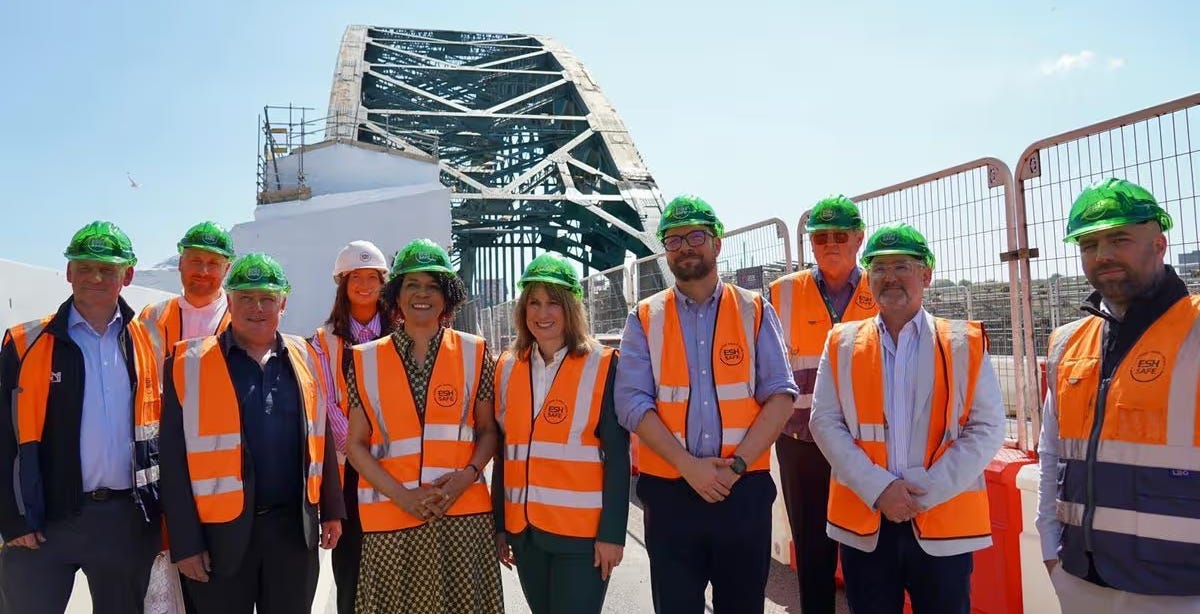
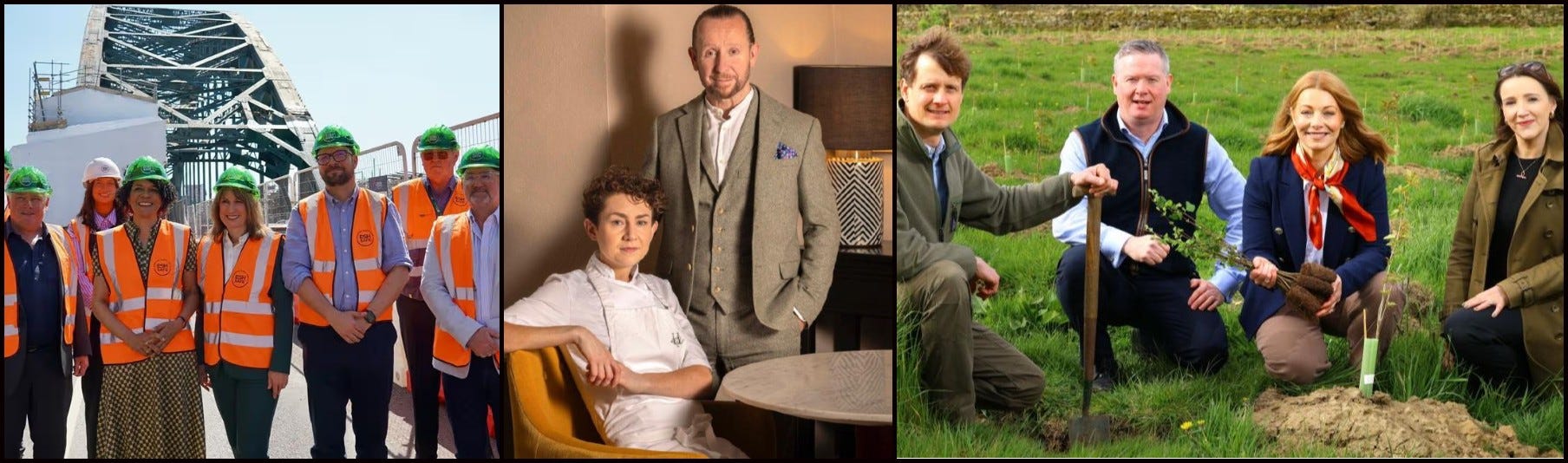
Talking of the Chancellor, she was in Newcastle on Friday and visited the Tyne Bridge as the restoration work there nears the halfway mark.
The Local Democracy Service reported that local media were not invited and that Rachel Reeves did not take questions, which seems odd since we are in the middle of an election campaign.
She did, however, speak to Great North Run founder Sir Brendan Foster, whose office overlooks the bridge. He said: “We had a very interesting conversation and I’m absolutely delighted that she and the Labour Party are committed to more devolution, particularly in the North East.
“The North East of England can be a difficult place to do business, so devolving fiscal responsibility would be a real addition. I was really pleased to meet her, really happy with the way she’s talking about regionalisation, and her responses to our questions were really positive.”
Stay positive
We can only hope that the positivity can be carried through to Leeds in two weeks time when the first Great North Investment Summit will take place.
Organised by Northern mayors in collaboration with the Department for Business and Trade and the Office for Investment, it is hoped that the event could attract investors to a number of development schemes, unlocking billions for the wider regional economy.
It will be chaired by North East Mayor Kim McGuinness who said: “We are seizing control of the North’s economic destiny, ending the days where our regions are overlooked. By establishing the Great North Investment Summit, we are creating the first ever forum dedicated to promoting the North of England collectively, demonstrating our unrivalled investment potential, and telling our story on the global stage with passion and pride.”
The summit takes place on Monday May 18, the day before the start of the annual real estate investment and infrastructure forum (UKREiiF). The three-day event will again have a strong delegation from the region led by Invest North East England and some private sector partners.
Waste not…
An ‘artificial nose’ for fridges has been developed at Newcastle University and could help save money and reduce food waste. Led by Dr Oktay Cetinkaya, the Waste-Not! project is built around a unit with low-power, low-cost sensors that detects odours and gases associated with food degradation. It has been checked and validated across a range of food types, including fruit, vegetables, meat, and dairy.
Fly tip closed

The Environment Agency has blocked access to land in rural Northumberland and taken out a court order following reports of illegal dumping and burning of waste. Concrete blocks have also been put up to stop vehicles accessing the site at Old Swarland.
Gary Wallace, area environment manager at the Environment Agency, said: “We’ve taken prompt action to shut down this site. Waste crime scars communities, harms the environment and undermines legitimate businesses and landowners. We’re taking faster, more targeted action against those we suspect of flouting the law.”
A quick word
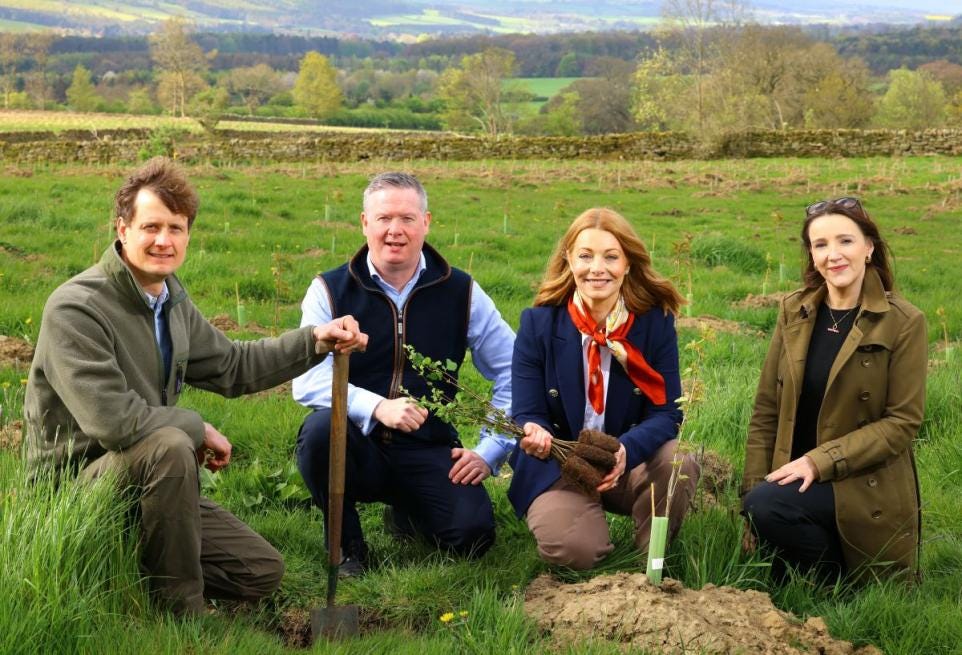
Newcastle International Airport has planted 16,000 trees on land near Corbridge, leased from Allendale Estates, as part of its strategy to reach Net Zero by 2030. Newcastle Green Party said it has withdrawn its support for candidate Tina Ion in Thursday’s council elections and was “appalled by the racist material” in some of her social media posts. The first little terns have returned to Seaton Carew after flying 3,000 miles from West Africa. Protective fencing has been put around their nesting area since they began choosing the beach for breeding in 2019. Wardens and volunteers will now be on the site 24/7, monitoring the birds and helping visitors enjoy the spectacle. Winning 69 out of a possible 70 points is pretty good in any contest, but that was the score achieved by Blagdon Farm Shop’s mince and onion pie at the annual Smithfield Awards in London. It earned the Northumberland shop a Best in Class award.
Sour taste
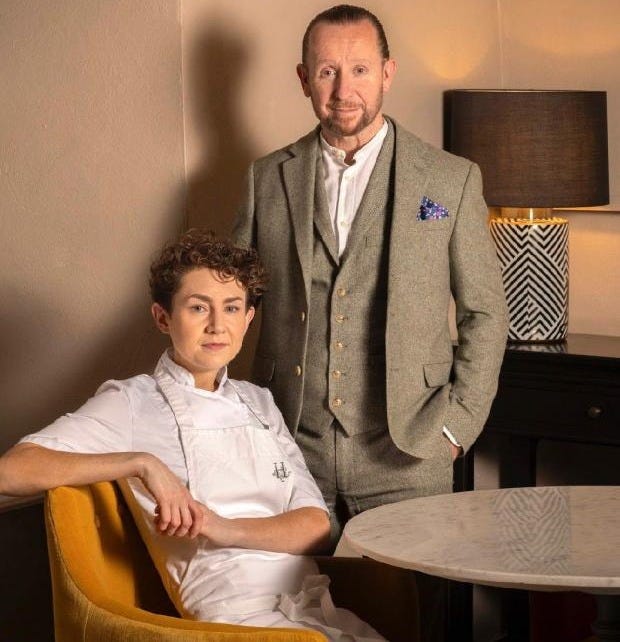
Take one rural restaurant. Add a generous dollop of taxi unavailability. Sweeten with some top quality customer care. Blend carefully - taking care to keep the mixture well away from council red tape, lest it curdle.
You may have seen award-winning chef Ruth Hansom on James Martin’s Saturday Morning a couple of weeks ago (I did). You may not have known at the time (I didn’t) that she and her husband had been ordered to stop driving customers home - for free! - from their Michelin Guide-listed restaurant in the market town of Bedale.
Ruth, who grew up in Darlington, trained and worked at the Ritz for five years and in 2017 became the first female winner of Young National Chef of the Year. She opened her restaurant, Hansom, two and half years ago and it was given a nine out of 10 rating by Times critic Giles Coren last year.
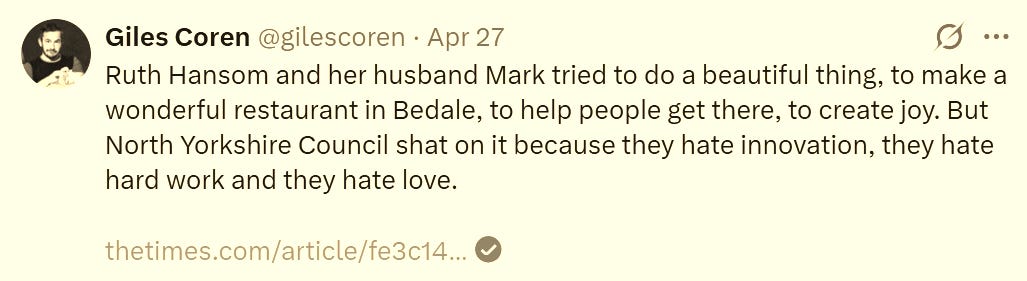
With no evening bus service and a lack of taxis, Ruth’s husband Mark, who has a full time day job, started driving people home if it was within 10 miles. Then came the email from North Yorkshire Council headed ‘Allegation – Using Own Vehicle as a Private Hire Vehicle’. The email went on to outline the various licences the couple would need to apply for and the various costs involved.
Given that no charge was being made, it’s difficult to see why the council view Mark’s car being a ‘private hire vehicle’ rather than him being a ‘designated driver’.
Times columnist Coren let the council have it with both barrels, ending his article by saying: “Yeah, you sue her you absolute local heroes. You teach Ruth and Mark a lesson for being great at their jobs, for treasuring their customers, for trying to create a little joy and make ends meet in a collapsing world.”
Happy birthday
Happy birthday to the Metrocentre which is now 40 years old. It was once Europe’s biggest shopping centre but became a leisure destination as well thanks to the indoor theme-park Metroland, cinema complex, pubs, the Roman Forum, restaurants, Mediterranean Village and a bowling alley.
The BBC has some photographs of the Metrocentre through the years and below is a TV advert from 1988.
I miss Metroland.
I would walk 5,000…
Keiron Carter used to take his wife on local history tours “but she hated it and told me to do it for other people instead”. The result is the North East Heritage Library, an independent, online‑only archive and research hub focused on the history, heritage, and built environment of the region. He does tours too.
Now historian Keiron, 29, from Newcastle, has launched a walking and cycling route builder which lets people plot journeys and discover the historic sites, buildings and heritage features that lie along their path - he has more than 5,000 recorded in the North East from the Borders to Teesside.
You just tap or click on the interactive map to indicate your starting point, and off you go - although the Heritage Route Builder was experiencing issues yesterday dues to the sheer volume of traffic. “Please be patient as I’m sorting a fix,” said Kieran.
Music City board
A new strategic board has been appointed to help drive forward plans for the North East’s music sector, as Newcastle Gateshead Music City looks to build on growing momentum across the industry.
Bringing together artists, venue operators, academics and industry professionals, the board has been created to guide the next phase of the Music City initiative, with a focus on turning research into action and strengthening the region’s music ecosystem.
The group will support the Music City Office, co-led by The Glasshouse International Centre for Music and Generator, following the publication of a new Foundation Report which sets out a long-term vision for the sector. Cultured. North East has more, including the names of the board members.
Mystery to be solved
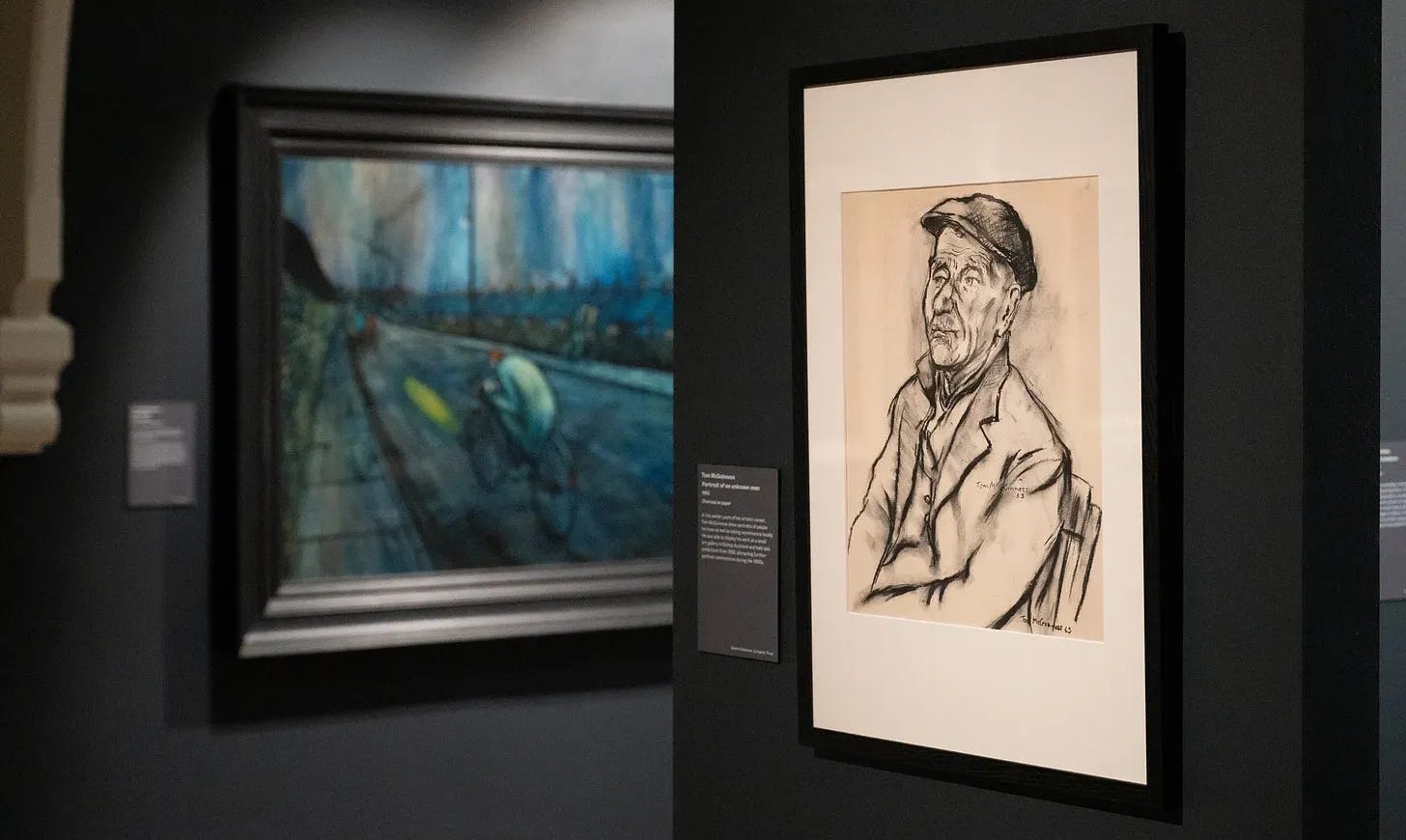
A mystery portrait has prompted a public appeal as a major new exhibition celebrating miner-artist Tom McGuinness opens at Bishop Auckland’s Mining Art Gallery.
Visitors are being asked to help identify an unknown man depicted in a 1963 charcoal drawing, Portrait of an Unknown Man, now on display as part of Tom McGuinness: Out of the Darkness. The exhibition marks the centenary of the artist’s birth and will run throughout 2026.
Another mystery
Water hyacinth sounds nice. It isn’t. It’s actually the world’s most invasive aquatic weed that grows on top of lakes and waterways in 70 countries. It blocks fishing, navigation, irrigation, kills fish and is a breeding ground for mosquitoes.
Kenyan Joseph Nguthru, the current UN Young Champion of the Earth, discovered a way to turn the menace into a marvel. He discovered that you can extract cellulose from water hyacinth and use it to make products that looks, feels and performs like plastic - but it decomposes.
He founded HyaPak and his company pays fishing communities to harvest the water hyacinth and dry it. Why are we still using plastic when this is something that could be produced on a much bigger scale?
And finally
I was going to leave you with some recommended reads. Instead, here is a recommended watch.
It’s from the 70s. It doesn’t matter if you were alive during that decade - you will still appreciate that some of these things are bonkers!
Loved this issue. I feel more optimistic 🙏🏼