

The age at which people consider themselves ‘old’ is a moveable feast. Get yourself a cuppa, sit back and enjoy the words of a man who has ‘lived experience’.
Before that, a few things that didn’t make Friday’s Eyes & Ears. And today’s edition ends with a very good reason for tuning into ITV at 10.20 tonight for a documentary that I’m sure will provoke a few emotions!
While you’re here, I would appreciate your help in spreading the word about Eyes & Ears. You must have friends, relatives, colleagues who would enjoy getting these newsletters sent straight to their inboxes.
Spread the word. Share this edition with them.
I’m looking to grow and develop Eyes & Ears to make sure that public interest journalism and quality storytelling is protected and preserved. Please help in any way you can - Brian Aitken, Editor.
Durham accolade
Durham has been named University of the Year in the Times and Sunday Times Good University Guide 2026.
It has also climbed from 5th to 3rd in the national rankings, overtaking both Oxford and Cambridge who dropped out of the top three for the first time in the guide’s 32-year history. The London School of Economics and Political Science (LSE) and St Andrews filled the top two places for the second year in a row.
Durham vice-chancellor Professor Karen O’Brien said: “As a diverse, global community, we are making progress in welcoming more under-represented students, including from our city and region. Through a range of scholarships and one of the most generous bursary schemes in the country, we are supporting students to come here and participate in the wider opportunities available to them at Durham.”
Let’s be clear
The leader of the opposition on Newcastle City Council says greater transparency is needed after a lengthy inquiry into bullying allegations cleared former council leader Nick Kemp of breaching the authority’s code of conduct.
The council said it would not publish the findings of the independent investigation - but the 200-page report was seen by the Local Democracy Reporting Service, and was reported in Eyes & Ears 19.09.26.
Lib Dem leader Colin Ferguson said: “It beggars belief that the contents of this report should be seen by the Chronicle and not by members of the Council’s Audit and Standards Committee. That position is unsustainable.
“Members, officers and the public at large all need confidence in the reputation and functioning of Newcastle City Council. In the absence of transparency, questions will long linger regarding the causes and consequences of this whole affair.”

Reform suspension
Reform has suspended Northumberland councillor John Allen while it investigates allegations of online comments about death threats to Prime Minister Keir Starmer.
Party leader Nigel Farage last week challenged police to arrest social media users who he said had been using TikTok to call for him to be shot.
Me and Helen Mirren: Life after 80
By Bob Hudson
We’re over here - all of us oldies! There are now more people in older age groups in the UK than ever before, 11 million of us aged 65+ and 3.2 million aged 80+. And that latter group now includes me - and Helen Mirren.
Helen has been railing against the ‘condescension’ she says she is forced to endure when simply holding hands in public with her husband. “People say ‘oh how sweet’ and, excuse my language, I think ‘F**k Off’. They think they are being kind,” says Helen, “But they’re not, they’re being insulting.”
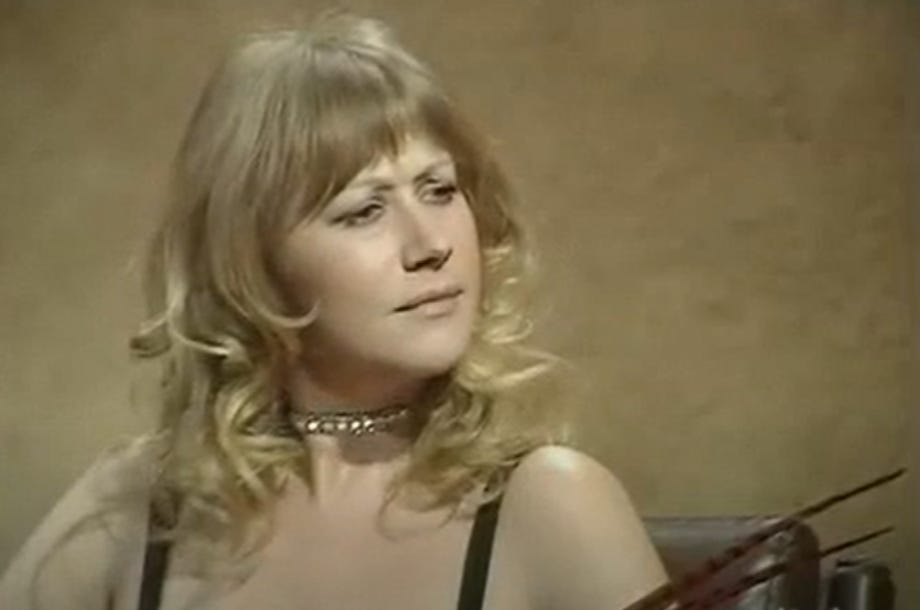
Older readers may recall that Helen has form on crushing condescending behaviour, as Michael Parkinson discovered to his cost 50 years ago.
Not everyone, however, is cut out to be a social warrior. What are the alternatives when facing up to being 80? Like any right-thinking octogenarian I sought advice from my new mentor, ChatGPT, about the pros and cons of being 80.
On the plus side it informed me that I now had ‘wisdom and perspective’ (flattery will get you everywhere), ‘freedom from responsibilities’ (if only), and that I now possess ‘a stronger appreciation of life’ (a nice way of saying I don’t have much of it left). And then there are the cons: declining physical health; loss and loneliness; reduced independence; and the need to face my mortality. By now the need to utter some Helen Mirren-style invective is overwhelming.
What is noticeable about this advice from ChatGPT is the focus upon the individual rather than upon the structural aspects of ageing and ageism. Taking a basic definition of ageism – prejudice and discrimination against older individuals – it is probable that most people are very unlike Helen; rather than rage against ageism they imbibe the stereotyping and behave in line with it.
The evidence certainly suggests there is plenty of ageism about. A recent report from the House of Commons Women and Equalities Committee concludes that it is ‘widespread’ and ‘culturally embedded’ in the UK, with women 50% more likely than men to say they have been patronised or dismissed.
According to data from the Age Without Limits campaign group, this embeddedness means that much of the discrimination is unwitting. Even well-meant remarks like ‘you look good for your age’ carry an inherent ageist message.
Other perceptions can be more overtly negative – physical characteristics such as unattractiveness; the perception of retirement as low social status; and behavioural tendencies like slowness.
The Age Without Limits survey reported that 24% think it embarrassing when people in their 60s attend concerts by current music stars like Taylor Swift, and 31% think people of that age should wear ‘age appropriate’ outfits. It’s hard to know what they expect we octogenarians to wear – personally I’m hooked on stuff from All Saints. And anyone watching daytime TV or channels like Talking Pictures TV will find it hard to escape adverts for care homes, mobility aids and funeral services.
Public service is another avenue increasingly closed to older people, though our House of Lords is a peculiar surviving gerontocracy. The 2024 US presidential election is a case study in the use of age as a political weapon, with a 78-year-old candidate successfully comparing his relative youthfulness to an 81-year-old opponent.
Research into the campaign identified four main ageist themes: old age as an inherent weakness (‘they’re both too old’); dementia-related stigma (Biden’s disastrous public debate); dehumanisation of older adults (‘ancient fossils are running for office’); and fear of perceived incompetence. That unedifying joust between Trump and Biden did massive damage to the anti-ageism cause.
The danger of portraying later life as a time of frailty, decline and dependency is that these beliefs take hold and give rise to negative self-perceptions – ‘Oh, I couldn’t do that, I’m far too old’. Various surveys have reported that self-held negative views of ageing predict poorer health outcomes as measured by longevity, quality of life, social relationships, mental illness, cognitive impairment, and physical illness. And this is everybody’s concern – younger people engaging in the perpetuation of an ageist culture will in turn become a target of these very same stereotypes in their own later life.
There is much that could be done about this. Some of it is at national level around legal protections and a higher political profile. The report by the Commons Women and Equalities Committee concluded that existing age discrimination law was ‘inadequate and rarely enforced’ and called for the creation of a Commissioner for Older People and Ageing for England. Independent commissioners of this sort already exist in Wales and Northern Ireland where they focus attention on such issues as pensioner poverty, difficulty accessing social care, and loneliness and social isolation.
Ultimately the political is the personal, and the other structural route is through networks of local champions for older people. A good example on our doorstep is in Sunderland where a cadre of Ageing Well Ambassadors (all older people themselves) has been created to act as ‘community connectors’. (
Since the scheme began in 2021 the number of ambassadors has grown to over 200 with a mission to tackle stereotypes in the city about older people. This includes the creation of a news team led by older people for older people.
All of this helps create a message that an older person is a positive, active citizen, not a passive social casualty. Moreover, the age at which people consider themselves ‘old’ is a moveable feast – as people get older they revise the age they consider to be ‘old’ upwards, even into their 80s. Then once you reach 80 it’s a source of great delight to discover active nonagenarians – thank you once again David Attenborough!
Some people (usually the worst amongst us) never know when to give in gracefully. Putin and Xi were recently caught on camera discussing ways to live to 150. Putin allegedly bathes in the blood of Siberian deer for its supposed anti-ageing properties, while Elon Musk is threatening us from beyond the grave by uploading his brain to the cloud.
The reality is that all good things must come to an end – it is merely a question of how best to use the remaining time. We can’t all be cast in the image of Jagger and McCartney, but we can seek to be as alive as we can. We do so as unique individuals – not for nothing is My Way the most popular song played at funerals.
Society showers us with contradictions: we are told to accept our ageing but to do our best not to look old; we must stay upbeat but accept our limitations; we should display our individuality but conform to social expectations; we should give up positions for younger people but carry on contributing in some way.
It's confusing being 80. Time to clear my head, have a healthy walk, boldly hold hands with my septuagenarian wife, maybe frowning at any hint of condescension. Hope I bump into Helen!
Bob Hudson is Visiting Professor in Public Policy, University of Sunderland.
On the money trail
Steve Dechan ran a small, loss-making firm distributing medical devices. But the fortunes of P14 Medical Ltd changed in March 2020 when the Government announced a procurement drive for PPE equipment as Covid swept the world.
In May of that year, Dechan’s company was awarded a £156m contract to supply medical gowns manufactured in China. This was on top of a £120m deal to supply face shields.
The Tory councillor - and subsequent party donor - went on to purchase a £1.5m mansion set within 100 acres of Cotswold countryside.
That is just one of the stories told by author Russell Scott in his forthcoming book VIP Lane: Cronyism and the Pandemic which is out on October 1. Scott is also executive producer of a documentary which you can see on ITV tonight at 10.20 called The Covid Contracts: Follow The Money.
The documentary tells the untold story of how the Government went from having almost no stocks of PPE to having more than could ever be used, and how some companies with little or no track record in supplying PPE or medical tests were given massive contracts.
With access to hundreds of previously unseen documents, emails and records, the film examines in detail the decision-making which led to billions of pounds of PPE being disposed of, and the failure of the Government’s test and trace programme to avoid a further lockdown.
You're right! Most of the time I forget I'm 83, apart from an irritating increase in a few aches and pains. I still wear the same jeans and jumpers and rant about the same political ineptitude that I did in my forties. I was surprised more than indignant recently when a young woman in her forties took my hands and looked at the freckled backs and said: 'Lovely old lady's hands!' Oh? Really? I thought. Still, I'm also very aware I might not have long, so of course I'm polishing my memoir!