

Our main story today is an insight into the workings of the multi-force police team which deals with money mules, drugs, online fraud and human trafficking.
You may not even be aware of the existence of the North East Regional Economic Crime Coordination Centre which operates across the Northumbria, Cleveland and Durham forces.
The Source’s Simon Rushworth spent a day with their officers during Freshers Week - because students are considered susceptible to becoming ‘money mules’, a gateway offence that is then used by organised crime gangs to entrap vulnerable young people.
Some 200 people are in India right now on a mission to attract inward investment and jobs. North East Mayor Kim McGuinness is playing a leading role. She is also playing a leading role in a series of videos which sees her walk fom County Durham to the Borders while talking to North East personalities along the way.
Council housing is on the political agenda again. Everyone’s favourite architect, George Clarke, is all in favour: “My council house allowed my family to put down roots and become part of a community. It gave us the breathing space to work, study, save, plan for the future and get on with their lives. It’s in total contrast to the stigma which exists around council housing these days.”
United mission
Nearly 200 people from the North of England are in India right now. There are mayors and senior figures from business, academia, tourism, culture and sport.
It is the first trade mission to India since a Free Trade Agreement came into effect between our two countries - and the first time the North of England has joined forces to promote itself on the global stage.
You could question whether it takes 200 people to do that. I’m sure many people will. But there is an upside, said to be between £450m-£700m, as the The Great North - a mayoral-led partnership set up in May 2025 to scale-up devolution opportunities - seeks to secure new investment, jobs and increased visitor numbers.
North East mayor Kim McGuinness is the Chair of The Great North. She said: “We’re not waiting for the benefits to come to us. We’re taking the North’s leading businesses, universities, sports clubs and visitor destinations to India to win investment, open doors for our businesses, bring more visitors to the North and build relationships that can last for generations.
“From clean energy and advanced manufacturing to life sciences, technology and our creative industries, the North has world-class strengths and a compelling offer to India. When the North comes together, we are mighty - and we’re excited to showcase the best of our regions on the global stage, to help bring jobs, prosperity and opportunity back home.”
Gloomy forecast
One Northern mayor who is not part of the delegation is Ben Houchen who told Northern Agenda there was “no empirical data” to justify spending taxpayers’ money on him making the trip.
The Tees Valley mayor is rather pessimistic about our short-term economic future, given this report from ITV’s Tom Sheldrick, from the Tory Party conference in Birmingham.
“I honestly believe we’re moving into one of the darkest periods we’ve seen in this country over the last 30 years,” said Houchen. “And I think it’s going to start in the coming months and we’re going to have to do what we can to help people in our community who are going to suffer.
“We’re going to have to try and support business through that very difficult time period, and hopefully we’ll come out of the other side stronger. But the short and medium term does not look positive.”
Talk the walk
Kim McGuinness may be in India right now but you can still see her on YouTube thanks to the release of a docu-series called Coastal Walks With Kim, where she travels the 140-mile coastline from Crimdon Dene in County Durham to the Scottish border while talking to some interesting people along the way.
Part one sees the mayor talk with former Dragon Sara Davies. The second episode is now live. It features jeans, sunglasses, Barbour jackets and ‘history gossip’ Katie Kennedy.
Charities feel the pain

The soaring cost of diesel is having a huge impact on some North East charities. Newcastle-based Daft as a Brush, which provides cancer patients with free transport to and from hospital appointments, said it was paying £15,000 a month on diesel - £5,000 more than last year.
The charity said it could no longer afford to upgrade its 30 diesel vehicles to electric because of the inflated pump prices.
In Middlesbrough, Teesside Minibus Hire director Billy Johnson said they often signed multi-year contracts with schools and businesses which were based on the cost of fuel when they were written. “We’re not running at a loss yet,” he said .”But we’re running close it to it not being worthwhile or sustainable.”
A quick word
Northumbria police and crime commissioner Susan Dungworth has demanded guarantees of long-term funding for measures such as the Bigg Market’s Safe Haven van after Newcastle City Council scrapped its late night levy on bars and clubs. Deloitte has been fined more than £6m by the industry watchdog over its audits of North East-based transport firm Go-Ahead. The Financial Reporting Council (FRC) said it found a “highly concerning pattern of failure” in the audits over a five-year period. The Business Improvement Districts in Newcastle and Sunderland jointly hosted the two-day 2026 Big Cities Conference last week, allowing delegates to visit regeneration projects across the region. Sewell Advisory chief executive Emma Bolton has been named Woman of the Year in the professional services category at the Inspiring Women in Property Awards.
Prevent, pursue, protect and prepare
People across the North East are falling victim to increasingly elaborate online scams that ruin lives and decimate businesses. Simon Rushworth spent time with members of the North East Regional Economic Crime Coordination Centre to find out how our police forces are tackling the UK’s £220bn fraud problem.
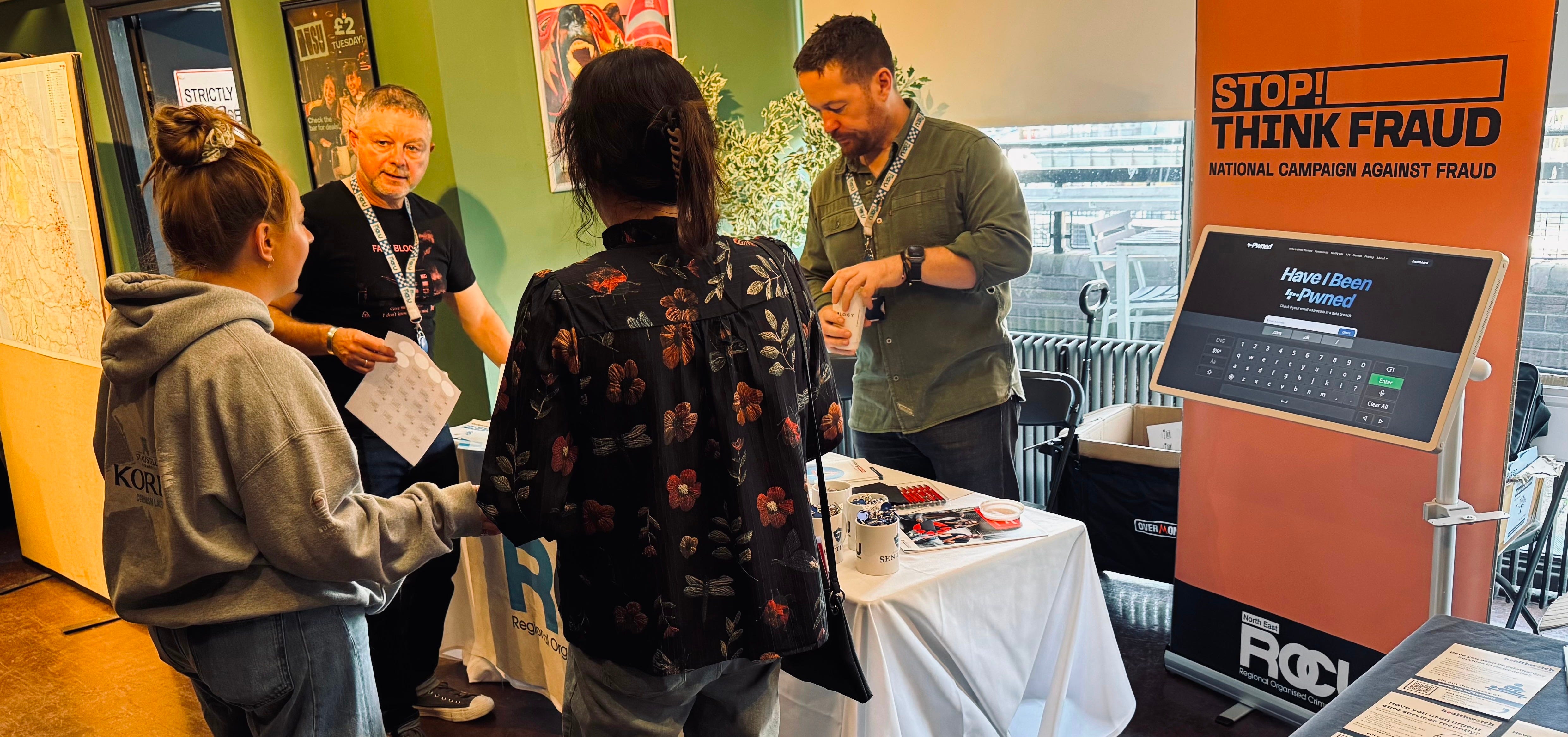
Free pizzas, fun games, new friends and… online fraud. Welcome to the fresh face of Freshers Fairs.
If it’s snazzy pens and water bottles that pique the interest of the wide-eyed first years strolling past the Stop! Think Fraud stand, prominently positioned at Northumbria University’s Welcome Week, then the bigger picture is to educate and enable. An astonishing 66% of so-called ‘money mule’ activity involves people aged 18-25 in full-time education.
“Days like today are about raising awareness and preventing young people from becoming criminals,” explains PC Brian Collins of the Regional Economic Crime Coordination Centre (RECCC). “Being a so-called money mule isn’t just about carrying stuff through customs anymore — accepting a big bag of cash or a stash of drugs and trying to get it from A to B. That does still happen but today’s money mules are more likely to operate online.
“They’ll be drawn in by what appears to be an opportunity to make easy money from home. It goes like this: an intermediary will approach you online, often via social media, and ask you to hold an amount of money in your account. Let’s say £10,000. They’ll then send some bank details and, a few days later, ask you to forward on that money and suggest you keep £100 for yourself.
“For various reasons students are incredibly susceptible to this type of fraudulent activity. They become money mules and, in some cases, that gateway offence is then used by organised crime gangs to entrap these vulnerable young people.”
The RECCC sits within the North East Regional Organised Crime Unit Network (ROCU) and Brian’s remit is wide-ranging. Following 20 years as a frontline officer and a spell working within an intelligence unit, he was keen to join the fight against economic fraud.
“The North East’s ROCU is made up of the Northumbria, Durham and Cleveland police forces,” adds Brian. “I’m a Northumbria cop but I cover the whole region. Within the unit there are many, many different departments but we do what it says on the tin and seek to disrupt and deal with organised crime.
“Unfortunately, our criminals don’t like to stick to borders. Those based in Newcastle don’t just operate within the Northumbria force area — they cross into Durham and Cleveland and even further afield. And they’re involved in financial crime, drugs, human trafficking and more.”
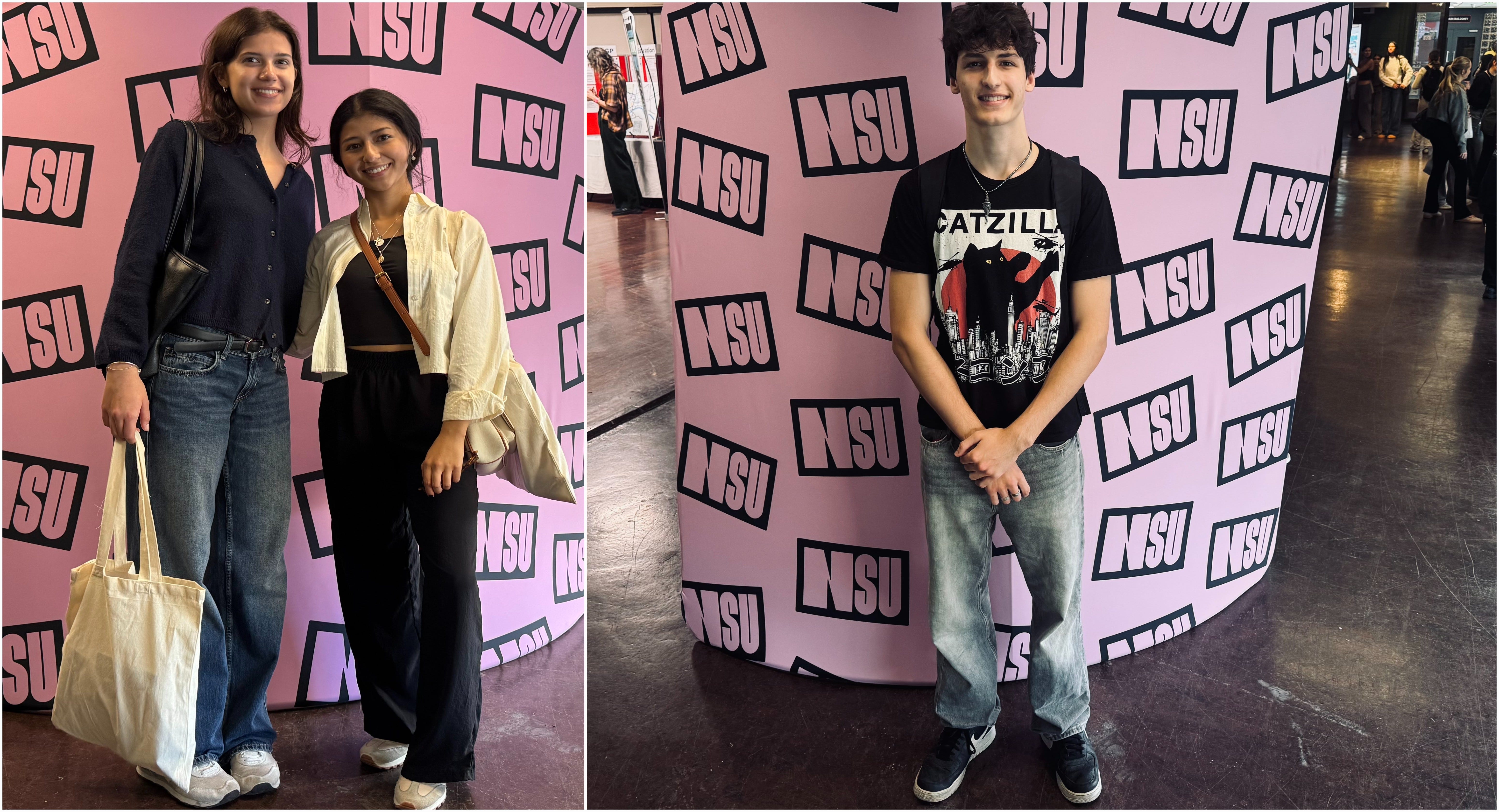
As he chats to the new intake of Northumbria undergraduates, Brian can point to countless examples of students duped into becoming money mules for organised crime gangs without having any conception of the pain and misery their mysterious contacts’ financial activity might cause.
“In the majority of cases the money these young people are holding is from the very worst of criminality,” he explains. “The students we speak to are, on the whole, no worse than naïve. They don’t realise that they’ve committed a criminal offence simply by holding that money, let alone understand that those funds are connected to human trafficking, child sexual exploitation or even terrorism.
“Part of my role is to offer safeguarding because there have been cases where students have become mixed up with the wrong people, beyond that initial online contact. What we do find is that the young people of today actually have stronger morals than my generation and the generations before that.
“When we highlight what their activity is connected to, most of them are disgusted with themselves and want nothing more to do with it. Our job is to educate and to get them to step away before they become entrapped.
“And if they have made the wrong decisions based on a gambling addiction or, maybe, mental health issues, then we’ll find the right organisations to support their recovery.”
Brian is the co-author of the 2025 report Money Muling and Economic Crime Activity at UK Universities and is a passionate advocate for working alongside higher education institutions in a bid to stamp out student exploitation.
However, he is focused on tackling the full gamut of economic crime and regularly criss-crosses the North East warning of the threat to individuals and businesses from increasingly convincing online fraudsters.
Brian and colleague Andy Hampson help to collate and distribute the Monthly Threat Update newsletter — a comprehensive overview of economic and cyber crime trends within the region. And the pair are constantly visiting businesses and community groups on a mission to raise awareness of fraudulent activity at every level.
“Our work aligns with the four pillars approach to policing,” adds Brian.” It’s a strategic framework originally adapted from counter-terrorism and now applied to serious and organised crime, domestic abuse and broader community policing.”
The four Ps stand for ‘prevent’, ‘pursue’, ‘protect’ and ‘prepare’ and Brian adds: “The protect side of it is focused on putting key information in the right hands — in our case ensuring that there’s a greater awareness of the types of economic crimes out there and the impacts they can cause.”
According to latest figures, 50% of all reported crime in the UK is related to fraud. However, a recent National Crime Agency report revealed that 86% of fraud is not reported.
“Just think about that,” adds Brian. “Fraud already makes up 50% of recorded crime in this country but that’s just the 14 per cent being reported! That’s why we will never stop talking about an issue that affects everyone, everywhere.
“We speak to everybody and anybody. We’ll talk to those deemed to be traditionally vulnerable to online crime — the trusting pensioner who takes calls from convincing criminals phishing for financial details — and to big businesses who remain exposed to complex hacks stemming from international organised crime gangs.
“The majority of those affected by the UK’s £220bn fraud problem are private sector firms and, in the current climate, 90% of all fraud is digitally based. Even so, there is still a distinct lack of awareness around online security.
“Economic crimes appear in various ways, shapes and forms but there’s a common trait: it’s basically someone telling a lie to obtain something or cause a loss. And contrary to popular belief, that loss does not actually have to happen. You can’t attempt a fraud and get away with it. In British law, as soon as the message is sent out — or the lie is told — the offence has taken place.”
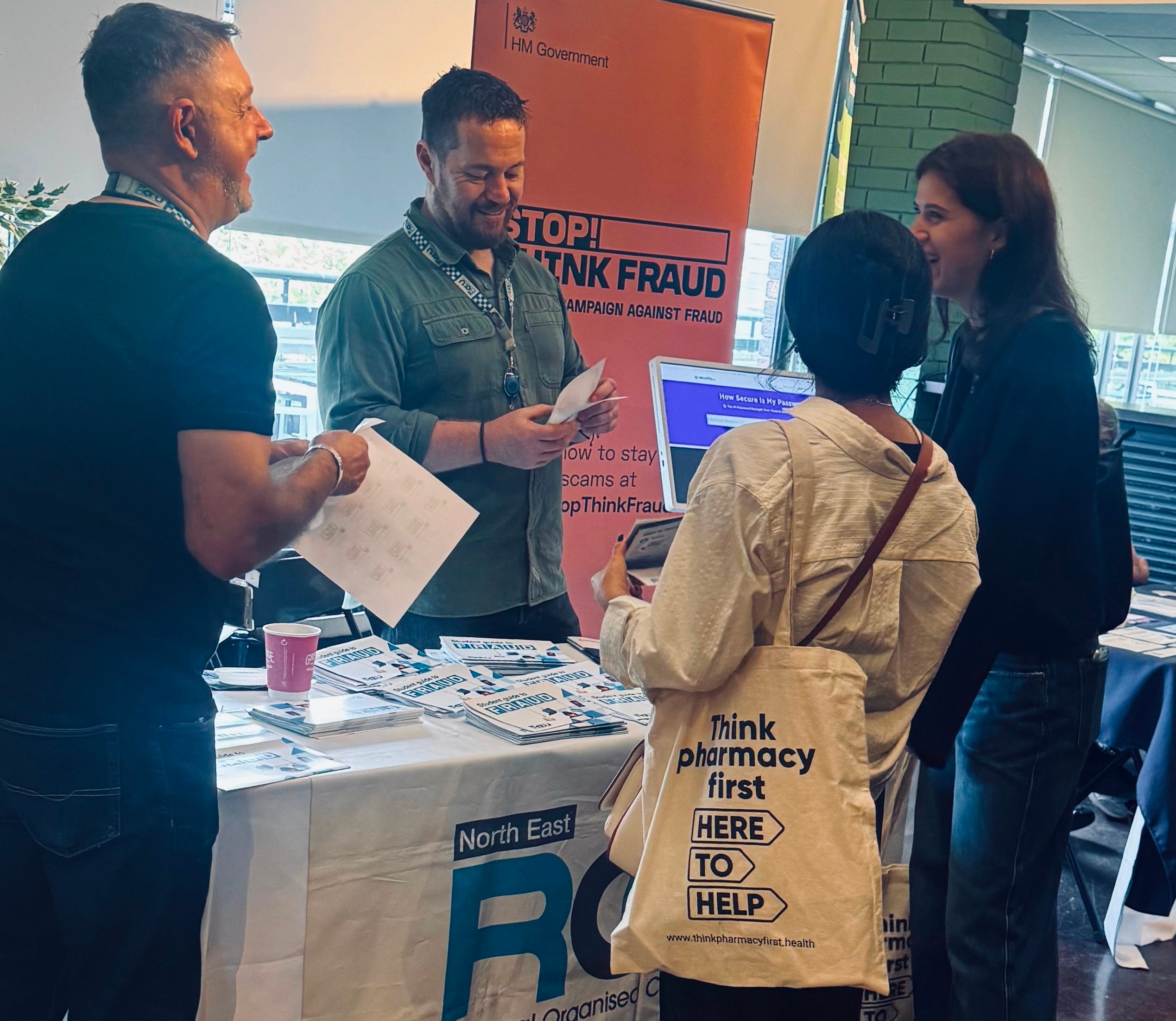
Back at Northumbria University’s bustling Welcome Week there’s a steady stream of students readily entering their email addresses into Brian and Andy’s touchscreen monitor in an attempt to discover whether those accounts have been associated with any historic global leaks of key information.
“I was a victim of online fraud back home,” explains Isabella Chisica, a Northumbria University law student from Bogota, Columbia. “It’s so important that the police are here talking to us. I know economic crimes are a big problem but a lot of my fellow students don’t.
“In Colombia this is not an unusual situation. There’s a website where you can record an online attack or a fraud and the banks and cellphone companies can access the information immediately. There’s credit available for victims of the crimes.
“With the advances in AI it’s more and more difficult to spot the scammers. It’s a global problem and it’s only getting worse.”
Isabella’s classmate, Canadian Olivia Siemicki, concurs. She insists she’d never fall for the money mule scam — it carries a maximum 14-year jail sentence in the UK — but fears others will be less cautious. “If a stranger asked me to deposit £10,000 in my bank account then it would definitely raise alarm bells,” she says. “I hope people of my generation wouldn’t fall for that.
“But I do have police connections in Canada and online fraud’s a hot topic right now. I also work with the senior community — educating them about phishing schemes and giving away personal information on the phone is hugely important.”
For second-year economics and finance student Kyle De Klerk, from Manchester, the work that Brian, Andy and colleagues are doing to raise awareness around fraud has never been more needed. “It’s been great to meet them and hear about what they’re doing to make students safer,” he adds.
“The booklets they’re giving out paint the full picture. I think I’m reasonably aware of how to look after myself online but there’s information about what to do when you receive scam calls and texts. I’ve been inundated with them lately.
“My friends and I are fairly tech savvy but I do worry about older generations. I know a couple of people my age who have had their Instagram accounts hacked and then the scammers send messages to their family, who then trust those messages. That can lead to money changing hands and worse.”
Financial crime expert Professor Nicholas Ryder explains: “Fraud is the funding mechanism of choice for organised crime and terrorist groups, who rely on laundering their money or using alternative banking methods to avoid police.”
And when it comes to those ‘alternative banking methods’, Brian urges serious caution. “Cryptocurrency is used by the organised crime gangs because it’s hard to trace and it’s unregulated,” he adds. “We should be looking more at cryptocurrency’s links to economic crimes. It’s not illegal but it’s not controlled. If you have money tied up in crypto — or you are offered payment via crypto — be very, very careful to make all of the relevant checks and balances.”
Brian and Andy insist there is no stereotype when it comes to victims of fraud. However, a feeling of embarrassment and even shame is common to the majority of those who have lost money to seasoned scammers. “It’s only natural,” adds Brian. “But whether you’ve willingly sent money to a criminal or been caught out as part of a wider scheme there’s no reason to be ashamed. We hear it all the time — ‘how could I be so stupid?’.
“We don’t accept that kind of talk. First and foremost you’re a victim of crime. The criminals are very organised. They’re very systematic.
“They have access to incredibly advanced technology and, in the current climate, they utilise artificial intelligence. They know how to socially engineer their potential victims and know how to catch someone off guard.
“That’s what you’re dealing with. You’re not stupid. You’re simply a victim of a crime.”
Ensuring the conversation around economic crimes is no longer taboo is just one of the reasons Brian, Andy and the RECCC team are relentless in their mission to spread the word.
“Signing up for our newsletter is easy,” adds Brian. “There’s a little bit about what we do and we try to create a community feel. There are hints and tips and the latest information about what threats are facing the North East. What are we seeing? What are the current trends?”
On campus the prevailing mood is one of optimism — the students who talk to The Source are adamant they can spot a scam a mile off. Nevertheless, economic crimes, including money muling, are still on the rise and it is estimated that thousands of students across the UK will have been the subject of unsolicited approaches relating to finance — by text, via social media or in person — during September.
So what’s the solution? “There’s no quick fix,” admits Brian. “As a global society we need to change our thinking around economic fraud. We need to take responsibility for using our devices and our phones and all the rest of it. We need to learn what to do, to mitigate the threat of fraud.
“Of course, it’s easier for some people than others. I appreciate that. That’s hopefully where my job comes in. I’m trying to educate people before they fall victim to organised crime.”
To sign up for the Monthly Threat Update newsletter email RECCC@durham.police.uk. To report fraud call 0300 123 2040 or forward fraudulent emails to report@phishing.gov.uk
Homes not units

Prime Minister Andy Burnham has promised to build more council houses. You won’t get any arguments from Sunderland’s own George Clarke, judging by his opinion column in The i Paper.
“I grew up in a council house in 1970s Washington and I loved it,” he said. “We rode our BMXs around, played football on the field, got into a bit of trouble and spent our lives outside with our mates. I didn’t grow up thinking there was anything shameful about living in a council house.
“So I get frustrated when we talk about social housing as though it’s some kind of consolation prize. I also hate it when people talk about housing in terms of ‘units’. They’re not units. They’re homes. Places where children will grow up, where people will fall in love, argue, celebrate birthdays, grieve, work and grow old.
“Washington New Town was designed. Architects, planners, landscape architects and engineers thought about the homes, but they also thought about the spaces between them, where children would play, how people would walk to school and how communities might actually work. There was beautiful landscaping, with trees and shrubs all around. There were young families like us nearby, and schools a 15-minute walk away. I don’t know anyone who got driven to school, because the route didn’t involve crossing any roads, thanks to the many pedestrianised areas.
“My council house allowed my family to put down roots and become part of a community. It gave us the breathing space to work, study, save, plan for the future and get on with their lives. It’s in total contrast to the stigma which exists around council housing these days.
“There is no way I’d be the person and the architect I am today if I hadn’t spent my childhood on the council estate that I did. My mam still lives in that council house I grew up in. Every time I think about it, I’m reminded that the places we build can have consequences that last for generations. Get them wrong and people live with those mistakes for decades. Get them right, and they can give a child the security and confidence to imagine a future beyond their own front door.”