

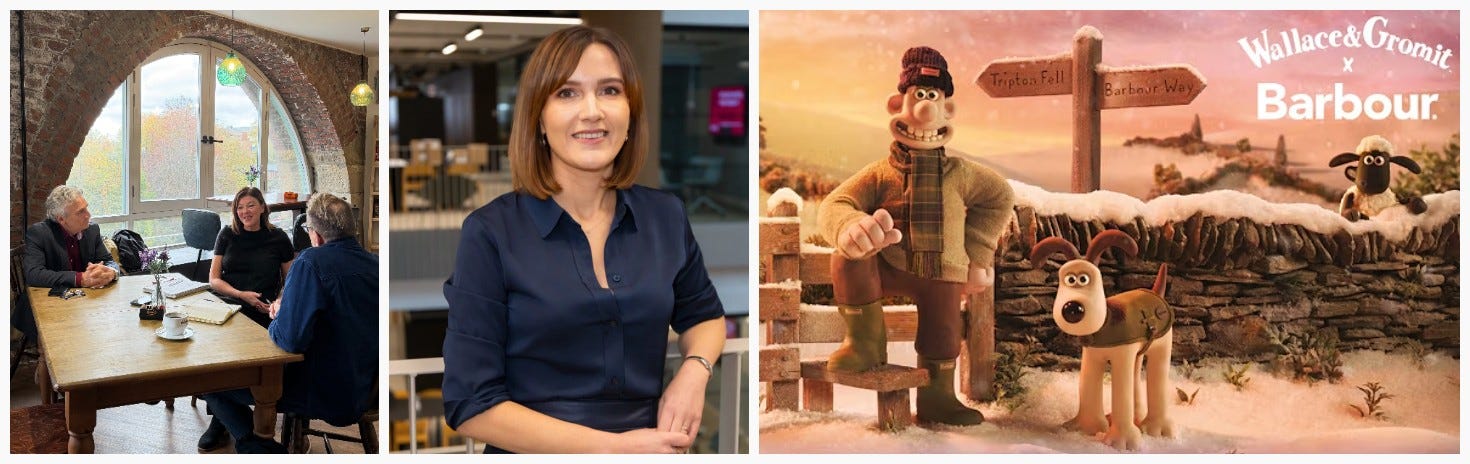
Storytelling is what The Source is all about. It’s also something the North East is very good at - anyone who was at our launch at The Catalyst in September will have heard Steph McGovern and Richard O’Neill, creative lead at Seven Stories, agree that we are the best in the world.
Richard expands on the theme in today’s issue where he tells our writer Simon Rushworth that he wants the region to be known as a powerhouse of storytelling.
Enter Sam Fender. The North Shields singer songwriter, just announced as a Glastonbury headliner, can easily be viewed as our greatest modern-day storyteller. He connects with his audience in a way that traditional storytellers might only dream of.
What if Fender’s deeply relatable narratives were the gateway into a wider world of reading, writing and creativity? It’s an opportunity not lost on those shaping a bold future at Seven Stories — the Tyneside-based National Centre for Children’s Books and a global leader in bringing the written word to life.
Today’s edition also includes Jamie Hardesty’s take on the latest happenings at Sage. A great set of financial results but a restructure which raises questions about how artificial intelligence is changing the economics of the software industry.
“I think we should be paying attention,” he said.
We also have news on lidos, the first chief executive of the agency tasked with growing our visitor economy, Barbour getting into the Christmas spirit with Wallace & Gromit, and the gaming way to regenerate Gateshead.
We end today with a study on musical memories. Research involving Durham University shows that they might not be as personal as you think.
Here’s Steph McGovern at our launch event agreeing with Richard O’Neill that we are the best storytellers in the world: “We are, cause we’re funny as well. And even in the darkest, toughest times, someone will crack a good gag - it might not be appropriate - but it will lighten the room with it.”
‘Pay attention’

Contributor Jamie Hardesty rose from his Covid sickbed to update us on events at Sage in his weekly Newcastle Tech Digest column.
We reported in Friday’s Business Bites column (Parkinson’s, paralysis and pain) that the company was looking to cut 300 jobs from its global workforce of 11,000. Then the financials came out. They were impressive - revenues up 11%, underlying operating profits up 13%, further growth in the cloud business, and AI-powered features helping attract and retain customers.
“By almost every conventional financial measure, this is a business in very good health,” said Jamie. “Sage isn’t just the jewel in the North East’s tech crown; in many respects, it is the crown.”
The timing of the restructure, however, raises questions about how artificial intelligence is changing the economics of the software industry, he said. The company is increasingly embedding AI agents into its products, automating tasks that previously required human intervention. It’s also reshaping its own organisation around the skills and capabilities it believes it will need in future.
“I’m increasingly convinced that the North East is approaching a ‘second wave’ of economic disruption, driven not by the disappearance of traditional industries, as we experienced in the latter half of the twentieth century, but by the transformation of the knowledge-based industries (and heavy public sector reliance) we’ve spent much of the intervening period trying to build.
“Software, professional services, creative industries and the graduate jobs that have underpinned our economic ambitions are all being reshaped. This doesn’t mean those industries are doomed, or that the jobs will simply disappear. But the nature of the work, the skills required and the opportunities available are changing, potentially faster than our institutions can respond.
“I think we should be paying attention,” he said.

First chief
Experience North East England, the regionwide destination marketing agency established earlier this year by the North East Mayoral Strategic Authority, has appointed Jill Laverick as its first chief executive.
The former director of strategy and corporate affairs at Sunderland City Council said: “There could not be a more exciting time to join Experience North East England as we deliver on the mayor’s ambition for our visitor economy. The North East has all the raw material to become one of the most compelling destinations in the UK and Europe.
The new chief executive of Experience North East England may be interested to know that the most-read article in The Source - by a mile - is this one by Bethany Usher which we published at the end of August.

Lidos bright future
The first “dedicated fund for lidos that this country has produced” is to be set up by Lisa Nandy’s Department for Digital, Culture, Media and Sport and will form part of a wider public leisure facilities programme.
The origins of the announcement has its roots in the project to restore Tynemouth Outdoor Pool, which began in 2012. The Future Lidos Group, co-founded by Northumbria University’s Michael Wood has been researching, supporting and campaigning this cause nationally since 2021.
“This is fantastic news,” he said. “We await to see the full details of the fund, and the longevity of the government commitment. These outdoor pools are vibrant hubs in their communities where a diversity of people come together all year round for healthy joyous times.
“Research evidence consistently shows the great value and meaning that people place on these spaces, and investment to sustain and create more pools will be welcomed across the country.
“Our Future Lidos network is aware of almost 50 proposed schemes, including Tynemouth, that could be supported by this investment on their journey to creation, alongside monies to modernise the existing pools to ensure they continue to be sustainable and thrive. Having government backing gives a great boost of confidence to the whole lido sector.”
The Government announcement has also been welcomed by the Weardale Open Air Swimming Pool Refurbishment Project. County Durham’s only heated lido at Stanhope closed in 2023 and the group has been trying to raise enough money to reopen it.
It’s that time again
Hard to believe it was 12 months ago when I brought you news of Barbour’s 2025 Christmas advert. The South Shields-based company has again teamed up with animation studio Aardman for its 2026 film, sending Wallace & Gromit on a snowy countryside walk that, inevitably, doesn’t go to plan.
The new stop-motion adventure features Wallace’s latest invention, the Walk-o-matic, a contraption that promises all the pleasures of a country ramble without the inconvenience of actually walking. Essentially a living-room chair fitted with enormous wheels made from Wellington boots.
Before setting off, Wallace presents his faithful companion with a new Barbour waxed dog coat. Gromit, meanwhile, has a tartan-wrapped present of his own, although Wallace is rather too preoccupied with his invention to notice.
Gateshead’s virtual world
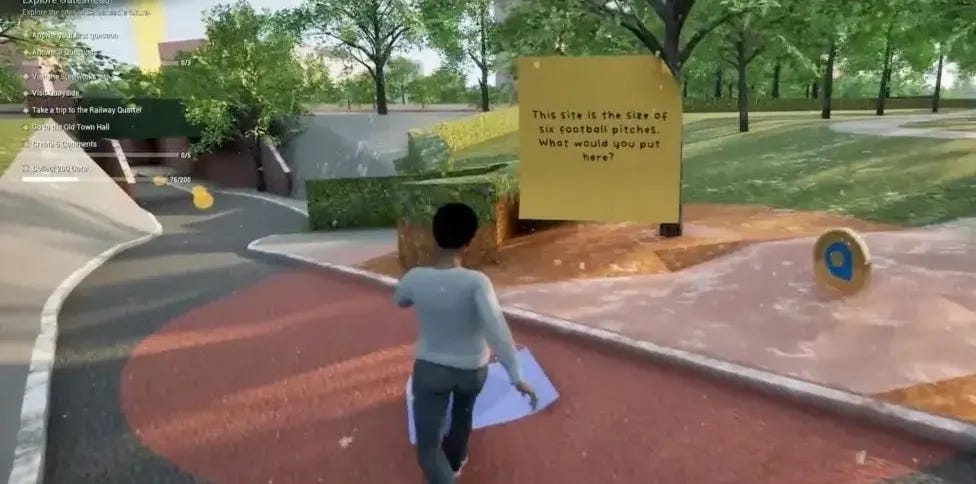
It’s hard to escape the new edition of Grand Theft Auto right now but there’s another video game in Gateshead that is attracting attention. Planning firm Digital Urban has created a game that allows users to walk through the town centre while viewing plans through a virtual reality headset and offer their feedback on regeneration. Gateshead College students have been taking part and the game has also been positioned in other areas of the town including Trinity Square. A £5m plan to tackle the issue of women feeling unsafe or uncomfortable while travelling on public transport in the North East is due to be approved by the North East Mayoral Strategic Authority this week. A study combining crime and demographic data plus comments from 2,000 women and girls from across the region found that 87% have felt unsafe and that three quarters have changed how they travel. The two-year £5m investment will include an increase in “visible staffing” at Metro stations and safety staff across the bus network. The owners of the Follingsby Park industrial estate have announced plans for a 12-megawatt data centre on the Gateshead site. They say it represents “one of the region’s most significant opportunities for direct, inward, digital infrastructure investment”. Ten schools and colleges in the North East will be invited to help pioneer a new native oyster restoration project on the River Tyne, thanks to funding from the Reece Foundation. Groundwork North East & Cumbria has received nearly £80,000 for an innovative oyster restoration scheme, including an educational programme to give local students practical, hands-on experience in marine ecology, restoration and environmental engineering. County Durham and Darlington NHS Trust has lodged an application to reduce the size of the new Shotley Bridge Hospital by about 20% to bring it within budget. Labour MP Chris McDonald has accused the Tory opposition on Stockton council of “playing politics” after their councillors ‘called in’ the proposal to buy Billingham town centre from a private developer for £13m. The deal will now be examined by the council’s executive scrutiny committee.
Sam Fender and the gateway to reading and writing
Seven Stories celebrated its 21st birthday earlier this year. However, as SIMON RUSHWORTH discovers, the emphasis is on the future, rather than the past, at the National Centre for Children’s Books.
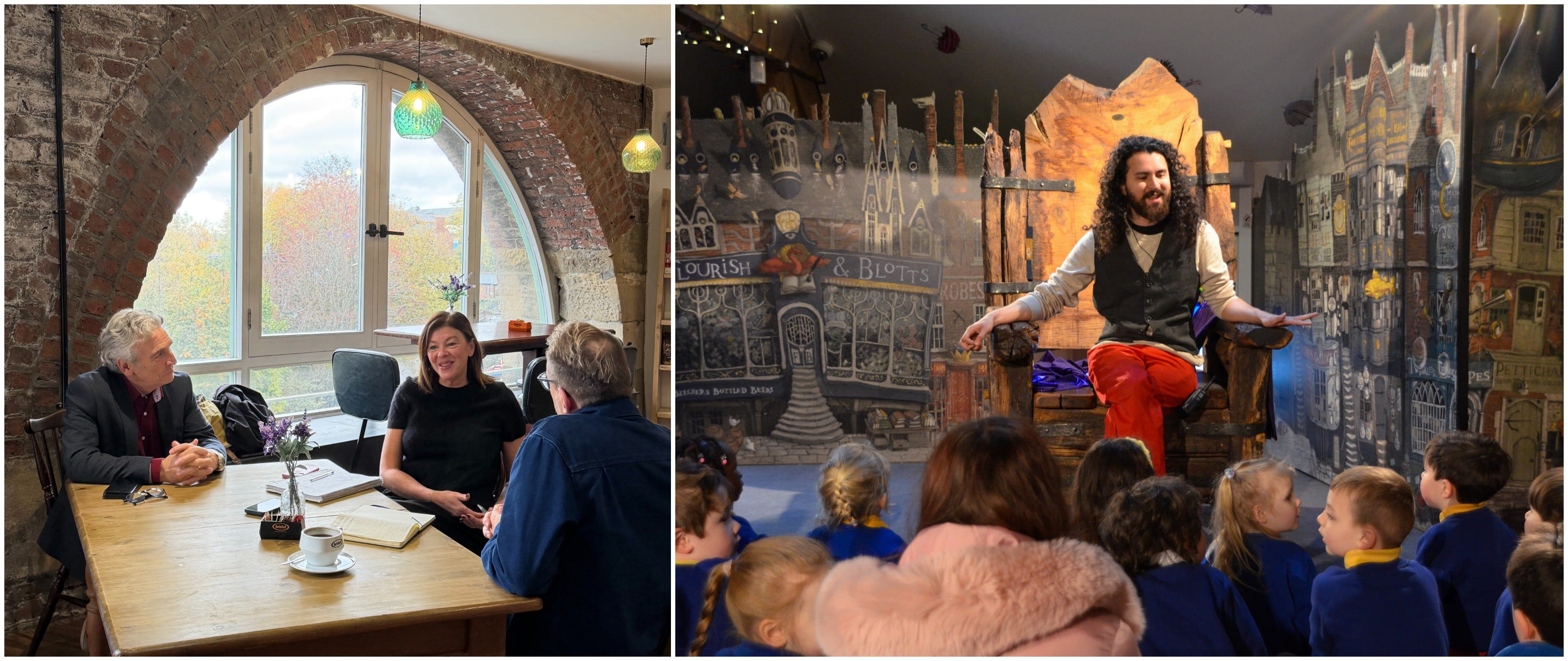
It’s hardly the boldest of claims to suggest Sam Fender is the North East’s greatest modern-day storyteller. The Glastonbury headliner’s compelling, erudite tales of small-town economic hardship, sharp observations on male mental health and heartfelt descriptions of complex family relationships resonate with a growing global fanbase searching for a common voice during increasingly challenging times.
The ‘North Shields Shakespeare’ connects with his audience in a way that traditional storytellers might only dream of. But what if Fender’s deeply relatable narratives were the gateway into a wider world of reading, writing and creativity? It’s an opportunity not lost on those shaping a bold future at Seven Stories — the Tyneside-based National Centre for Children’s Books and a global leader in bringing the written word to life.
“We’ve talked about the value of an illustrated anthology of song lyrics as a means of capturing the imagination of young people looking for a hook into their reading journey,” says Richard O’Neill MBE, creative lead at Seven Stories. “Aspirational readers might not necessarily choose to pick up a book from day one but they might hear a favourite Sam Fender song and want to dig into his words and their meaning.
“I’m a huge music fan and I used to love reading the song lyrics as I pulled out the insert of a brand new album. Storytelling comes in many different forms and the people of the North East have always told wonderful stories. Sam is the perfect example of that. If his songs can spark an interest in storytelling, reading and writing then that’s something we should embrace.”
Richard, an author and public speaker who proudly celebrates the art of storytelling in all of its various guises, joined Seven Stories in 2022 at a time when the post-pandemic landscape threatened to cast a long shadow over the creative arts community. His hands-on approach coincided with a renewed determination to take the National Centre for Children’s Books into the heart of those communities increasingly disengaged with reading and historically distanced from writing.
“We go to where our communities are,” explains Wendy Elliott, CEO at Seven Stories. “We know we have a beautiful building that’s celebrating its 21st anniversary but we felt as if we’d reached a glass ceiling in terms of people coming to Seven Stories. Moving to free entry helped to double our visitor numbers but we want to engage with more of the region’s aspiring storytellers.
“We do that by going into community centres, libraries, schools, hospital wards — all the places where we know that we can reach those people. Based on what we’ve learned from listening to communities, we came out of Covid determined to pivot. We build relationships and we go to where the gaps are.
“As an example, we take our Dolly Parton Imagination Library work into Cruddas Park Library, in the West End of Newcastle, where we know there’s footfall and we can sit with families and tell stories. It’s very much word of mouth but it’s a relaxed and supportive environment where there’s no judgement.”
Broadening Seven Stories’ local, regional and national reach is no easy task and yet that’s exactly what Wendy and Richard have set out to do as they near the end of the National Year of Reading and look to a future where a growing number of young people not in education, employment or training — so-called NEETs — need fresh support and encouragement.
“The next phase of Seven Stories is all about ambition,” adds Wendy. “It’s about harnessing the power of stories and enabling children to tell their own story. My heart lies in community work and we want to get out there and equip young people with the tools they need to make their lives a little easier. Reading and writing are two of those tools.
“Seven Stories has to be ambitious in terms of doing things differently. We need to be innovative about the way we tell our story and about the way we encourage others to tell their stories. Storytelling is a strand that runs throughout the creative industries — film, television, music and more. Stories connect everything and everyone.
“We know that of the children who we’re engaging with, only a very small percentage of them will become authors or journalists or write for a living. But what we hope is that we’re giving them the confidence and the life skills to be able to tell their own stories, in their own voice.
“Alan Milburn’s report into NEETs is a sobering read. We know that it’s harder than ever for young people to get onto the employment ladder. Even Saturday jobs are becoming a thing of the past. If a young person’s experience of Seven Stories — and our engagement with their communities — gives them the confidence to tell their story during a 10-minute interview with John Lewis then we’ve done our job. That’s where we can make a real difference.”
Richard, an internationally published author and founder of Diverse Book Week, boasts an infectious personality that’s perfect for capturing the imagination of those experiencing the joy of Seven Stories. During his conversation with The Source he’s constantly on the move, chatting to visitors, encouraging staff and lighting up a busy space with his natural, northern charm.
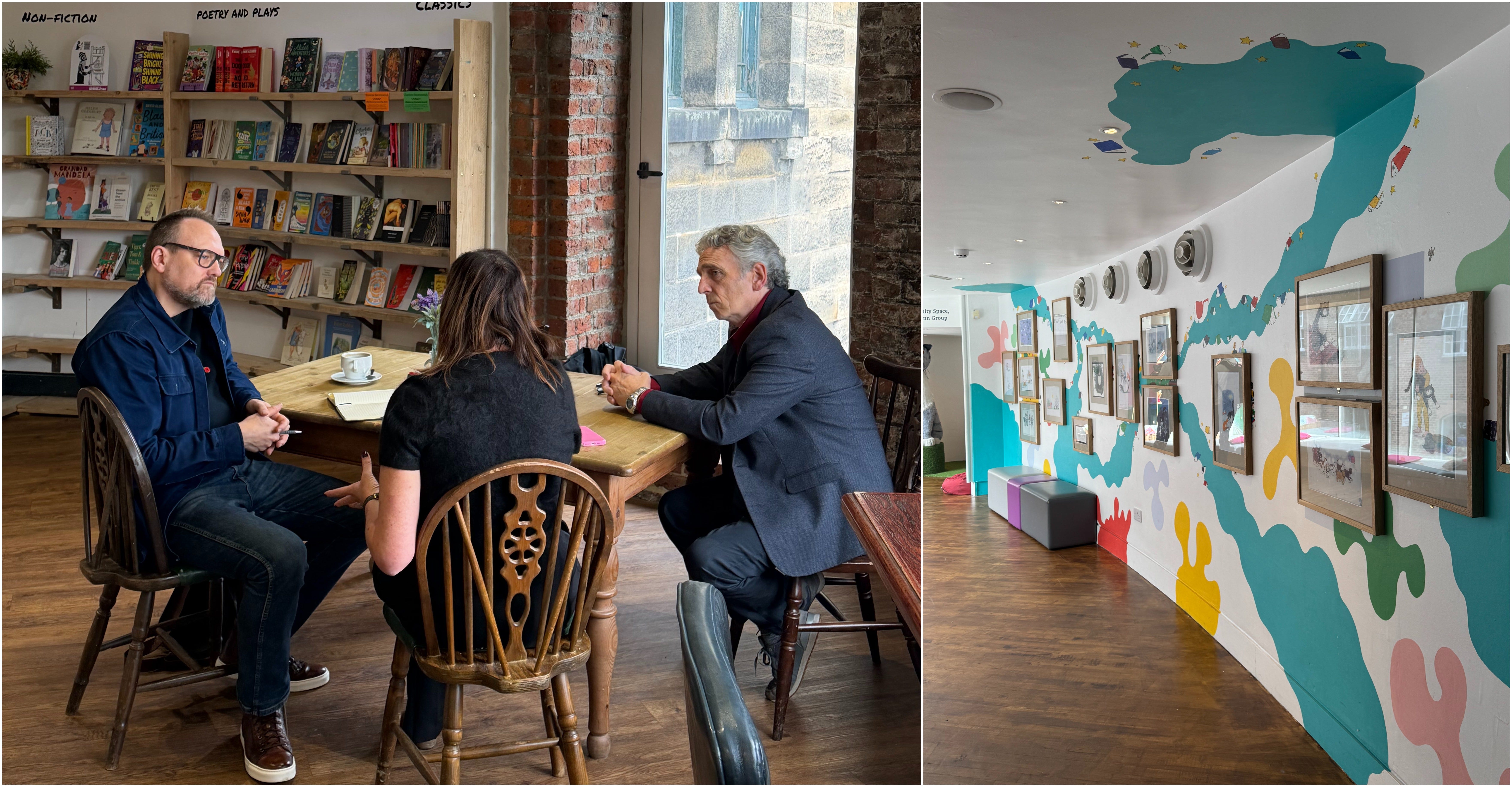
Richard epitomises Seven Stories’ community-first approach and he derives great pleasure from the school visits that seek to break down those barriers preventing young people from experiencing the true pleasure of reading, writing and telling stories. He wants to bust the perception that ‘all authors live in £2m London flats, flanked by full bookcases and with access to a bespoke writing room at the bottom of the garden’.
“I was in Sunderland one day after I’d been into a school,” he recalls. “I’d gone into the pound shop and I saw this kid wearing the same school uniform. He comes running down the aisle and he’s bright red and he just starts shouting at the top of his voice ‘mam, mam!’. I’m sure she thought her son was being abducted or that he’d suffered some terrible injury. Anyway, she comes rushing around the corner and asks him what’s wrong. I heard him shout ‘mam, there’s an author in the pound shop!’.
“Now it was nice for me to suddenly feel as if I had some kind of status, all of a sudden. But the serious point is that kids should know that the majority of authors are just like them. They should know that we live among them and that we even buy stuff at the pound shop! The aspirational readers and writers out there need to know that authors aren’t a distant bunch and that we don’t all live in London.”
Richard screams ‘relatable’. At one point he rushes to pick up the Seven Stories Visitor Book as he suddenly remembers a comment that filled him with joy. “One of our visitors told me how much she’d enjoyed her coffee and I asked if she’d say something about it on the visitor feedback page,” explains Richard. “She wrote ‘Lovely coffee. Lovely helpful staff. Managed to choose 4 books!!’. Isn’t that wonderful? I want the people who work here to know how much of a difference they make every single day.”
Serving up the perfect cup of coffee is another impressive string to Seven Stories’ bow but surely the focus should be on its staple offering? After all, this is the National Centre for Children’s Books. Richard and Wendy politely accept the point but, after 21 years working out how best to inspire the readers and writers of the future, Seven Stories is committed to taking a more holistic and less traditional approach. Hot coffee and tasty cakes are part of a wraparound offering that includes those famously warm welcomes, a sense of relaxed inclusivity, interactive exhibition spaces and, of course, a comprehensive collection of children’s books, young adult fiction and graphic novels the envy of organisations across the UK.
“I’ve always said that I don’t see why Seven Stories should stick to its lane,” insists Wendy. “We can’t afford to stand still. I don’t want to sound negative when I talk about our collection because heritage is a big part of what we stand for. We have work from more than 250 authors and illustrators and our fabulous collection tells the story behind how children’s books have been created from 1930 to now.
“But let’s be honest. That collection is only really relevant if it’s relatable to children and young people — otherwise it’s simply an academic resource. Now I’m not diminishing its value in that respect but we have to work out how to transform what is an incredible heritage asset into something that’s tangible and impactful as far aspirational readers are concerned. Seven Stories is about bringing stories to life.”
Wendy and Richard are united in their determination to evaluate and evolve. Neither will allow Seven Stories to become a staid and stuffy institution where the weight of history stifles genuine progress. Far from it. If the dream is to enthuse a new generation of voracious readers and Fender-like storytellers then the reality requires a radically different approach to bringing the brilliance of books to the masses.
From the opening of a hugely successful pop-up space in Durham’s bustling city centre to encouraging adults to carry — and read — books on public transport, Seven Stories is taking the initiative and taking the lead. But what does the future really look like for a charity that faces regular scrutiny from critics constantly questioning its raison d’être?
“I want us to be known as a powerhouse of storytelling,” says Richard. “And I want everyone in the North East to feel a sense of pride in the fact that this part of the world is home to the National Centre for Children’s Books.
“In four years’ time — as we celebrate our 25th anniversary — I’d like to think that more people will understand that Seven Stories helps children, helps families, helps communities and helps businesses. In four years our 14-year-olds will be adults and we want to play a key role in preparing for them for the worlds of higher education, training and work. We want to help shape a generation of young people who can give a really good account of themselves and develop those skills that the North East is going to need.
“If there is going to be an even greater focus on our region as a hub for culture and tourism, for instance, then we need people who can tell our story, generate the big ideas and bring those ideas to life. They need to be customer and client focused and to be clear and compelling communicators. Storytelling can be their greatest asset.”
Richard is up again. The excited scream of a young child back in their favourite place shatters a rare moment of calm but there’s no censure. Quite the opposite. Richard’s enthusiasm only serves to fuel a snapshot of Seven Stories at its stimulating best as he greets familiar faces and digs into their plans for the day ahead.
“It’s so easy to judge people and yet none of us really know whether a child might have additional needs or if a parent simply needs some respite in the middle of a busy week,” adds Richard. “Everyone in here is aware of their responsibility to make Seven Stories a safe space and we welcome excitement! We’re not a library. I’ve always said that there’s an invisible sign on the walls that explains we have a ‘no shushing policy’. If an adult ever shushes a child or a baby when I’m around then I’ll politely ask them – the adult, that is — to leave!”
Seven Stories is open daily (except Wednesdays during term time) from 10am-5pm. Entry is free. Visit sevenstories.org.uk
Sounds familiar

Guns N’ Roses might have been surprised that their 1988 hit Sweet Child o’ Mine would feature in a university study. The same goes for Billy Ray Cyrus and his Achy Breaky Heart in 1992. But they have helped to show that although music from people’s past often strikes a chord memories-wise, it might not be as personal as we think.
A new study involving Durham University and Princeton University in the US has found that memories sparked by songs are surprisingly similar from person to person. The researchers say this shows the ability of music to shape our memories is an effective way of bringing people together through similar shared experiences. Tony Henderson has more on the study here.