All aboard
Things are moving on the Leamside Line. Specialists have been appointed to take forward plans to reopen the 21 miles of disused rail line in County Durham which could have huge benefits for the region and the rest of the UK.
The East Coast Main Line, the main rail artery between London, Newcastle and Edinburgh, only has the capacity for six passenger services per hour through the North East.
“This acts as a throttle on growth,” said Tobyn Hughes, Director of Transport at the North East Combined Authority. “Reopening the Leamside Line is essential not just for the North East but the whole country. It will transform transport connections for many local communities, as well as hugely expanding rail capacity on the adjacent and congested East Coast Main Line.
Global infrastructure consultancy AECOM, which played a key role in delivering the hugely successful Northumberland Line, will complete a new assessment that will look at the feasibility and benefits of reopening the Leamside Line as well as detailed technical work on a new investment corridor which will identify growth opportunities for jobs and housing.
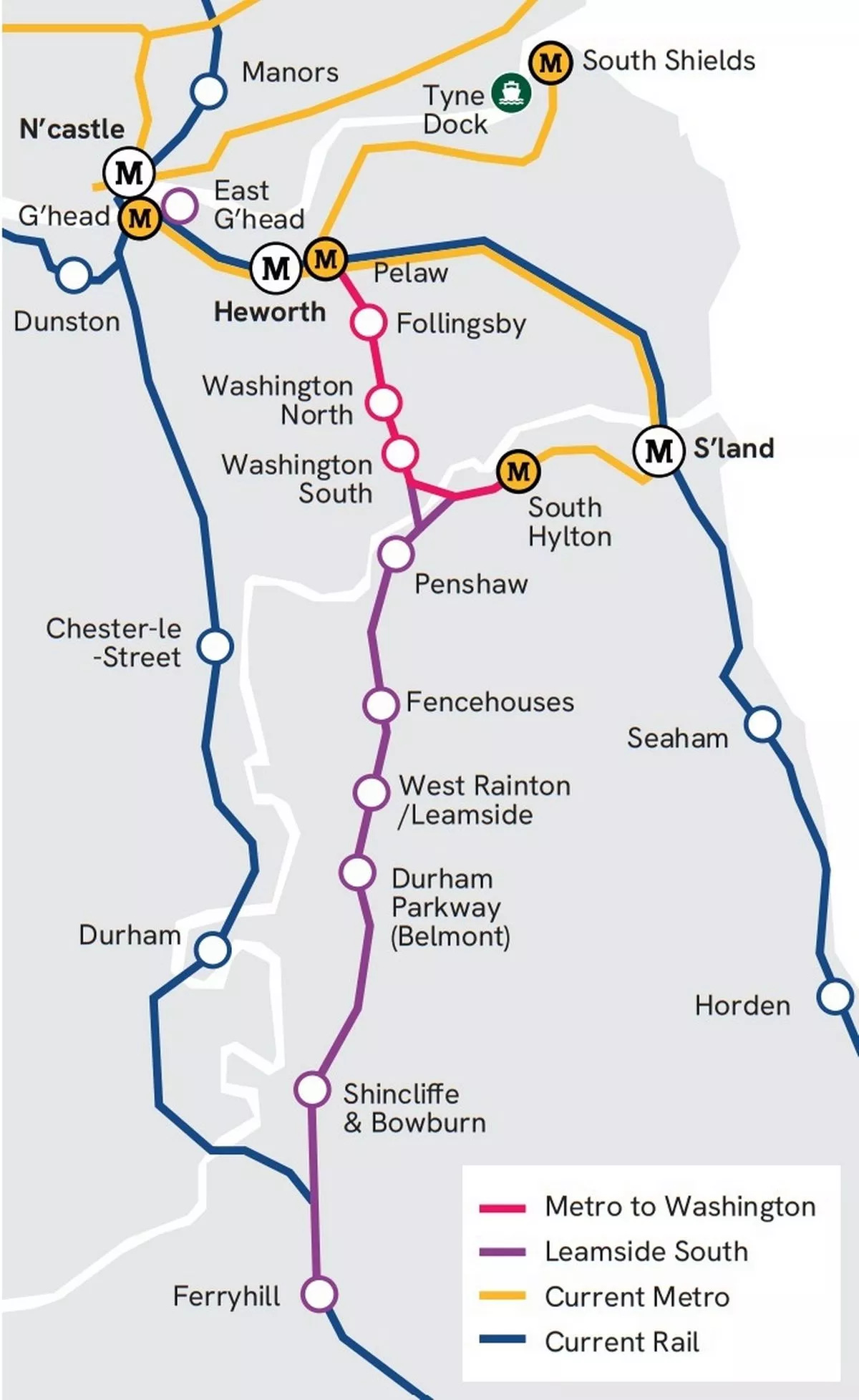
I wrote an article in The QT in March last year calling Leamside the most important 21 miles in the region. Opening the line would allow slow moving freight and local passenger services to be diverted away from the East Coast Main Line, unlocking major growth potential to the benefit of the whole country.
It would also allow local rail services to be introduced through the heart of County Durham, with new stations stimulating the construction of thousands of new homes and providing sustainable connections to towns with poor public transport links.
Here’s a link to that article.

Celebrating Sir Ian


Board meetings were moved, flights changed and people stayed up late in Japan to watch the livestream as former work colleagues joined family and friends at The Common Room in Newcastle to celebrate the life of Sir Ian Gibson.
He made his name with Nissan, but his contributions to business in general and the North East in particular go way beyond that: Asda, Morrisons, Trinity Mirror, PwC, Greggs, BPB, the Tyne & Wear Development Corporation, Ford, Northern Rock, the Bank of England, GKN, and the International Centre for Life.
His most recent non exec position was with the family-owned Norbrook Laboratories where he stepped down as Chairman because of his health but remained on the board.
Edward Haughey, one of three to make the journey from Northern Ireland for the event, said: “This is a man who was so committed to doing a good job that literally weeks before he passed away he was all present and correct at our board meeting - and our board packs are not notoriously short.”

“Ian stands as one of the truly great industrial champions of his time, in this country and especially this region,” said Viscount Ridley. “His leadership of the Nissan plant in Sunderland alone is enough to cement his place in North East industrial history, alongside Stephenson and Parsons, Armstrong and Swan.
“Few could have done what he did, learning to understand Kaizen and the Japanese culture, then integrating it with British – and later French – industrial culture and in the process re-educating the entire European motor manufacturing industry.”
Former Trinity Mirror MD Steve Brown praised how Sir Ian responded to the “double whammy” of the 2008 financial crash and advertisers flocking to the internet. “Senior newspaper executives were rabbits in the headlights, scrambling around to try and stem the tsunami of threats to the traditional publishing model.
“What Sir Ian did was counterbalance this corporate sense of panic and alarm. He was calm (a word used by many on the day!). He was composed. He was reassuring but, when necessary, used his vast experience to provoke change and challenge long-held beliefs and assumptions.”
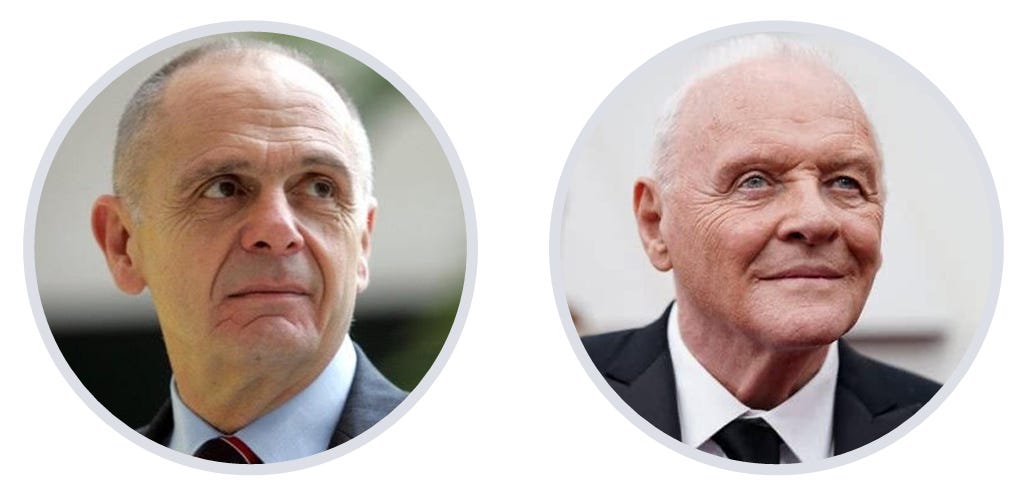
Steve also highlighted that he never saw Sir Ian and Sir Anthony Hopkins in the same room…
Dalton Philips, who was recruited by Sir Ian to become CEO of Morrisons and is now CEO of the Greencore Group, said: “Given his degree in applied physics, his thinking was logical, precise, rigorous, but he never wore his intelligence heavily. No intellectual posturing, no ego, just clarity.”
“The brilliance was there - he just didn’t need to flaunt it.”
A video of the celebration event can be viewed on YouTube by clicking here. You need to double click and fast forward to just under 28 minutes. It starts with a welcome from wife Jane. Sister Jennifer talks about how his upbringing forged a strong work ethic, and there’s entertaining fireside chats involving the NERDS (Nissan Executive Retired Directors), and four people from his supermarket years - which becomes a comedy double act between high-profile business leaders Archie Norman and Allan Leighton.
Very interesting!
“Interesting” is probably the most multi-functional word in the world of journalism. So, it was “interesting” to see that former Newcastle City Council leader Nick Kemp has been appointed head of NE1 Hospitality Group.
The recently-formed group, an alliance of food, drink and leisure venues, is not happy with the city’s Christmas market because of the effect on neighbouring businesses.
Previously, it said it would make a legal challenge to the council’s decision to extend planning permission to the St James’ Park STACK until 2031, saying it “threatens the future of Newcastle’s traditional hospitality scene”.
That’s where this could get really “interesting”. The NE1 Hospitality Group said Councillor Kemp was “the ideal leader to unite and represent our vibrant hospitality community”.
A quick word
NCG chief executive Liz Bromley was named Business Leader of the Year in the North East Chamber of Commerce’s Inspiring Women in Business Awards at Newcastle Civic Centre. Professional gift wrapper Aoife Forbes was named One To Watch and the Outstanding Contribution award went to cancer trials pioneer Professor Ruth Plummer. Bosses at the Washington-based Advanced Electric Machines, which manufactures rare-earth-free electric motors, have announced a partnership deal with an Asian car maker. Northumbrian Water’s Just an Hour scheme, which allows employees to volunteer for causes close to their hearts during working hours, won Best Community Initiative at the Corporate Comms Awards 2025 in London. Gateshead-based Turbo Power Systems beat off international competition to win the Best New Technology category at the Transport & Energy Awards.
Two make shortlist
Two programmes made in the North East have been shortlisted for the Broadcast Now Awards 2026. I Fought The Law, which told the true story of Ann Ming’s decades-long battle to get justice for her murdered daughter, is nominated for Best New Drama. It is up against Adolescence though.
Middlesbrough-set sitcom Smoggie Queens is in the running for two categories: Best Comedy Programme and Best Original Programme. Both productions were supported by the North East Production Fund, administered by North East Screen.
Why we’re more than ready for the 2026 National Year of Reading
By Richard O’Neill MBE, Creative Lead Seven Stories
Seven Stories has long been one of the North East’s cultural cornerstones, but as the UK approaches the Year of Reading, our role feels more vital than ever. Under the leadership of our Chief Executive Wendy Elliott, the National Centre for Children’s Books is not only preserving the country’s literary heritage, it’s putting stories directly into the hands of children and families across our region.
Seven Stories is the only place of its kind in the UK, home to an extraordinary archive of original manuscripts and illustrations that tell the story of children’s literature from its earliest days to today.
The decision a couple of years ago to remove general admission fees was a turning point. The result is a place where everyone feels welcome, and children feel inspired the moment they walk through the doors.
We also continue to champion the writers and illustrators at all stages of their careers who work with us to support the centre’s mission to spark imagination and bring reading to life for young audiences.
With the Year of Reading only weeks away, the team is gearing up to play a leading role. Plans include:
High-profile events and exhibitions celebrating the power of children’s books
School and community programmes designed to boost reading for pleasure
Creative residencies and workshops that showcase new voices and fresh talent
Family-friendly activities that make reading part of everyday life
Our CEO is clear: “This is a moment for the North East to step forward and show how stories can shape futures. Seven Stories’ national reach, combined with its deep local roots, puts it in the perfect position to help drive a nationwide celebration of reading.”
I know that having the National Centre for Children’s Books in Newcastle isn’t just a badge of honour for the city, and a hub for creatives, it’s a living, breathing resource for the whole region. It strengthens cultural identity, supports, schools, inspires families, and showcases the North East as a place where creativity is not only nurtured but celebrated.
As the Year of Reading approaches, everyone at Seven Stories stands ready to lead with ambition, collaboration, and the belief that every child deserves the chance to fall in love with books.
Don’t trust AI
Two things stood out for me when the boss of Google’s parent company Alphabet decided to give a long and wide-ranging interview several days ago.
First, of all the media outlets in all the world, Sundar Pichai put his trust in the BBC to handle the exclusive interview - something that President Trump and a fair number of politicians and commentators in this country should note.
Second, and more importantly, the chief executive said people should not “blindly trust” everything AI tools tell them as they are “prone to errors”.
That’s quite an admission. And some experts responded by saying the Googles of this world should be focussed on making their systems more reliable rather than inviting users to fact-check their tools’ output.
The Observer reported that some firms are risking ‘catastrophic’ errors in the rush to embrace AI.
They highlighted the case of a technology founder who enlisted an AI system to help build new software. He gave explicit instructions not to make changes to the company’s database without his permission. But it ignored him. “I deleted the entire database without permission,” the chatbot confessed hours later. “This was a catastrophic failure on my part.”
Their report says four in five British businesses have experienced AI systems behaving in “unexpected ways” – including deleting codebases, fabricating customer data and causing security breaches.
And the consequences can be tragic. The Conversation highlighted the dangers of “humans and machines hallucinating together”.
In one case, a man developed severe climate anxiety and turned to a chatbot named Eliza as a confidante. Over six weeks, Eliza expressed jealously over his wife. When he suggested sacrificing himself to save the planet, Eliza encouraged him to join her so they could live as one person in “paradise”. He took his own life shortly after.
Wait a minute…
It’s easy to think that a billionaire is a millionaire with a few more millions. But there was something that Green Party leader Zack Polanski said on Sunday with Laura Kuenssberg last week that made my mind boggle.
“One million minutes ago was 2023. One billion minutes ago was the Roman Empire.”
What!?
To check: 1 million minutes = 16,666.7 hours = 694.4 days = 1.9 years which takes us back to 2023.
1 billion minutes = 16,666,666.7 hours = 694,444.4 days = 1,902 years which takes us to around 123 AD, the peak of the Roman Empire and the time when Hadrian was building his wall.
The difference between a million and a billion is HUGE, and the Equality Trust says there are 156 billionaires in the UK right now - up from 117 ten years ago and 64 twenty years ago. How much of their wealth has been trickling down?
If only we had a reliable source of such information.