


Eyes & Ears will soon be celebrating its first birthday - a good time for me to take stock.
I want to inform, inspire, entertain and connect the people of the North East through independent quality journalism that respects their time and intelligence.
I want to grow Eyes and Ears to be the region’s most trusted, engaging and essential voice - a modern publishing platform that champions public interest journalism and fosters regional identity.
I can’t continue to do that on my own. Could you help?
Some good people have already said they will invest in my plans to deliver clickbait-free curated news, compelling features and educated opinion columns. Others have already donated - ahead of a crowdfunding campaign I plan to launch soon.
And dozens of you - like the person quoted above - have pledged support through subscriptions (I’ve not turned them on yet, but thank you).
The question to the rest of you is, how much do you value Eyes & Ears? Would you be willing to be an investor, donor or subscriber? Could your company be a sponsor? Would you like to support in another way?
It’s getting to the stage where I have to ask. And I’d love to hear from you: brian.aitken@theqt.online.
Today’s Eyes & Ears
“Children who learn through creative education perform better academically and socially.
“Adults engaged in cultural activities report higher wellbeing and lower rates of social isolation.
“Healthier, more connected communities require less public spending on crisis intervention and welfare, generating savings that ripple through the system.”
Today’s main article by Julia Handelman-Smith, the director of Into the Light, is a case for investing in our creative capacity. It’s aimed at Chancellor Rachel Reeves, but everyone needs to hear it.
Before that, some Eyes & Ears Extras…
A1 stop sign
It’s official. The dualling of the A1 in Northumberland can’t happen. Transport Secretary Heidi Alexander has formally revoked development consent for the road upgrade.
Northumberland County Council deputy leader Richard Wearmouth called it a betrayal and warned of long-term economic and safety impacts.
“Despite this we will continue to fight for the investment Northumberland is owed,” he said. “We are seeking possession of all planning and design documents so when this rotten Government gets booted out of office we can start up work fast to reinstate this project and finally get the job done.”
Figures show there have been 181 collisions on the single carriageway sections of the A1 since the start of 2020. A total of 44 people were seriously injured, and five people were killed.
I will point out that dualling the A1 has been an the agenda for decades. When I was Editor of The Journal, I had a lovely round of sandwiches and a cup of tea at the home of Tynemouth Tory MP Neville Trotter who gave me chapter and verse of how the dualling was a done deal - and then it wasn’t.
I only mention the sandwiches because his wife was lovely and insisted on making them - the point being that the Conservatives were in power for long enough to ‘get the job done’.
Improving outcomes
Education secretary Bridget Phillipson is introducing Regional Improvement Teams in the next academic year to help underperforming colleges deliver the skills needed by employers in their areas.
The improvement teams will analyse colleges’ performance in delivering on local priorities, and improving outcomes for young people with special educational needs and disabilities (SEND).
The education secretary said: “By providing targeted support where it’s needed most, we’re delivering on our commitment to break down barriers to opportunity and give young people the best possible start in their careers.”
New leader
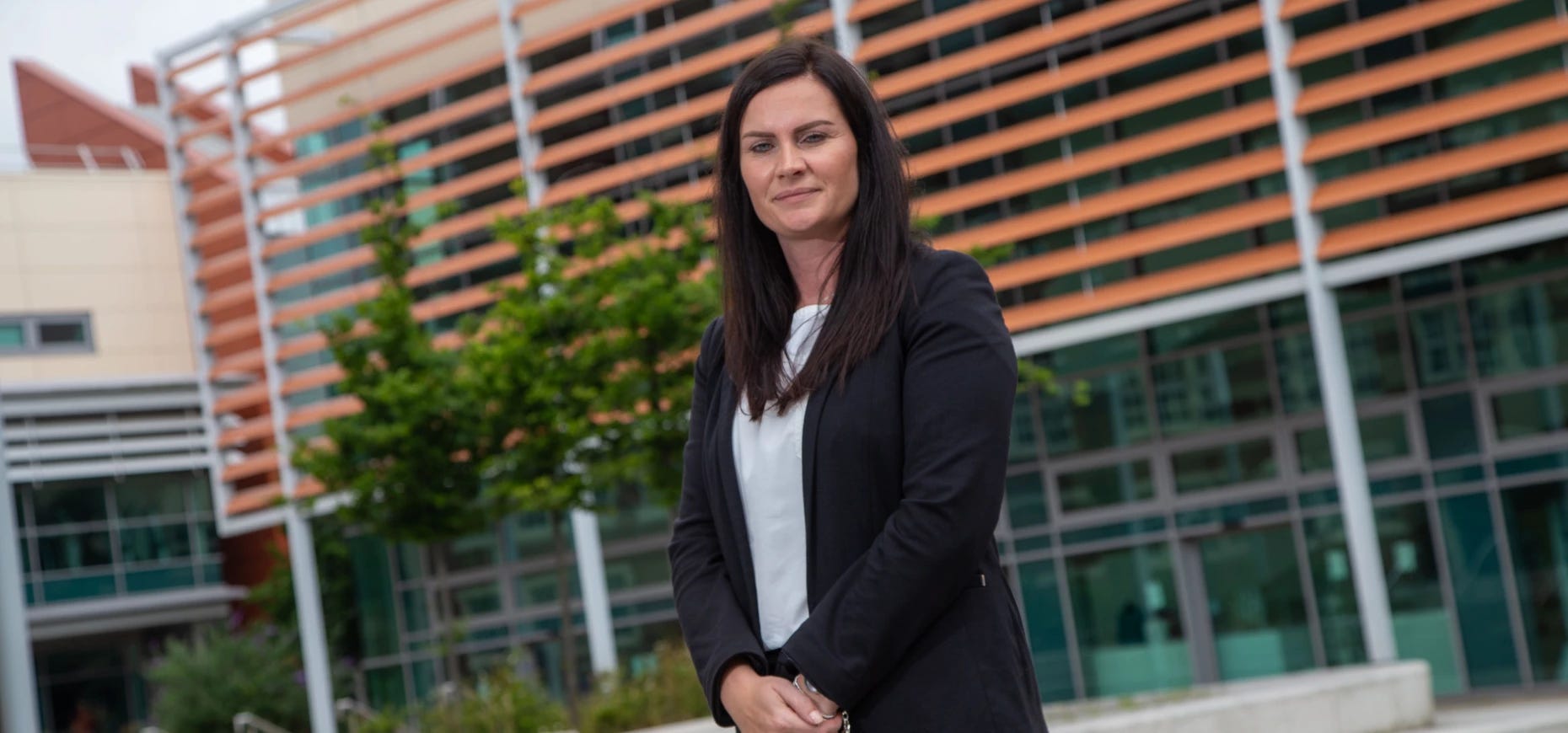
The Regional Improvement Teams will report into the new FE Commissioner Ellen Thinnesen when she leaves her current role as chief executive of Education Partnership North East at the end of the year.
Her position in leading Sunderland, Hartlepool Sixth Form and Northumberland colleges will be taken over by current deputy Toni Rhodes. She said: “It is a privilege to lead such an ambitious college group that unlocks potential, creates opportunities and transforms lives through outstanding education, skills and training.”
Bridge closure
An inspection has prompted the immediate closure of a bridge in South Shields. It’s made of concrete and was built in the 1930s.
The measures might cause inconvenience, but were “essential to keep people safe,” said South Tyneside councillor Ernest Gibson. “While Heugh Street Bridge has served the community for decades, recent inspection has prompted us to close the bridge to traffic with immediate effect.”
Fire station alarm
The decision by Northumberland County Council to press ahead with demolishing an old fire station in Hexham that was wanted by Sir Antony Gormley for a gallery and storage space has provoked quite a reaction.
I told you about this on Friday (Eyes & Ears 14.11.25). More than 3,400 people have signed a petition calling on the council to sell the site to the man behind the Angel of the North.

Pupping season
The National Trust has announced that the first grey seal pups of the year have been born on the Farne Islands. “Each pup born here is a testament to the conservation work we do,” said area ranger Sophia Jackson.
More than 3,000 seal pups are expected this season. Visitors can watch from boat trips but are not permitted on the islands during the pupping season.
Off to uni
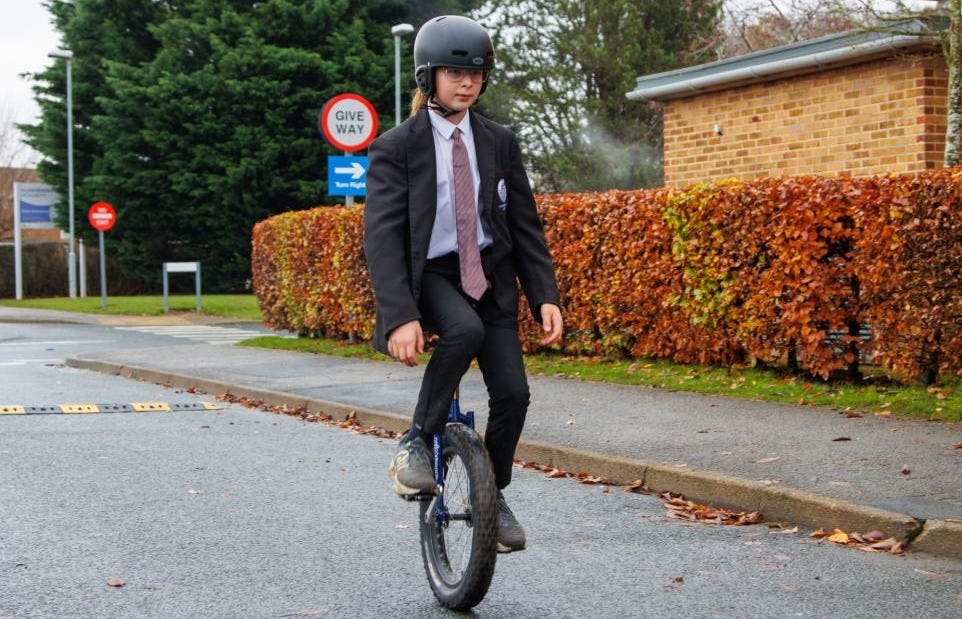
Lots of children cycle to school - but how many do it on one wheel? Eleven-year-old Alfie Brown was introduced to the joys of unicycling by friends at Hartlepool’s Manilla Cycling Club, and now rides one to Hummersknott Academy, in Darlington.
“I had a quick go on a friend’s unicycle, and I thought it was really cool,” he told Peter Barron. “So I decided to buy one with my savings.”
And it has its advantages: “The best part is that I know no-one’s going to steal my bike, because I’m the only one who can stay on it!”
Out of this world
An exhibition featuring images from the world’s leading astrophotography competition opened at The Sill in Northumberland yesterday.
Previously shown only at the National Maritime Museum in Greenwich, the images from the 16th Astronomy Photographer of the Year competition, will be on display at the centre until March next year.
Affordability for fans
There will be no dynamic ticket pricing when the UK and Ireland host the Euro 2028 tournament with organisers emphasising a commitment to affordability for fans.
There will be five matches at St James’ Park in Newcastle, four group stage matches on June 12, 15, 17 and 20 and a round of 16 knockout match on Sunday June 25, which could potentially feature England if they were to win their group. The draw will take place in Belfast on December 6 next year.
A different league
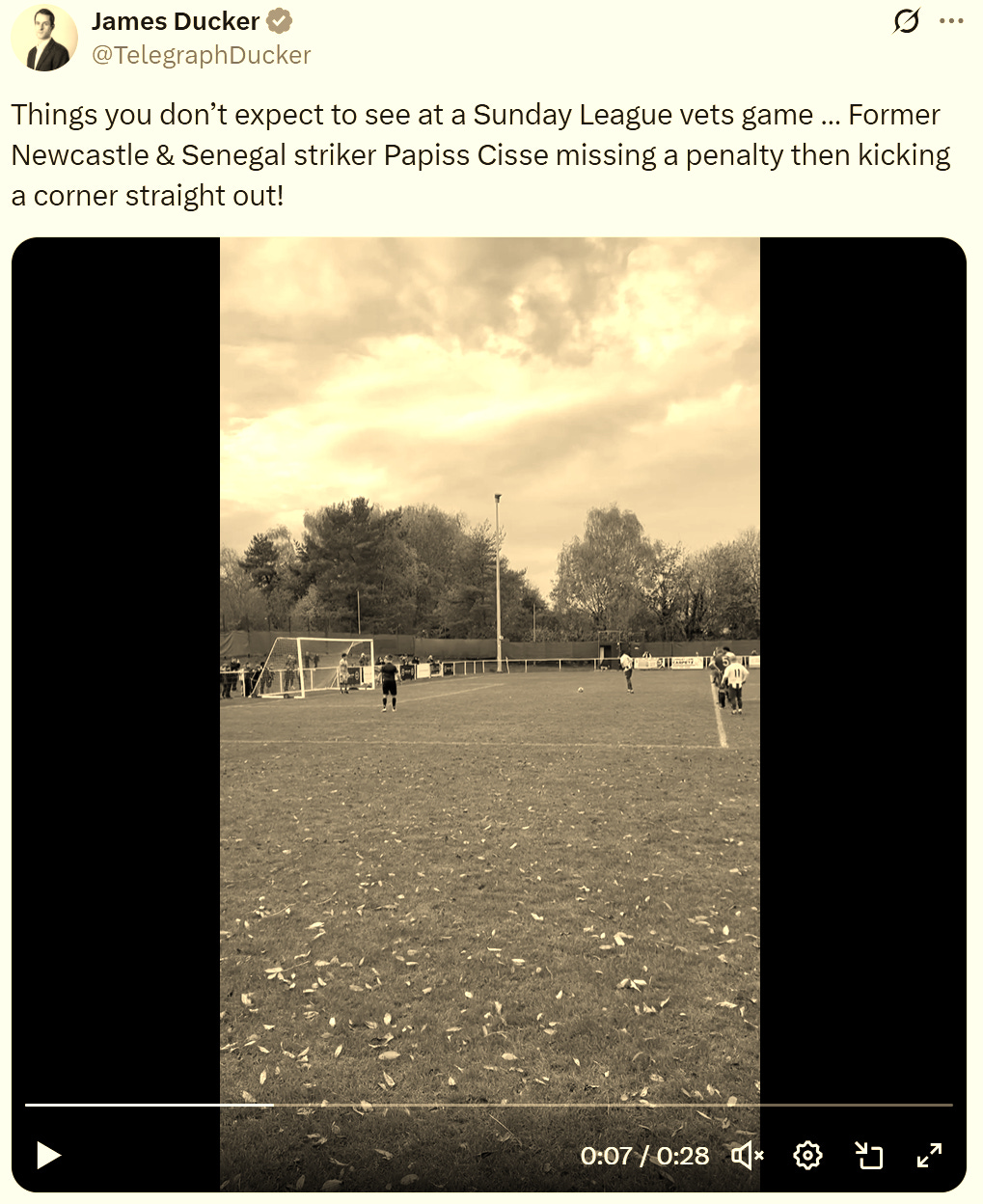
If you’re interested in football, you might want to read this tale in The Telegraph. They sent their northern football correspondent to cover a Sunday league match between Wythenshawe Over 35s and South Liverpool.
Why? Well, the Lamborghinis, Range Rovers and Mercedes G-Wagons in the car park were the first clue. Writer James Ducker and a crowd of 800 saw former Newcastle United striker Papiss Cisse miss a penalty but score seven goals.
Cisse is just one of 10 former Premier League footballers who pay their £15 monthly subs to play for Wythenshawe - others include Emile Heskey, Stephen Ireland, Joleon Lescott and Nedum Onuoha.
The case for investing in our creative capacity
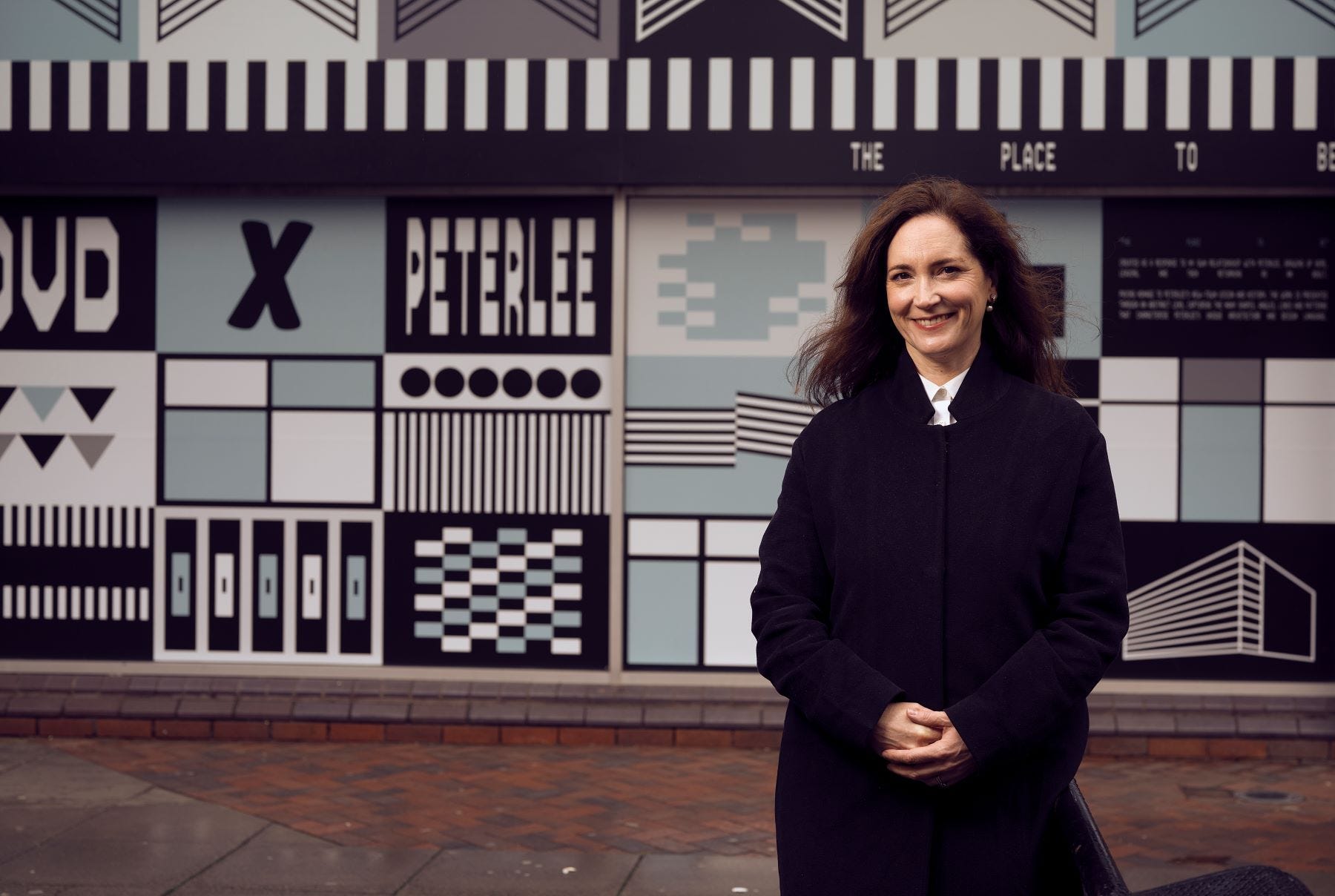
By Julia Handelman-Smith, Director, Into the Light
Conversations about growth tend to focus on hard infrastructure: transport links, digital connectivity, new energy hubs. But the real test of regional success lies not only in what we build, but in how we imagine.
That’s why the next great investment opportunity for the North East may not be a factory or a port, but its creative capacity.
As the Autumn Budget approaches, we face a choice. We can continue to see the arts as an optional extra, or recognise them for what they truly are: an engine of innovation, enterprise, and long-term prosperity.
The North East’s competitive advantage
The North East has always been defined by its makers, from the shipwrights of Sunderland to the engineers of Teesside, and the miners whose ingenuity powered the nation.
That same creative impulse now drives the region’s craftspeople, writers, artists, videographers, choreographers, content creators, designers, filmmakers, coders, and cultural producers, as well as thousands of freelancers, technicians, stage crews, and event suppliers whose work underpins local prosperity.
They form one of the fastest-growing parts of the UK economy, yet too often they operate below the radar of mainstream investment.
These are not marginal gains. In regional economies like ours, where diversification and regeneration are key, the creative sector is a stabilising force. It weaves together commercial and community outcomes in a way few other sectors can.
Reframing the business case
Treating culture as economic strategy means shifting from a subsidy mindset to an investment model. The returns are measurable in GDP, but also in skills, education, and health outcomes.
Take creativity as a form of “compound capital.” Children who learn through creative education perform better academically and socially. Adults engaged in cultural activities report higher wellbeing and lower rates of social isolation. Healthier, more connected communities require less public spending on crisis intervention and welfare, generating savings that ripple through the system.
From a Treasury perspective, the argument is clear: investing in creativity doesn’t just generate economic growth, it reduces long-term public expenditure. It’s not about sentimentality, it’s fiscal prudence.
The County Durham case study
In County Durham, we at Into the Light are proving how cultural investment can translate into tangible regional benefit. Over three years, our programme is commissioning more than a hundred creative projects, spanning theatre, visual arts, heritage, and education, connecting communities and build economic momentum.
It’s a model that could be easily scaled regionally and nationally, leveraging cultural investment to build up our communities, aligning creativity with tourism, skills, and innovation strategies.
For that to happen, both government and investors must think differently about culture. Too many policy frameworks treat arts funding as discretionary, a budget line vulnerable to cuts. Yet culture underpins the very goals regional strategies seek to achieve: growth, productivity, and resilience.
Cross-departmental thinking is essential. Treasury, Education, Health, and Business departments all benefit from a thriving creative sector, but policy often isolates culture within narrow arts remits. Integrating cultural investment into wider regional development policy would unlock greater efficiency and impact.
A new growth narrative
If we want a resilient, future-ready North East, we must expand our definition of infrastructure. Roads and railways connect us physically, but culture connects us emotionally and economically. It attracts people to live, learn, and invest here. It’s the story we tell the world about who we are and who we can become.
As the Chancellor prepares the Budget, she should see culture not as a cost centre, but as a growth sector. And as investors look north for new opportunities, they would do well to recognise that the most valuable assets may not be found in industrial estates, but in studios, rehearsal rooms, and creative clusters that ignite new ideas.
Creativity is the North East’s natural resource. If we mine it wisely, it will power the region’s prosperity for generations to come.
Julia Handelman-Smith is Director of Into the Light, a three-year cultural programme driving long-lasting growth in County Durham through creative collaboration, experimentation, and community empowerment.
Into the Light represents a partnership between Beamish Museum, The Bowes Museum, Culture Durham, Creativity Works, Durham County Council, Durham University, Ensemble ‘84, The Forge, Northern Heartlands, No More Nowt, TIN Arts. Into the Light acts as a key stakeholder, representing the wider cultural sector.
The programme is funded by Durham County Council, the National Lottery through Arts Council England, the UK Government through the UK Shared Prosperity Fund (UKSPF), and Durham University.
Funding’s not a favour
The lights went off on the last Durham Lumiere festival last night. Helen Marriage, the co-founder of Artichoke, the creative force behind the festival, wrote a column for The Guardian this week.
Setting aside any politics, it was, said former Durham director of culture, sport and tourism Alison Clark on LinkedIn, “as heartfelt a defence of arts funding as you’re likely to read.”
Here’s an extract and a link to the whole article:
“We talk about “funding” as if it’s a favour. It’s not. It’s investment in imagination, in shared experience and in our national story. We invest in trains, hospitals, and clean water because we know they’re essential. Art is essential too.
“The budget later this month could show whether the Government understands that, or not. Sector leaders are calling for a new national arts recovery plan. Not charity but public investment on the same footing as sport or science. Even a small commitment would send a signal that culture matters, that it’s part of how we rebuild our economy and communities.
That argument appears to have been lost long ago with Whitehall. But not, it seems, in Durham. People there understood. They came, year after year, in the rain and the cold, to stand together in the light, unified by art. Now the lights are out and what are they left with? Flags and banners?
And unless something changes, Lumiere won’t be the last to go dark.”
And finally…
What decade is this?
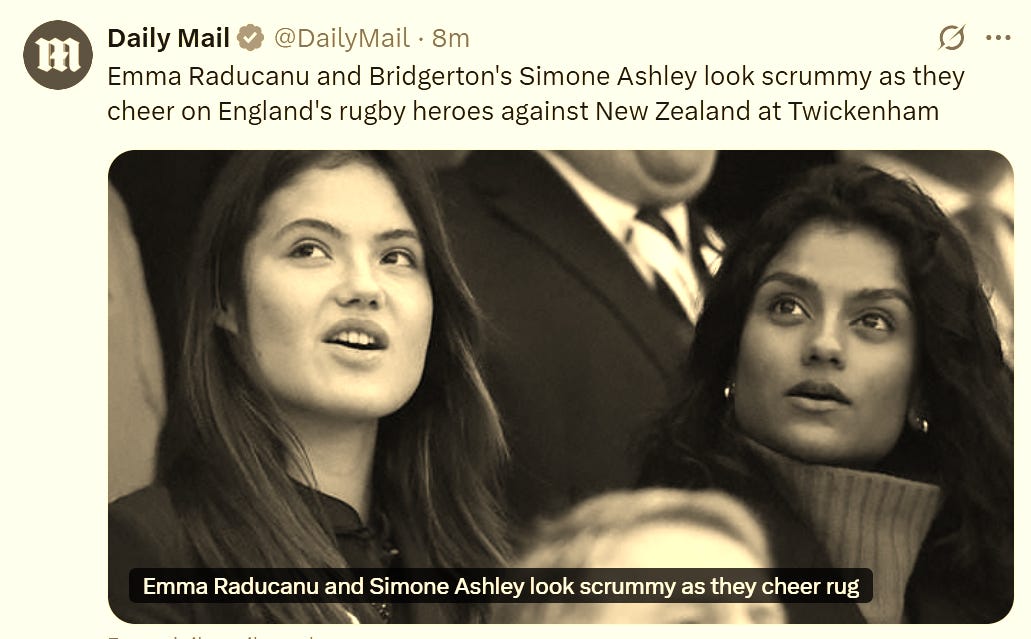
Someone needs to tell the Daily Mail it’s 2025.