

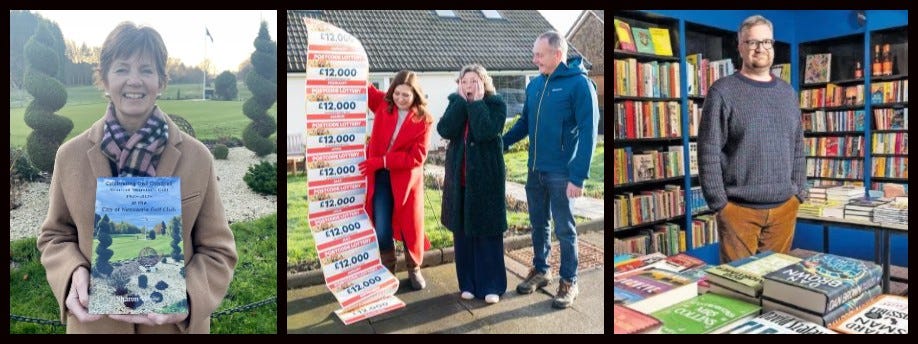
This is Sunday. The best day of the week for a leisurely read. So, be prepared to give more time than usual to Eyes & Ears or come back to it when you can.
Professor Bob Hudson is always worth listening to and his article on the Durham breast cancer scandal is essential reading. There’s also links to longer reads from Tom Rowley on business rates, Shaka Hislop on Keegan, cancer and Julie’s, and Durham University graduate Alexandra Hall Hall on living in Trump’s America.
All great reads.
GSBOCAT - with good reason
Tom Rowley is a talented individual (understatement). The former RGS pupil and Oxford graduate is one of the best journalists I have employed. I say ‘employed’ he did a few months work experience with The Journal as part of his training with The Telegraph (we got his services for free!).
He made rapid progress through the ranks there before spending four years at The Economist, where he was their Britain Correspondent.
You won’t see much evidence of his Journal background by looking at his LinkedIn experiences. Before his journalism career took off, he was co-founder of the Northern Chords Festival in Newcastle in 2008 where it says: “Secured media partnership with the key regional paper.”
I’ll take ‘key’ - I agreed that partnership when I was Editor of The Journal.
Tom made a career change in 2022 by opening a bookshop in London. Not that Backstory is any old bookshop. Tom doesn’t do things by halves.
I’m telling you all of this to establish his credentials as someone who can talk knowledgably on many subjects - including business rates.
He has written on Substack about what he calls a rite of passage - giving his first interview to a newspaper (The Times) in the well-trodden genre of Grumpy Small Business Owner Complaining About Tax.
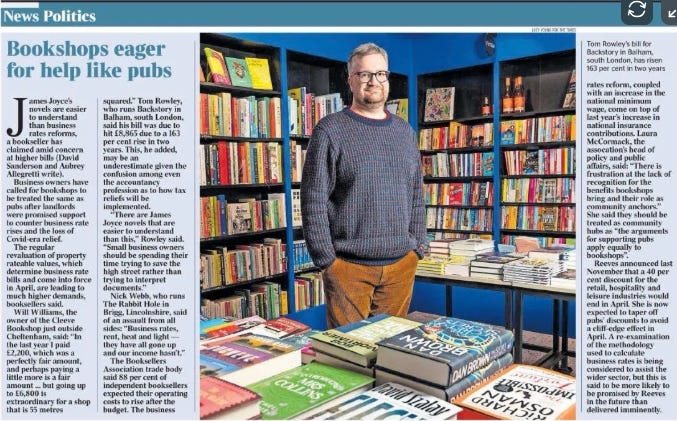
“When I dreamt up Backstory four years ago, I swore I’d never become a GSBOCAT,” he said. “Compared to most retail bosses, I am, in fact, really quite pro-tax.
“I think our public services are in a mess and that probably requires more money as well as significant reform. I think the staggering growth in inequality in the UK and most rich countries in recent years is good for none of us, apart from the very, very wealthiest (and arguably not even them, if they consider their long-term self-interest in stable politics).
“I’m more than happy, then, to pay more income tax. We need to beef up wealth taxes and give inheritance tax another look. On the business side, I can even accept that there may be a case for increasing corporation tax or tax on dividends.
“What makes no sense at all is the 168% increase in business rates that we are being asked to swallow over two years. It seems to work in direct contradiction to the Government’s stated policy goals of chasing growth and reviving the high street.”
Rachel Reeves, take note.
Reunion postponed
A planned reunion of Newcastle United’s Entertainers from 1996 has been postponed because of former manager Kevin Keegan’s cancer diagnosis.
This was revealed in an interview Shaka Hislop gave to The Telegraph this week where the former Newcastle keeper talked about the launch of Show Racism The Red Card 30 years ago - and his own recent diagnosis with prostate cancer.
Hislop talks about the reason why he founded the charity, the support he received from Keegan, what his former boss said in the dressing room after his infamous “I’d love it” rant on TV, hanging out at Julie’s nightclub on the Quayside, and the electric atmosphere in the city at the time.
Council clash
Reform councillor Barry Elliott, who was told to pay almost £40,000 of debts to Northumberland County Council at a court appearance in November, clashed with monitoring officer Stephen Gerrard at this week’s full council meeting.
The property developer questioned the timing of the monitoring officer emailing councillors about declaring an interest when it came to discussions on council tax.
Mr Gerrard said the legal position was clear. “You are in substantial arrears of council tax. You have liability orders against you of a substantial sum. If you speak and do not declare that fact, you commit an offence – if you vote, you commit an offence, and if you vote your vote will be disregarded.”
Unstable condition
The mayor of Hexham has criticised the behaviour of senior leaders on Northumberland County Council for the way they acted in refusing to sell the town’s old fire station to the man who created the Angel of the North.
Councillor Derek Kennedy, who also leads the town council as the mayor, said: “What a mess. The council was presented with an offer from Sir Antony Gormley – gift horse. They have looked at it, and they have led it to the knacker’s yard and shot it. We should not be in this position.”
Life changing

Fire control operator Gail Wood from Seaton Carew had a hysterectomy. One of the first things the 54-year-old did when she came out of the recovery room after surgery was to reach for her phone.
“I remember thinking, ‘I’d better message people to say I’m alive’, she said. “Because I’d got it into my head I wasn’t going to make it.”
When she picked up her phone she discovered a voicemail from the People’s Postcode Lottery to say that she’d won a prize. The next day Gail and husband Jason, a retired firefighter, were the recipients of £12,000 a month for a year - one of three families in the postcode area to each win £144,000.
Different strokes
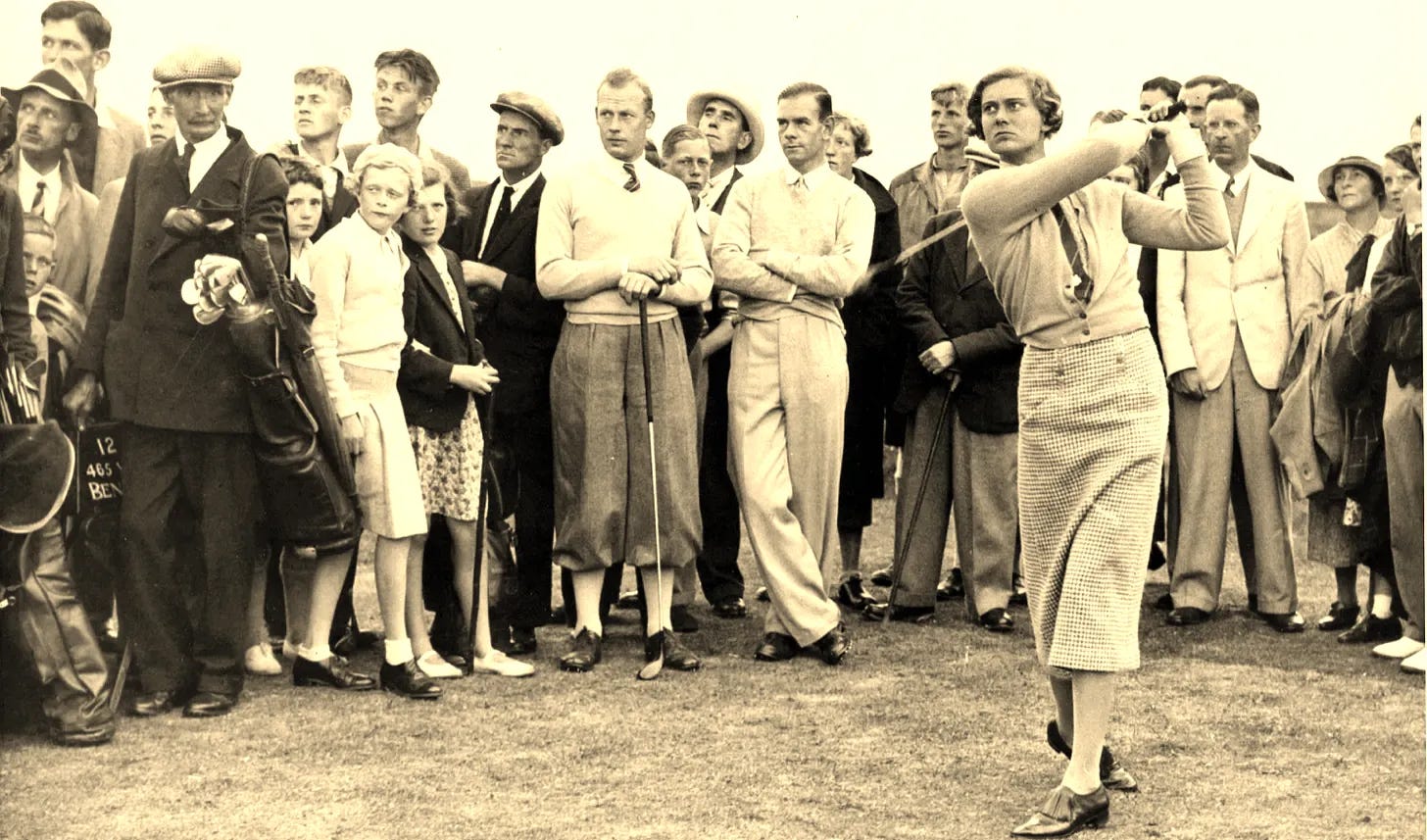
You’re in a golf club and you want to speak to your husband. But he’s in the Men’s Only bar. So, you have to pass a message to the steward without going anywhere near the door - and you’re definitely not allowed to peer through the glass panel.
Just one of the many stories told in a new book detailing 100 years of women’s golf at the City of Newcastle Golf Club, written by Sharon White and featured by Tony Henderson in Cultured. North East.
How you can help
I hope you are enjoying Eyes & Ears. I want to bring you more quality journalism in 2026. I’m talking about articles like the one coming up from Professor Bob Hudson on the Durham breast cancer scandal, and last week’s feature from young journalist Liam Geoghegan about the gangster turned faith healer Stuart Watson.
Independent, politically neutral - but North East biased. That is my promise.
You can help by taking out a monthly or annual subscription. It’s £6.99 or get two months free by paying £69.99 for the year.
You can also spread the word about Eyes & Ears to friends, family and work colleagues. But only if you think it’s worth it.

Durham breast cancer scandal: What’s going on?
By Professor Bob Hudson
It is a happily rare event for a North East NHS Trust to attract negative national attention, but County Durham and Darlington Foundation Trust (CDDFT) has recently managed to do just that in relation to breast cancer treatment. A damning 232-page review of their services, led by governance expert Mary Aubrey, was released last November. What are the key messages of this review, and what wider lessons can be drawn?
The most arresting messages concern shocking clinical failures – missed diagnoses; unnecessary surgeries; avoidable harm; inconsistent review; and non-compliance with national standards. The report acknowledges the ‘distress, pain and erosion of trust’ experienced by patients and families; one national newspaper referred to women feeling ‘butchered and traumatised’.
But this is not a matter of a handful of cases slipping through the clinical cracks. Aubrey’s report covered the period 2012-25 and at the time of publication over 200 cases were under review. While the magnitude of failure is still unclear, the legal teams representing patients have warned that hundreds – even thousands – of women could be affected. Indeed the Trust is now reviewing the medical records of over 1500 patients. This has all the hallmarks of a medical scandal of massive proportions.
Reaction has been strong. City of Durham MP, Mary Foy, (herself a breast cancer survivor) has accused the Trust of ‘catastrophically failing patients’. Regulators and commissioning bodies have been wringing their hands and saying they expect better; medical negligence solicitors are actively seeking redress; and the issue is the subject of a searing documentary, Hidden Scars, by BBC Look North’s health correspondent, Sharon Barbour, which is available on BBC iPlayer. Meanwhile the Trust itself tries to make reassuring noises about having taken ‘significant action’.
CDDFT is not the only NHS organisation in the region to be mired in controversy – Tees, Esk and Wear Valleys NHS Trust is to be the subject of a public inquiry following a spate of suicides. However, the failings at CDDFT are on a much bigger scale and for relatively routine interventions. Moreover, they are not without precedent. A CQC investigation in 2023 into maternity care at CDDFT stated that understaffing had put mothers and babies at risk; an earlier CQC review in 2015 concluded that the Trust required improvement; and a follow-up visit in 2018 still found too many serious medical incidents, too few staff and key targets missed.
The warning signs, then, have been clear for a long time. This begs the question - why do these failures keep recurring? CDDFT struggles with a budget that is insufficient to meet demand, but this is also the case with every other part of the NHS. Rather, the Aubrey Report suggests the explanation lies in matters of governance and culture.
The charge list on poor governance is long and complex: blurred lines of accountability; ignored warnings; weak escalation mechanisms; ineffective audit trails; and an absence of corporate oversight. Aubrey concluded that systemic governance collapse had enabled unsafe practices to endure for years, and required root-and-branch reform to restore integrity and accountability.
Judgements do not come much harsher than this – but it gets worse. The culture at the Trust is described as ‘toxic and fearful’, with a tendency to downplay problems rather than address them. High staff turnover was said to have weakened accountability, and concerns from staff, external auditors and patient advocates were minimised or ignored. And externally, relationships with NHS England, CQC and regional boards were said to be ad hoc and lacking in structure.
It is within this dysfunctional culture that an extraordinary contracting out of NHS breast cancer services to two private providers - Spire Healthcare Ltd and Durham Surgical Services - was allowed to continue from 2012 onwards.
Both clinics were led by Dr Amir Bhatti, who was also the surgical lead within CDDFT itself. This aspect of the scandal is fully explored in Sharon Barbour’s documentary. Her investigations revealed that while half of women referred for breast cancer treatment at CDDFT were seen within the Trust, the other half (a staggering 8000 patients) were referred to these private clinics.
To confound matters, CDDFT was paying Bhatti a fee per procedure, thereby providing an incentive to see as many patients as possible in as short a time as possible.
The service arising from this arrangement is described as ‘frankly atrocious’ – a conveyor belt of short and insensitive interactions. The Trust had known about these concerns since at least 2019 following a confidential review by the NHS Northern Cancer Alliance, but had failed to act upon them.
Bhatti profited handsomely, with CDDFT handing over almost £6m for the outsourced service. He is no longer clinical lead, no longer performing surgery, and his private clinic work has ended. Some women who have suffered at his hands might think this is insufficient.
Sharon Barbour interviews the new CEO of the Trust in her documentary, and makes the observation to him that the contracting ‘screams of conflict of interest’. His open-mouthed and garbled admission (25 minutes in) is worthy of more than one look.
If conflict of interest is one elephant in the room with this story, the other is lack of accountability. No expression of remorse seems to have been forthcoming from Bhatti, and he is still employed by the Trust under supervision.
What of the members of the governing board of CDDFT? Those at the top have disappeared into the ether – long-standing CEO Sue Jacques has retired (on the back of an OBE for services to the NHS), and the Chair, Professor Richard Scothon, stepped down just before the Aubrey report was made public.
New faces are at the helm – Alison Marshall (ex-Chair of Gateshead NHS Trust) becomes Interim Chair of the Board, and Steve Russell (formerly of the shortly to be abolished NHS England) is the new CEO. Deep remorse is on offer, along with commitments to rebuilding trust through transparency, improvement and accountability.
But where is accountability to patients in the NHS? It is an issue that goes beyond CDDFT. Current mechanisms are weak and fragmented. Trust board members are appointed in ways that are as mysterious as a papal conclave.
While foundation trust governors are openly elected by Trust ‘members’, they are relatively powerless in relation to the Trust boards, as well as invisible to local populations. Further tweaking would be insufficient. The bigger task is to rethink the whole notion of accountability and put in place a raft of options and opportunities that bring people’s views and preferences squarely into the equation.
Accountability matters because in its absence those in power with the capacity to act might do so without regard for those whose lives are affected by their actions. Just ask the thousands of breast cancer patients in Durham whose cases are currently under review.
Bob Hudson is Visiting Professor in Public Policy, University of Sunderland.
Surgeries under review
Patients who underwent surgery under orthopaedic surgeon Leslie Irwin are being asked to come forward with concerns after Spire Washington Hospital launched a review into procedures he carried out over several years.
The Care Quality Commission (CQC) confirmed that it inspected the hospital on October 14, following concerns about the care being provided. Its findings will be published following quality assurance processes.
The surgeon, who worked at Spire Washington and for South Tyneside and Sunderland NHS Foundation Trust between 2001 and 2023, retired from the NHS Trust in 2022 and relinquished his registration with the General Medical Council in May 2025. Spire Healthcare suspended him in August 2023 and withdrew his practising privileges in September 2024.
A year of living dangerously
Alexandra Hall Hall is a former British diplomat known for her principled resignation over the Government’s handling of Brexit.
The Durham University graduate lives in the US and has written a chilling piece for the Byline Times about how life has changed on the other side of the Atlantic, one year into Trump’s second term as President.
“It may superficially look the same from the outside. Many of us are able to go through the motions of our daily lives in the same ways as before. But, everything is changed on the inside.
“I feel privately relieved and ashamed not to be a migrant, black or Hispanic myself. I imagine this is not dissimilar to how many Germans felt in the early 1930s, when they became uneasily aware that their Jewish neighbours were being harassed by Hitler’s brownshirts.”
Just seen this - thanks so much Brian, how lovely :)