

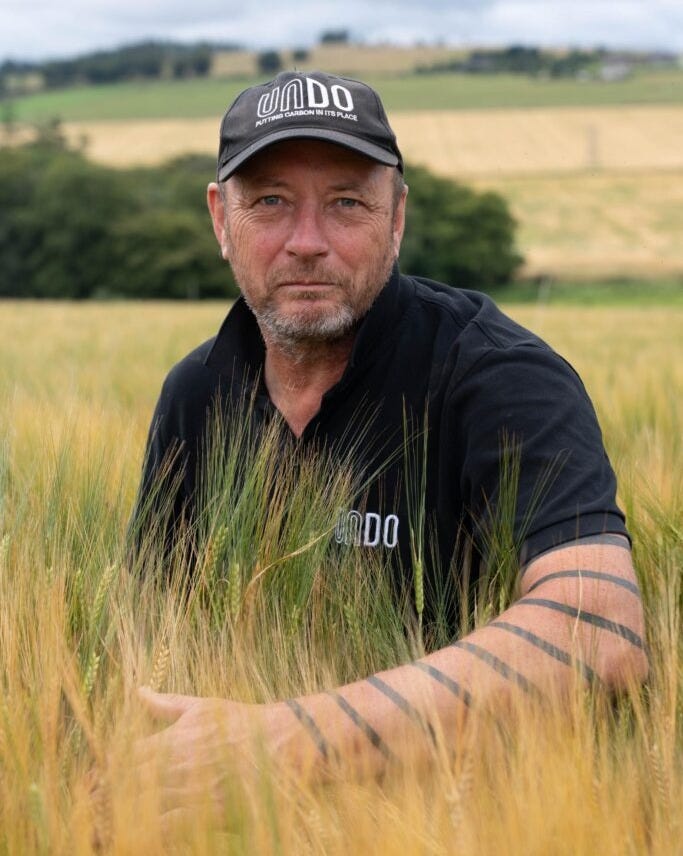
Durham University graduate Jim Mann, founder and CEO of UNDO, travelled to New York to receive a cheque for $5m last week - his prize for beating 1,300 applicants from 11 countries in a contest for scalable projects that combat climate change.
Thanks to UNDO's work with Newcastle University, the process known as enhanced rock weathering was shown to make farmland more productive, suck carbon out of the atmosphere, and reduce the amount of harmful phosphates flowing into streams and rivers.
As our correspondent Graeme Anderson said at the time, it’s a win-win-win situation (and it could be a win-win-win-win!)
David Manning, professor of soil science at Newcastle University School of Natural and Environmental Sciences, said: "We are delighted with the news that UNDO won the $5m award from XPrize. We work closely with UNDO on a number of projects, especially engaging our undergraduate and postgraduate students in the potential for enhanced rock weathering to mitigate climate change.”
Founder Jim Mann said: "Being an XPrize winner is a powerful validation - not just of UNDO’s scientific rigour and massively scalable operational model but of the incredible academic and agricultural communities behind it all.
"Our collaborative research with Newcastle University is instrumental in advancing this vital climate technology, particularly by demonstrating the agronomic benefits of applying crushed silicate rock to local farmland.”
It is a story of huge significance and I was surprised that it did not attract many headlines at the time the academic research was published. Here is how we covered it in The QT on March 28, 2024 - Brian Aitken, Editor.
Seismic find will help farming and the climate
March 28, 2024: Volcanoes in the North East would normally be a bad thing you’d think but scientists at Newcastle University this week proved they can boost agriculture and help solve the climate crisis. Graeme Anderson was there for the big reveal of the ground-breaking research
Tiny volcanic rocks used as fertiliser on North East fields can increase crop growth by more than 20%, Newcastle University scientists proved this week — in a process which also captures huge amounts of carbon.
The landmark findings, officially published in an academic paper today), could have a major impact on British farming in the years ahead and a genuine impact on solving the climate crisis.
The research paper shows that the widespread use of basalt rock on farmland using a process called Enhanced Rock Weathering (ERW), would make farmland more productive, suck carbon out of the atmosphere, and — because natural materials are being used — reduce the amount of dangerous phosphates flowing into our streams and rivers which have become such a cause for concern in recent years.
It’s a win-win-win of a result, the findings checked, double-checked and cross-checked and all standing up to scrutiny.
The report itself is densely detailed, full of meticulously compiled statistics and evidence and soberly presented to the academic community which laps this sort of thing up.
The general public might find it a less enticing read but if a journalist had to sum it up in one word that every readers could understand, they would probably settle on this one: Proof.
The paper shows ERW offers agronomic benefits that align with regenerative farming practices while also having fertilising effects that can benefit farmers’ bottom lines.
Sorry if that previous sentence sounded like I was channelling my inner Sheldon but it’s the company I’ve been keeping this week.
The Press briefing on the landmark research was held in the fabulous gothic pile which is Newcastle’s Armstrong building and I was in the room where it happened.
Not that there was anything dramatic in the setting — Seminar Room 2.50, 2nd Floor is as modernly functional and featureless as any classroom you may have been in.
But it buzzed with the infectious enthusiasm of scientists on Monday, excited to show the world the result of field tests carried out at Nafferton Farm near Stocksfield in the Tyne Valley and exhaustively researched in the University’s laboratories and test facilities.
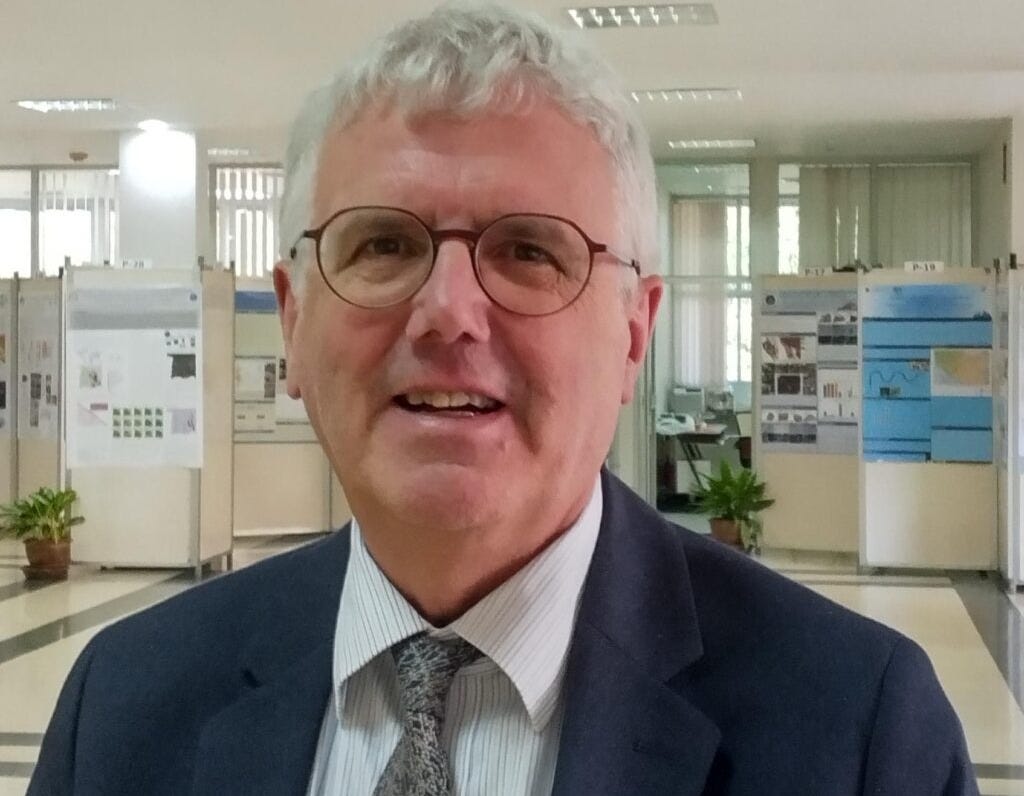
Co-author of the paper, David Manning, Professor of Science, led a research team at Newcastle University which spent more than a year rigorously field-testing ERW.
And he says he hopes the evidence his team produced will lead British farmers to take up the opportunity to boost their take and improve their land.
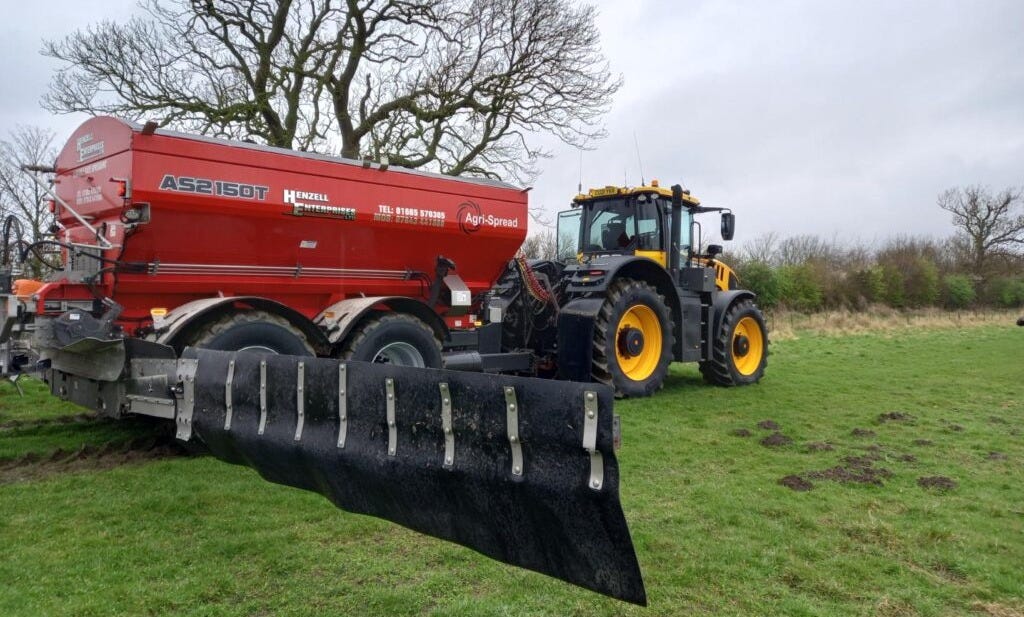
“Crop yields can be increased by up to 22% just by spreading these tiny pieces of basalt rock on fields,” he said.
“Basalt rock is a volcanic rock which would normally take tens of thousands of years to break down but enhanced weathering takes the rocks to that final stage where they are tiny chips and break down quickly when rain falls.
“That releases minerals, particularly calcium and magnesium, which maintains or increases soil PH and improves the quality of crops.
“But from a net zero perspective, basalt also absorbs absolutely huge amounts of carbon from the atmosphere and could be a major contributor to combating climate change if deployed at scale.
“I’m very proud of the work done by the project team because these are exciting results and the great thing from our point of view is that they have been rigorously tested and peer-reviewed to establish that the findings hold up.
“The results of this trial give further scientific credibility for enhanced rock weathering and greatly improve its value proposition to farmers, who we hope will take it up in numbers thanks to the proposal of our partners in research UNDO.”
The new process could be especially useful for farmers in the North East, as the green fields of rural Northumberland, Durham and the Tees Valley lie close to numerous local quarries that produce great quantities of the basalt rock used, meaning transportation is not an issue.
Regional take up of basalt fertilising is something that Professor Manning, along with professor of soil science Yit Arn Teh, academic strategy lead Dr Dave George and Nafferton farm director James Standen, who all devoted time to the project, hope swiftly comes to pass.
Dr XinRan Liu of UNDO, who co-authored the paper with Professor Manning, explained: "It's great that the North East is one of those places where farms and quarries are to be found side by side.
“Basalt is one of the most abundant rocks on the planet and produced by quarries locally as a by-product of their work because the quarry owners are looking for other materials.
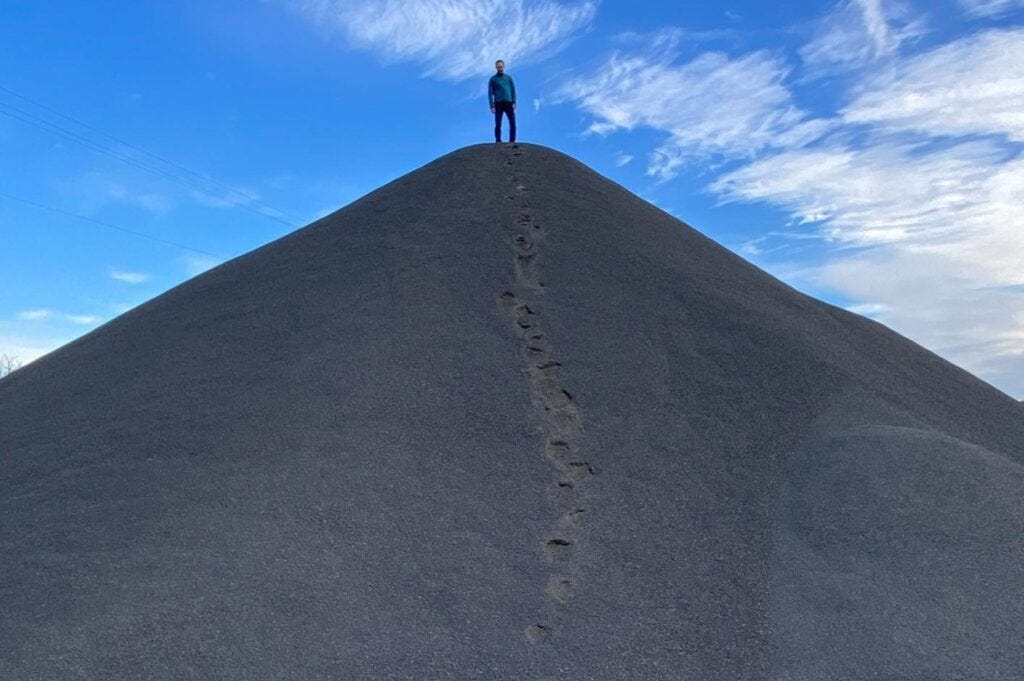
“Basalt is just something that comes out of that process and usually goes towards things like gravel drives but we break the rocks down much further which means they produce much more carbon in a short space of time.
“It’s a process farmers can adopt regionally and nationally across the UK — across the world too.
"That's something we're very aware of because UNDO is an eco-company on a global mission to remove the excessive amount of carbon in the atmosphere as quickly as possible, so we’re supplying basalt chips to farmers free of charge to encourage the start of its widespread use.”
UNDO was created by Scottish eco-entrepreneur and former Durham University student, Jim Mann, and the company was recently nominated for the Prince William-supported Earthshot prize.
It supplies basalt chips to farmers for free, claims carbon credits in return and ploughs the money from those credits into buying more basalt. It already does this at scale in the North of England and Scotland, spreading 140,000 tonnes of basalt in the UK alone last year but it is hoping to do so much more in the years to come.
The fertility of land around volcanoes has been known since the time of Vesuvius erupting but this is the first time that fertility caused by basalt breaking down can be so dramatically accelerated in terms of time.
It’s estimated the world needs to remove 10 billion tonnes of CO2 from our atmosphere every year if we want to return to pre-industrial levels.
Currently, we’re only removing a few thousand tonnes a year, so scalability and speed are crucial for carbon removal and UNDO does not lack keenness or urgency in their race against time.
Dr Liu said: “Emission reductions are vital in the fight against climate change but they aren’t enough — we need to remove carbon from the atmosphere too.
“If we don’t we’re facing extreme weather, global crop failure and mass human and animal extinctions so the stakes couldn’t be higher.
“Basalt is a perfect, nature-based solution and I’m excited about this paper coming out of Newcastle University because it illustrates a win-win-win-win situation. How often do you get that?
“It produces more crops, captures vast quantities of carbon, releases no damaging toxic chemicals, supports rural communities and enriches the soil.
“It’s incredible technology with amazing benefits and its uptake should be a ‘no-brainer’.
“There’s research going on in the field of ERW all over the world but the Newcastle University paper demonstrates that not only does it work but it is viable in temperate climate zones like the UK.”
In the UK alone, it's estimated that basalt-based ERW has the potential to remove 30 million tonnes of CO2 per year by 2050 which equates to 45 of the UK's total carbon-removal needs.
The key though will be farmer uptake of the volcanic chip dust and even if it is offered free by UNDO there may not necessarily be a stampede.
Jez Wardman, agronomist and crop nutrition specialist, who also worked on the paper, smiled: “Farmers can be funny — they’re custodians of their land and tend to be very protective of it and not given to quick adoption of new techniques.
“They’ll often find a way of being sceptical of change — it might be that the report is a few years old so there's a question of is it out of date, or maybe they feel it will work in other places but not theirs.
“So we’re hoping that the paper coming out of Newcastle this week will help give farmers the confidence and assurance they need to begin using basalt, perhaps first in the North East and then quickly further afield because the benefits are obvious for both profits and the planet.”
Many of the potential solutions to the climate crisis, as the situation worsens, involve escalating levels of sacrifice by the public and the risk is that makes them potentially unpopular and therefore difficult to implement.
So it's always uplifting to hear of climate solutions that are all gain for everyone and no pain for anyone.
The widespread uptake of basalt fertilising on farmland — which I'd never heard of before this week — could be a game changer in the battle against climate change.
In that context, the research findings announced in the Armstrong Building felt important.
They felt seismic.